Transforming analytical insights into actionable business recommendations is a critical step in driving organizational value. Effective recommendation development considers the unique business context, organizational constraints, and quantifiable impacts.
It culminates in a clear implementation roadmap and measurable success criteria to guide execution and evaluation.
Translating Analytical Findings into Actionable Recommendations
Translating analytical findings into actionable recommendations involves synthesizing data insights into clear, prioritized guidance aligned with business goals.
Recommendations should avoid technical jargon to remain accessible to diverse stakeholders and highlight the rationale by directly connecting to analytical evidence.
Ensuring that suggestions are practical, feasible, and address the core business problems increases their impact. This effective translation bridges the gap between data analysis and informed decision-making.
Addressing Business Context and Organizational Constraints
Addressing business context and organizational constraints requires considering factors such as budget limitations, resource availability, regulatory requirements, and cultural aspects.
Recommendations should align with the company’s strategic priorities and operational realities.
Engaging stakeholders early helps assess feasibility and secure buy-in, while customizing suggestions to fit the organizational structure and existing workflows ensures practicality.
Context-aware recommendations increase their relevance and the likelihood of successful adoption.
Quantifying Business Impact and ROI
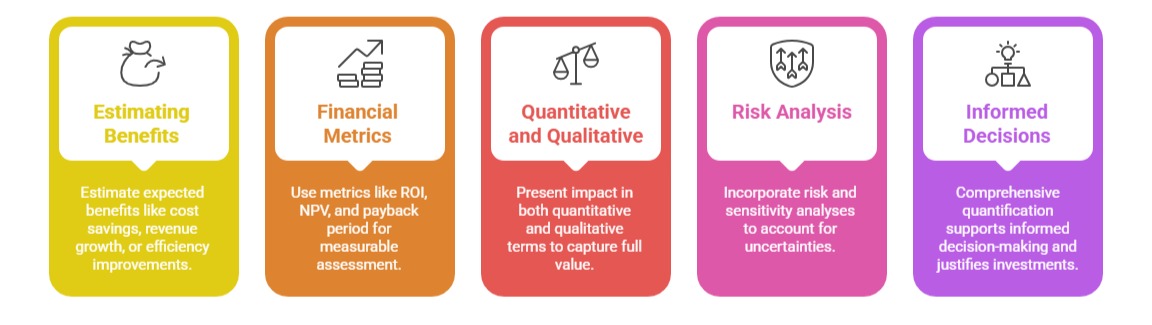
Quantifying business impact and ROI involves estimating the expected benefits of recommendations, including cost savings, revenue growth, or efficiency improvements.
Financial metrics such as ROI, net present value (NPV), and payback period are used where applicable to provide a measurable assessment.
The impact is presented in both quantitative and qualitative terms to capture the full value of the initiative. Incorporating risk and sensitivity analyses helps account for uncertainties and potential variations.
This comprehensive quantification supports informed decision-making and justifies investment decisions.
Identifying Implementation Roadmap and Success Measurement
Identifying an implementation roadmap and success measurement involves creating a detailed action plan that outlines steps, timelines, responsibilities, and required resources.
Key performance indicators (KPIs) are defined to monitor the effectiveness of the solution, while periodic review cycles allow for progress assessment and necessary adjustments.
Incorporating feedback mechanisms ensures recommendations can be refined based on actual outcomes. A well-structured roadmap combined with continuous measurement supports sustained benefits and accountability.

Class Sessions
Sales Campaign

We have a sales campaign on our promoted courses and products. You can purchase 1 products at a discounted price up to 15% discount.