Effective stakeholder engagement is a cornerstone of successful analytics projects and organizational decision-making.
Understanding who the stakeholders are, prioritizing their needs, managing conflicts, and communicating analytics findings appropriately ensures that projects receive the necessary support and that recommendations lead to actionable business insights.
Identifying Primary, Secondary, and Tertiary Stakeholders
Stakeholders are individuals or groups affected by or having an interest in the outcome of an analytics project. They can be categorized by their level of influence and involvement:
Primary Stakeholders: Those directly impacted by the project outcomes or responsible for decision-making (e.g., executive sponsors, project managers).
Secondary Stakeholders: Groups indirectly affected or contributing resources, such as department heads, data analysts, and IT teams.
Tertiary Stakeholders: Peripheral participants or observers, like external partners, regulators, or customers.
Accurate identification ensures all relevant perspectives are considered, reducing resistance and increasing project relevance.
Prioritization Frameworks: Eisenhower Matrix and Impact-Effort Analysis
With numerous stakeholders, prioritizing engagement efforts is critical. Two effective tools for prioritizing stakeholders and tasks include:
1. Eisenhower Matrix: Categorizes tasks/stakeholders based on urgency and importance:
Important and urgent: Requires immediate action.
Important but not urgent: Plan and schedule engagement.
Urgent but not important: Delegate or minimize attention.
Neither urgent nor important: Lowest priority.
2. Impact-Effort Analysis: Plots initiatives or stakeholder issues on a two-axis grid (impact vs. effort required):
High impact, low effort: Prioritize these for quick wins.
High impact, high effort: Invest with careful planning.
Low impact, low effort: Monitor and address as time permits.
Low impact, high effort: Avoid or deprioritize.
These frameworks help allocate resources effectively to maximize project success.
Conflict Resolution When Stakeholders Have Divergent Priorities
Diverging interests are common in multi-stakeholder environments. Effective conflict resolution promotes cooperation and alignment:
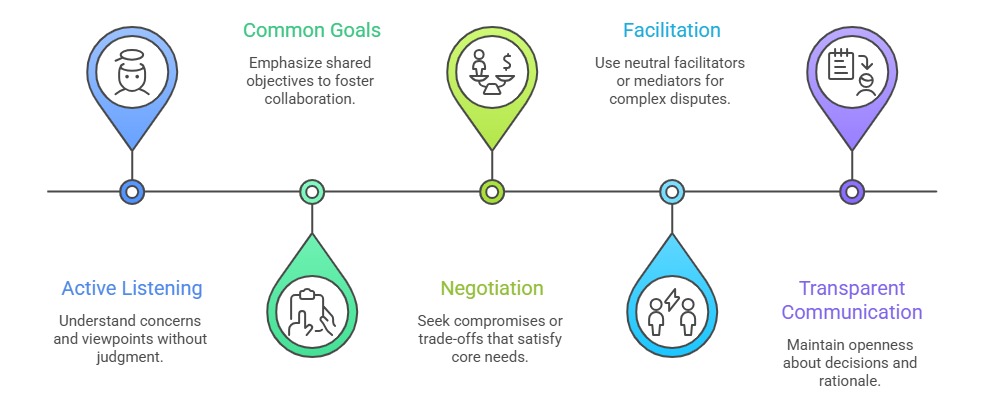
Resolving conflicts early prevents escalation and ensures that analytics outcomes reflect balanced stakeholder input.
Communicating Analytical Recommendations to Different Stakeholder Groups
Tailored communication is vital for ensuring analytics insights are understood and utilized:
1. Executives: Focus on high-level summaries, business impact, and strategic implications. Use concise dashboards and executive briefs.
2. Operational Teams: Provide detailed reports, process-oriented insights, and actionable steps to improve workflows.
3. Technical Teams: Share data methodologies, assumptions, and model specifics for implementation and validation.
4. External Stakeholders: Communicate results within compliance and confidentiality parameters emphasizing transparency and trustworthiness.
Utilizing appropriate media (presentations, reports, dashboards) and language (avoiding jargon for non-technical audiences) enhances engagement and adoption of recommendations.

Class Sessions
Sales Campaign

We have a sales campaign on our promoted courses and products. You can purchase 1 products at a discounted price up to 15% discount.