Machine learning (ML) has become an integral part of modern business operations, offering a wide range of applications that enhance efficiency, personalization, and risk management.
From detecting fraud in real time to segmenting customers and predicting equipment failures, ML-driven solutions help organizations make smarter, faster decisions based on data patterns and insights.
Fraud Detection: Identifying Anomalous Patterns in Real-Time
Fraud detection systems use machine learning algorithms to analyze transactions, user behaviors, and network activity to identify unusual patterns that may indicate fraudulent activity.
Techniques such as anomaly detection, classification, and clustering help flag suspicious actions, including credit card fraud, insurance claims fraud, and money laundering.
With real-time analysis, these systems enable immediate intervention, reducing financial losses and strengthening customer trust.
Example: Credit card companies use ML to monitor millions of transactions per second, blocking or flagging transactions that deviate from established patterns.
Customer Segmentation: Clustering Similar Customers for Targeting
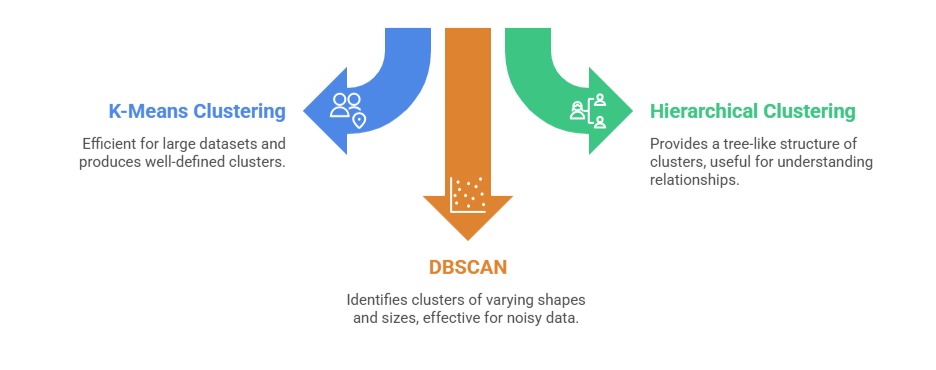
Customer segmentation groups customers based on their behaviors, demographics, and preferences, enabling personalized marketing and service strategies.
Machine learning techniques such as k-means clustering, hierarchical clustering, and DBSCAN support dynamic, data-driven segmentation that adapts to changing customer profiles.
This targeted approach helps tailor campaigns, enhance customer experience, and allocate resources more efficiently.
Example: E-commerce platforms automatically segment users by browsing and purchase history to deliver targeted ads and promotions.
Recommendation Engines: Personalizing Product Suggestions
Recommendation systems analyze historical purchases, browsing behaviors, and customer preferences to suggest products or services that match individual interests.
Using techniques such as collaborative filtering, content-based filtering, and hybrid approaches, these systems balance personalization with scalability.
As a result, recommendation engines boost user engagement, improve conversion rates, and enhance overall customer satisfaction.
Example: Streaming services like Netflix recommend content based on viewing history, while retailers suggest products linked to past purchases.
Predictive Maintenance: Forecasting Equipment Failures
Predictive maintenance uses sensor data, operational logs, and historical failure patterns to forecast equipment issues before they occur. AI algorithms analyze trends, anomalies, load conditions, and usage behaviors to optimize maintenance schedules.
This proactive approach minimizes downtime, reduces repair costs, and extends overall asset lifespan.
Example: Manufacturing plants leverage ML to monitor machinery health, scheduling maintenance during low-impact periods based on predicted failure risks.

Class Sessions
Sales Campaign

We have a sales campaign on our promoted courses and products. You can purchase 1 products at a discounted price up to 15% discount.