Churn analysis and retention modeling are vital processes that help businesses identify customers at risk of leaving and develop targeted strategies to retain them.
By leveraging predictive modeling, understanding churn drivers, and evaluating the impact of retention initiatives, companies can effectively reduce customer attrition and enhance long-term profitability.
These techniques combine data science with customer insights to optimize engagement and loyalty.
Identifying At-Risk Customers Through Predictive Modeling
It involves analyzing transaction, engagement, and demographic data to assign a risk score that indicates the likelihood of churn. Common algorithms for this purpose include logistic regression, random forests, and neural networks.
Real-time data, such as recent logins or declines in purchases, can trigger dynamic churn scoring. Businesses leverage these scores to segment customers and focus proactive retention efforts on high-risk, high-value segments.
Churn Drivers: Analyzing Reasons Customers Leave
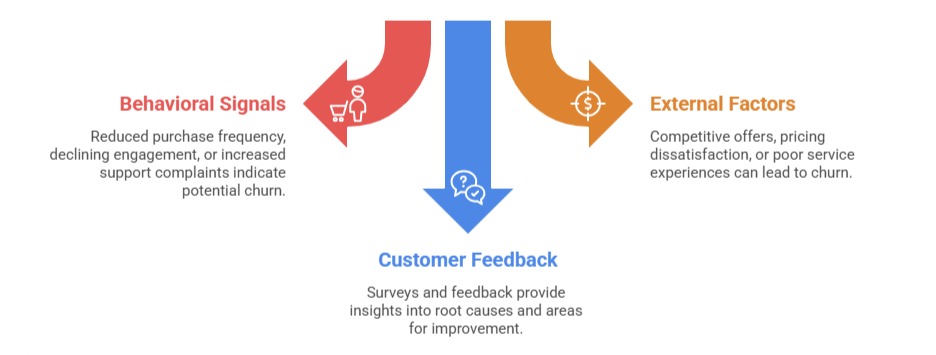
Churn drivers are identified by analyzing the reasons customers leave, which often include behavioral signals such as reduced purchase frequency, declining engagement, or increased support complaints.
External factors like competitive offers, pricing dissatisfaction, or poor service experiences also contribute to churn.
Understanding these drivers enables businesses to tailor retention strategies and improve products or services. Surveys, customer feedback, and transactional data provide additional insights, enriching the analysis of root causes.
Retention Strategies: Targeting Interventions Based on Churn Risk
Retention strategies for targeting interventions based on churn risk involve personalized outreach, such as discounts, loyalty rewards, or exclusive offers, aimed at at-risk customers.
Proactive customer support helps address dissatisfaction before it leads to churn, while improvements to product features or user experience can mitigate underlying structural causes.
Consistently monitoring and adjusting retention campaigns based on customer feedback and observed churn behavior ensures that these strategies remain effective and impactful.
Measuring Effectiveness of Retention Initiatives
It involves tracking metrics such as reductions in churn rate, increases in customer lifetime value (CLV), and improvements in satisfaction scores.
A/B testing of retention offers and communications helps refine strategies, while continuous data collection feeds back into predictive churn models for ongoing enhancement.
Reporting frameworks evaluate the ROI of retention programs, providing actionable insights to guide business decisions and optimize future retention efforts.

Class Sessions
Sales Campaign

We have a sales campaign on our promoted courses and products. You can purchase 1 products at a discounted price up to 15% discount.