Business analytics has emerged as a vital discipline across industries, driving demand for skilled professionals capable of deriving insights from complex data.
Pursuing a career in analytics offers diverse opportunities, ranging from data analysis, business intelligence, and data science roles to specialized positions like machine learning engineers and predictive modelers.
Success in this field depends on a combination of essential technical and soft skills, industry awareness, and a proactive approach to continuous learning.
Essential Technical Skills
A solid foundation in technical skills forms the backbone of an analytics career. The following tools and techniques are critical for effective data analysis and interpretation:
1. SQL (Structured Query Language): The most widely used language for querying and managing relational databases. Proficiency in SQL enables analysts to extract and manipulate data efficiently.
2. Python: A versatile programming language favored for data analysis, machine learning, and automation. It offers powerful libraries like Pandas, NumPy, and Scikit-learn.
3. Excel: A fundamental tool for data manipulation and visualization, especially useful for quick analysis, pivot tables, and reporting.
4. Statistical Analysis: Understanding descriptive and inferential statistics helps analysts derive meaningful conclusions from data and validate hypotheses.
5. Data Visualization: Skills in tools such as Tableau, Power BI, or Excel charting enable clear communication of insights through compelling visual stories.
Soft Skills for Analytics Professionals
Beyond technical know-how, soft skills significantly influence an analyst’s ability to drive business value. The most valuable include:
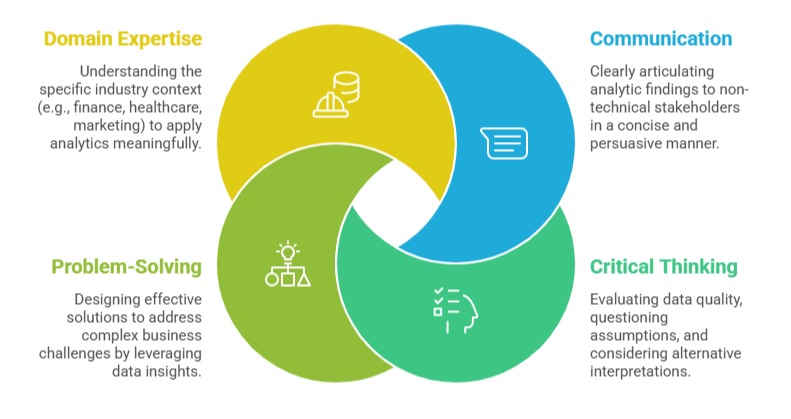
These interpersonal and cognitive skills facilitate collaboration and ensure analytics outcomes align with organizational objectives.
Industry Trends and Emerging Roles
The analytics landscape continues to evolve rapidly with technological advancements and shifting business needs:
1. Artificial Intelligence and Machine Learning: Integration of AI-driven analytics is creating demand for specialists who bridge data science and business strategy.
2. Data Engineering and Cloud Analytics: Increasing data volumes require advanced data engineering skills and proficiency with cloud platforms (AWS, Azure, Google Cloud).
3. Augmented Analytics: Automated insights generation and natural language processing tools are enhancing analyst productivity.
4. Ethical Analytics and Data Governance: Roles focusing on data ethics, privacy, and compliance are rising, reflecting regulatory environments like GDPR and CCPA.
Emerging roles such as analytics translators, who connect technical teams and business units, are becoming crucial to organizational success.
Building a Professional Foundation
Developing a successful analytics career requires deliberate planning and continuous skill enhancement:
1. Formal Education and Certifications: Pursue relevant degrees and certificates (e.g., Certified Business Analyst, Google Data Analytics Certificate) to validate technical proficiency.
2. Hands-On Experience: Engage in projects involving real-world data, internships, or competitions like Kaggle to strengthen problem-solving skills.
3. Networking and Professional Development: Join industry groups, attend webinars, and contribute to analytics communities to stay updated and build relationships.
4. Soft Skills Practice: Develop presentation and storytelling skills through practice and feedback, and deepen domain knowledge through cross-functional collaboration.
A commitment to lifelong learning and adaptability will keep professionals competitive as the analytics field advances.

Class Sessions
Sales Campaign

We have a sales campaign on our promoted courses and products. You can purchase 1 products at a discounted price up to 15% discount.