Market segmentation is the process of dividing a broad consumer or business market into subgroups based on different shared characteristics.
This approach helps businesses target and tailor their marketing efforts effectively, addressing the unique needs, preferences, and behaviors of different segments.
The primary types of segmentation include demographic, behavioral, psychographic, and geodemographic, each offering valuable insights for crafting personalized strategies.
Demographic Segmentation
Dividing the market based on quantifiable population characteristics.
Common Variables: Age, gender, income, education, occupation, family size, and geographic location.
Use Cases: Helps companies target products and marketing messages to age groups (e.g., millennials vs. seniors), income brackets, or genders.
Example: A luxury brand targets higher-income consumers, while a youth-oriented brand focuses on teenagers and young adults.
Demographic segmentation is straightforward, supported by readily available data, making it widely used in marketing.
Behavioral Segmentation
Classifies consumers by their behaviors related to the product or brand.
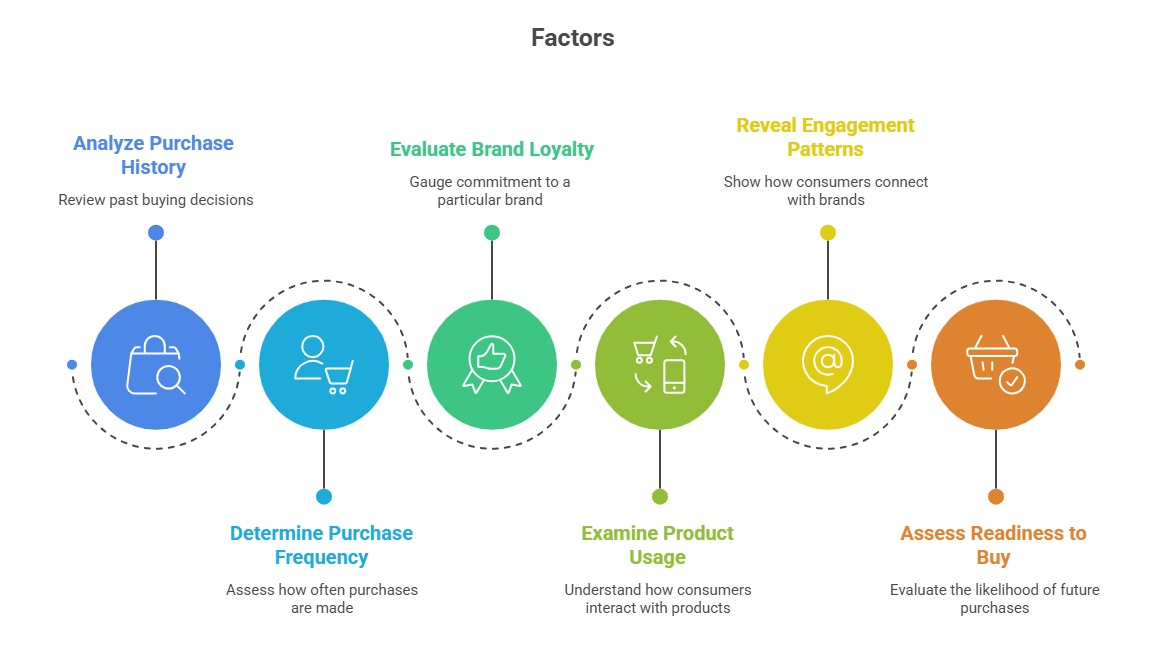
Benefits: Enables personalized marketing, recommending products to frequent buyers, or re-engaging lapsed customers.
Example: An online retailer offers discounts to returning customers and exclusive previews for high-value purchasers.
Behavioral segmentation improves customer experience by aligning offers and communications with actual user actions.
Psychographic Segmentation
Segments based on psychological attributes such as lifestyle, interests, opinions, values, and personality traits.
Data Collection: Often requires surveys, social media insights, or third-party data due to its subjective nature.
Marketing Use: Helps create emotional connections by targeting consumers’ motivations and aspirations.
Example: A fitness brand targets wellness-focused and environmentally conscious consumers with tailored messaging.
Psychographic insights deepen understanding of customers beyond observable traits, enhancing engagement strategies.
Geodemographic Segmentation
Combines geographic and demographic data to cluster consumers based on their location-linked lifestyle characteristics.
Applications: Retail site selection, localized marketing campaigns, and regional product adaptations.
Example: A fast-food chain designs menus suited to urban vs. rural areas or different cultural regions.
Benefits: Offers granular targeting by considering environmental and contextual factors influencing consumer behavior.
Geodemographic segmentation enables businesses to address location-specific preferences effectively.

Class Sessions
Sales Campaign

We have a sales campaign on our promoted courses and products. You can purchase 1 products at a discounted price up to 15% discount.