Effective implementation of machine learning (ML) in business requires more than just technical expertise.
Ethical practices, data quality, model understandability, and evaluating the return on investment are critical factors that influence the success and sustainability of ML initiatives.
Businesses must navigate these considerations carefully to maximize benefits while minimizing risks and ensuring stakeholder trust.
Ethical and Responsible AI: Bias Detection and Fairness Assessment
Ethical and responsible AI focuses on bias detection and fairness assessment to ensure machine learning models do not perpetuate or amplify biases present in training data, which can lead to unfair outcomes.
Detecting bias involves applying statistical tests, fairness metrics, and continuous auditing to identify disparate impacts across demographic groups.
Implementing fairness-aware algorithms, using inclusive datasets, and promoting transparency are essential to maintaining ethical standards.
Responsible AI also requires clear documentation, active stakeholder engagement, and adherence to legal frameworks such as GDPR and algorithmic accountability guidelines.
By prioritizing ethics in AI, organizations foster trust, reduce reputational risks, and align their systems with broader societal values.
Data Quality Requirements for Model Success
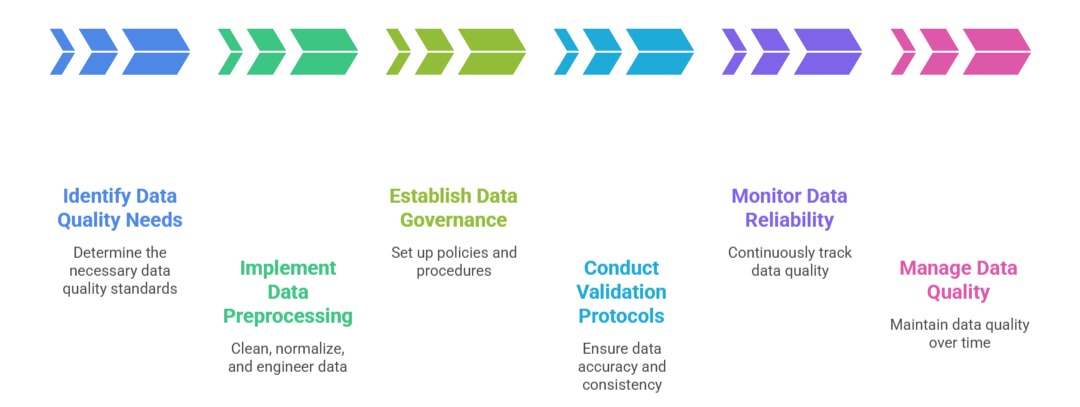
High-quality data—accurate, complete, consistent, and timely—is essential for building reliable machine learning models, as poor data quality can lead to misleading predictions, higher error rates, and ineffective outcomes.
Data preprocessing steps such as cleaning, handling missing values, normalization, and feature engineering play a critical role in preparing data for modeling.
Establishing strong data governance practices, validation protocols, and continuous monitoring further ensures long-term data reliability.
Ultimately, effective data quality management is an ongoing effort that directly impacts model accuracy and overall business relevance.
Balancing Model Complexity with Interpretability for Business Stakeholders
Balancing model complexity with interpretability is essential for business stakeholders, as highly complex models like deep learning and ensemble methods may offer superior accuracy but often reduce transparency.
In contrast, interpretable models such as decision trees and linear regression support clearer understanding, easier debugging, and regulatory compliance.
Explainability tools like SHAP and LIME help clarify how complex models make decisions, bridging the gap between performance and transparency.
Ultimately, selecting the right model requires weighing predictive power against interpretability based on the application context and regulatory needs. Striking this balance enhances stakeholder trust, promotes accountability, and supports successful adoption.
Cost-Benefit Analysis of Implementing Machine Learning Solutions
Implementing machine learning solutions requires significant investment in infrastructure, talent acquisition, data management, model development, and ongoing maintenance.
However, the benefits such as automation, improved decision accuracy, enhanced customer experiences, and competitive advantag can offer substantial returns.
A thorough cost-benefit analysis includes estimating ROI, evaluating payback periods, and ensuring strategic alignment with business goals.
Pilot projects and phased rollouts help mitigate risks while delivering incremental value. Continuous performance tracking further ensures sustained benefits and guides future investments.
Ultimately, economic evaluation helps ground ML initiatives in business realities and optimize resource utilization.

Class Sessions
Sales Campaign

We have a sales campaign on our promoted courses and products. You can purchase 1 products at a discounted price up to 15% discount.