Personalization in customer analytics leverages comprehensive customer data to tailor marketing campaigns, recommend appropriate products, optimize service delivery, and maintain compliance with privacy regulations.
By delivering relevant experiences, businesses increase engagement, conversion, and loyalty, while also addressing ethical and legal responsibilities.
Using Customer Data for Personalized Marketing Campaigns
Personalized marketing uses various types of customer data to create targeted campaigns that resonate with individual preferences and behaviors.
Segmentation-based personalization categorizes customers by transactional history, engagement, and demographic factors to deliver tailored promotions.
Event-triggered personalization activates communication based on specific actions, such as cart abandonment or price drops. Real-time personalization dynamically adjusts marketing messages based on current customer behavior and location.
For example, brands like Shein utilize customer segmentation to recommend products based on shopping history and style preferences.
Domino’s sends personalized mobile push notifications promoting deals tailored to past orders, enhancing relevancy and conversions.
Recommendation Systems and Product Cross-Sell Opportunities
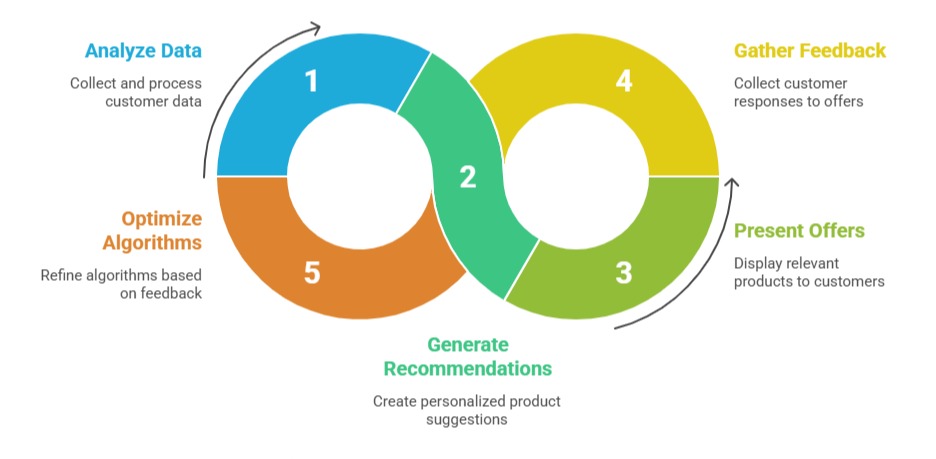
Recommendation engines analyze previous purchases, browsing behaviors, and customer profiles to suggest products or services that a customer is likely to buy.
These systems increase average order value and customer satisfaction by presenting relevant offers. Intelligent on-site messaging, like Old Navy’s approach, suggests complementary products to customers, creating cross-sell opportunities without disrupting the shopping experience.
Retailers optimize recommendations by combining collaborative filtering, content-based filtering, and AI algorithms, enhancing personalization beyond simple purchase history.
Optimizing Customer Service through Operational Analytics
Operational analytics monitors and improves customer service activities by analyzing call center metrics, response times, and customer feedback.
Personalization enhances support by providing context-aware assistance customized to customer history and preferences.
Brands increasingly use AI chatbots with personalized responses and proactive engagements to solve problems efficiently. Customer segmentation for support prioritization ensures high-risk or high-value customers receive timely attention.
Privacy and Compliance Considerations in Customer Analytics
Handling customer data requires adherence to privacy laws such as GDPR, CCPA, and industry-specific regulations. Businesses must obtain clear consent, implement data minimization principles, and secure data storage and processing.
Transparent data practices, anonymization techniques, and regular audits help build trust and avoid legal penalties. Additionally, ethical considerations demand avoiding intrusive personalization that could alienate customers or violate privacy expectations.

Class Sessions
Sales Campaign

We have a sales campaign on our promoted courses and products. You can purchase 1 products at a discounted price up to 15% discount.