Aligning analytics initiatives with the broader organizational context is critical to their success. Understanding the constraints, resources, regulatory environment, and industry dynamics helps ensure that analytics solutions are feasible, relevant, and impactful.
This alignment enables organizations to capitalize fully on data insights while navigating operational limitations and compliance requirements.
Organizational Constraints and Industry Dynamics
Organizations face a variety of constraints that affect analytics initiatives, including:
1. Resource limitations: Budgetary restrictions, insufficient staffing, or limited technical infrastructure can limit analytic scope and scale.
2. Legacy systems: Outdated technologies and data silos complicate data integration and real-time analytics.
3. Industry competition: Competitive pressures may dictate analytics priorities, such as speed to market or customer insights.
4. Organizational culture: Resistance to change or siloed departments can impede collaboration and adoption of analytics.
Examples of constraints include a bank needing to comply with new regulations before a deadline, or a firm dependent on a single expert to maintain a critical legacy system.
Industry dynamics such as regulatory changes, customer expectations, or technological trends also influence how analytics projects are scoped and executed.
Assessing Data Availability and Quality for Problem-Solving
Data is the foundation of analytics, so evaluating its availability and quality is essential:
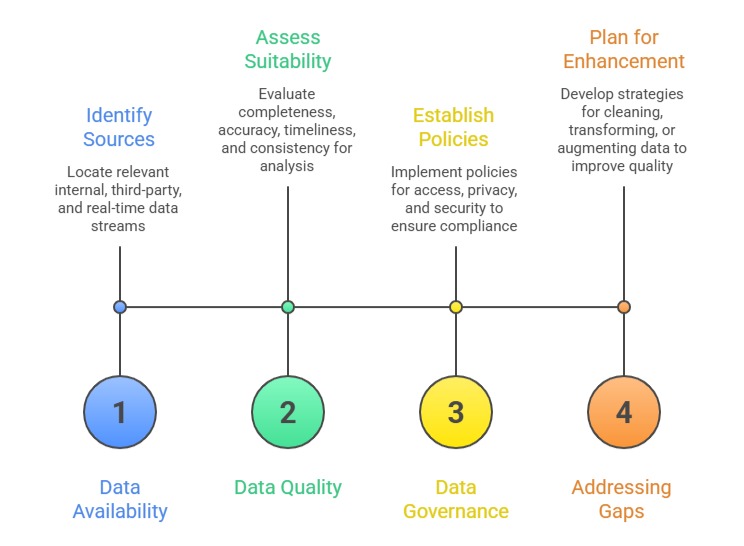
Without reliable data, analytics results risk being misleading or unusable. Early assessment prevents project delays and aligns expectations.
Resource Evaluation: Tools, Infrastructure, and Team Capabilities
Effective analytics requires appropriate tools and human expertise:
1. Analytics tools: Software for data extraction, processing, visualization, and modeling (e.g., SQL, Python, Tableau, Power BI).
2. Infrastructure: Scalable computing environments, cloud platforms, and databases to handle data volume and complexity.
3. Team skills: Data scientists, business analysts, IT professionals, and domain experts must collaborate effectively.
4. Budget and time: Adequate funding and realistic timelines are necessary to complete analytics projects successfully.
Evaluating these resources upfront helps optimize project design and execution.
Regulatory and Compliance Considerations
Analytics projects must navigate evolving legal and ethical standards:
1. Data privacy laws: Compliance with regulations like GDPR, HIPAA, or CCPA governing personal data collection and use.
2. Industry-specific regulations: Ensuring analytics processes meet sector rules (e.g., financial reporting, healthcare standards).
3. Ethical use: Avoiding biases, ensuring transparency, and protecting stakeholder interests.
4. Auditability: Maintaining documentation and reproducibility to support regulatory audits and governance.
Proactively addressing compliance mitigates risks associated with data misuse or legal penalties.

Class Sessions
Sales Campaign

We have a sales campaign on our promoted courses and products. You can purchase 1 products at a discounted price up to 15% discount.