Sampling and data collection are foundational practices in business analytics that allow organizations to gather representative and high-quality data for analysis.
Proper sampling strategies, data collection techniques, and awareness of potential biases ensure that analyses are accurate and generalizable to larger populations or processes.
Sampling Strategies
Different approaches to sampling help ensure the collected data accurately reflects the population. Common strategies include:
1. Random Sampling: Each member of the population has an equal chance of selection. This approach reduces selection bias and supports simple probability theories.
2. Stratified Sampling: The population is divided into subgroups or strata (e.g., age groups, regions), and samples are drawn from each stratum proportionally. This method enhances representativeness of diverse groups.
3. Systematic Sampling: Selection occurs at regular intervals from a sorted list (e.g., every 10th customer). It is simpler to implement but requires caution against hidden patterns in population order.
Each method has trade-offs between simplicity, cost, and representativeness.
Sample Size Determination and Representativeness
Choosing the right sample size ensures findings are statistically reliable and generalizable:
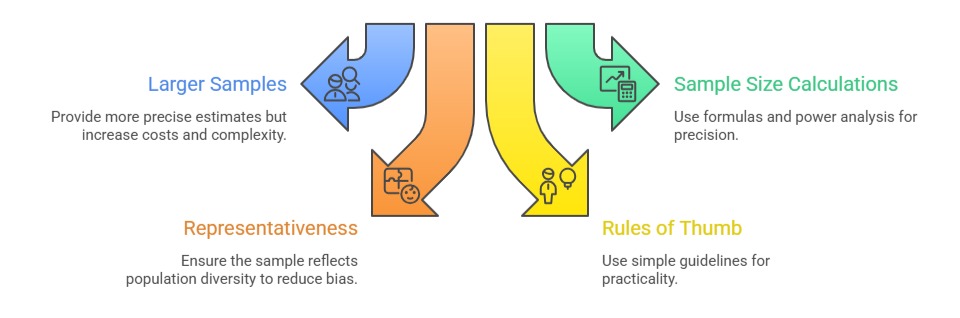
Adequate sample sizes combined with appropriate strategies yield trustworthy insights.
Data Collection Methods
Various techniques are available depending on business needs:
1. Surveys: Collect structured data directly from customers or employees through questions. Suitable for gathering opinions, preferences, and demographic information.
2. Transactional Data: Automatically captured during business operations, such as sales logs, website clicks, or sensor readings. Rich in volume and often real-time.
3. Sensor Data: Collected via IoT devices or monitoring systems to track environmental conditions, machinery performance, or consumer behaviors.
Each source offers unique strengths; combining methods can provide comprehensive perspectives.
Sampling Bias and Validity Considerations
Bias arises when the sample does not accurately reflect the population due to systematic errors, threatening the validity of conclusions.
1. Selection Bias: Occurs when certain groups are over- or under-represented.
2. Nonresponse Bias: Results from individuals not participating or answering in surveys.
3. Measurement Bias: Inaccuracies in data collection instruments or procedures.
Mitigating bias involves careful sampling design, increasing response rates, validating instruments, and adjusting analyses with statistical techniques.

Class Sessions
Sales Campaign

We have a sales campaign on our promoted courses and products. You can purchase 1 products at a discounted price up to 15% discount.