Customer analytics leverages data to understand and optimize customer behavior, preferences, and value over time.
Key techniques include calculating customer lifetime value (CLV), conducting cohort analyses to track groups of customers, mapping customer journeys to identify critical touchpoints, and utilizing diverse data sources like transactional, behavioral, and psychographic information for comprehensive insights.
These approaches enable businesses to tailor strategies, improve satisfaction, and drive profitability.
Customer Lifetime Value (CLV) Calculation and Prediction
CLV estimates the total revenue or profit a business expects from a customer over their entire relationship.
Basic CLV Formula:
CLV= Average Purchase Value × Purchase Frequency × Customer Lifespan
Historical vs. Predictive CLV: Historical CLV uses past data, while predictive models incorporate behavioral and demographic factors and forecast future value using algorithms.
Business Use: CLV informs marketing spend, customer retention efforts, and segmentation, prioritizing high-value customers.
Example: If average purchase value is $100, frequency 5 times/year, and average lifespan 3 years, then CLV = $100 × 5 × 3 = $1,500.
Cohort Analysis: Understanding Customer Groups and Behavioral Patterns
Segmenting customers into cohorts based on shared characteristics or behaviors (e.g., sign-up month).
Purpose: Tracks retention, engagement, and revenue over time within cohorts to detect patterns and lifecycle stages.
Use Case: Identify which cohort has higher repeat purchases or long-term engagement, guiding targeted interventions.
Cohort analysis reveals trends invisible in aggregate data, facilitating personalized marketing and improved loyalty.
Customer Journey Mapping and Touchpoint Analysis
Customer Journey: Visualizes the end-to-end experience customers have with a brand across multiple channels.
Touchpoints: Specific interactions such as website visits, customer service, or purchase moments.
Analysis: Evaluates conversion rates, pain points, and satisfaction at each stage.
Benefit: Identifies opportunities to enhance experience, reduce churn, and increase lifetime value.
Journey mapping bridges data with customer emotions and expectations, enabling holistic strategy development.
Data Sources for Customer Analytics: Transactional, Behavioral, Psychographic
Customer analytics relies on diverse data sources to gain a comprehensive understanding of customer behavior and preferences.
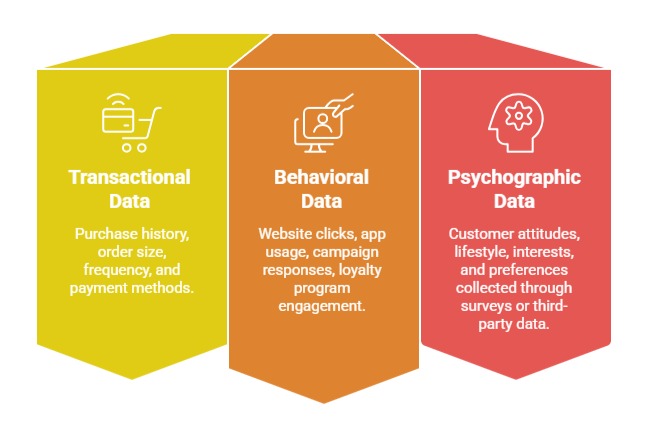
Combining these data types enriches customer profiles and improves segmentation accuracy, resulting in more relevant offers and communications.

Class Sessions
Sales Campaign

We have a sales campaign on our promoted courses and products. You can purchase 1 products at a discounted price up to 15% discount.