Business analytics encompasses a range of analytical approaches that help organizations understand their past, diagnose problems, forecast the future, and prescribe actions.
These types are essential for transforming data into actionable insights that drive strategic decision-making and operational efficiency.
The main types of business analytics include descriptive, diagnostic, predictive, and prescriptive analytics, each serving distinct but complementary purposes.
Descriptive Analytics: Understanding What Has Happened
Descriptive analytics is foundational and focuses on analyzing historical data to summarize past business performance. It answers the question: "What has happened?"
Common tools include dashboards, reports, and key performance indicators (KPIs) that provide snapshots of sales trends, website traffic, customer demographics, and financial results.
By converting raw data into easy-to-understand formats such as charts and graphs, descriptive analytics allows businesses to recognize patterns and trends that inform strategic planning.
Examples include monthly sales summaries, customer retention rates, and production output tracking.
It provides a clear, data-supported overview of organizational health and areas needing attention.
Diagnostic Analytics: Investigating Why Events Occurred
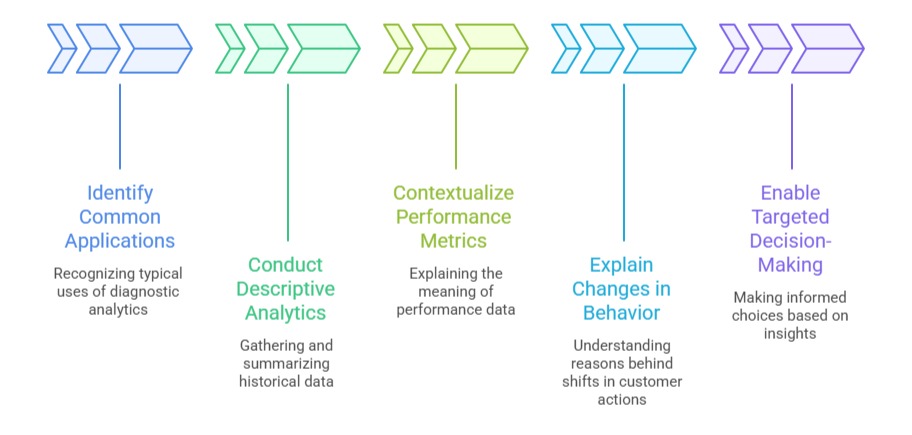
Diagnostic analytics delves deeper to understand the reasons behind observed outcomes. It addresses the question: "Why did it happen?"
Techniques such as data mining, drill-down analysis, and correlation studies help uncover root causes of trends or anomalies.
For example, if sales declined in a quarter, diagnostic analytics would explore underlying factors such as customer feedback, marketing effectiveness, or supply chain disruptions.
Predictive Analytics: Forecasting Future Outcomes
Predictive analytics uses historical data and advanced statistical models, including machine learning, to forecast what might happen. It tackles the question: "What is likely to happen in the future?"
By identifying patterns and trends, predictive analytics supports proactive business strategies, such as anticipating customer churn, demand forecasting, and risk assessment.
Examples include sales forecasting, credit scoring, and predictive maintenance scheduling.
This forward-looking approach enables organizations to reduce uncertainty and optimize planning and resource allocation.
Prescriptive Analytics: Recommending Actions to Achieve Desired Outcomes
Prescriptive analytics goes beyond forecasting by suggesting specific actions and strategies to reach business goals. It answers "What should we do?" by using optimization algorithms, simulation, and decision analysis to recommend best courses of action.
This type of analytics integrates insights from descriptive, diagnostic, and predictive analytics to provide data-driven recommendations.

Class Sessions
Sales Campaign

We have a sales campaign on our promoted courses and products. You can purchase 1 products at a discounted price up to 15% discount.