Pricing analytics is a strategic approach that helps businesses optimize prices by analyzing customer sensitivity, competitive positioning, and market demand dynamics.
Through data-driven techniques, companies can implement dynamic pricing models, understand price elasticity, and ultimately enhance revenue and profitability by balancing price and volume effectively.
Price Elasticity Analysis: Understanding Customer Sensitivity to Prices
Price elasticity measures how demand for a product changes in response to price changes. A product is considered elastic if demand significantly drops with a slight price increase, and inelastic if demand remains stable despite price fluctuations.
1. Elasticity helps identify which products or customer segments are more price-sensitive.
2. Enables targeted pricing strategies, discounts, or premium pricing.
3. forecasting the impact of price changes on sales and revenue.
Example: Elasticity analysis allows retailers to predict how a 5% price increase might reduce demand and adjust accordingly to optimize profit.
Competitive Pricing Analysis and Market Positioning
Competitive pricing analysis compares a company’s prices to those of rivals to determine market positioning.
1. Regular benchmarking against competitors ensures prices are aligned with market expectations.
2. Businesses analyze competitor promotions, product assortments, and price points to identify opportunities for differentiation.
3. Pricing decisions are informed by competitor moves while considering brand value and customer willingness to pay.
This analysis supports strategic positioning, balancing cost leadership and premium value.
Dynamic Pricing Strategies Informed by Demand Analytics
Dynamic pricing adjusts prices in real time based on demand fluctuations, inventory levels, competitor pricing, and customer behavior.
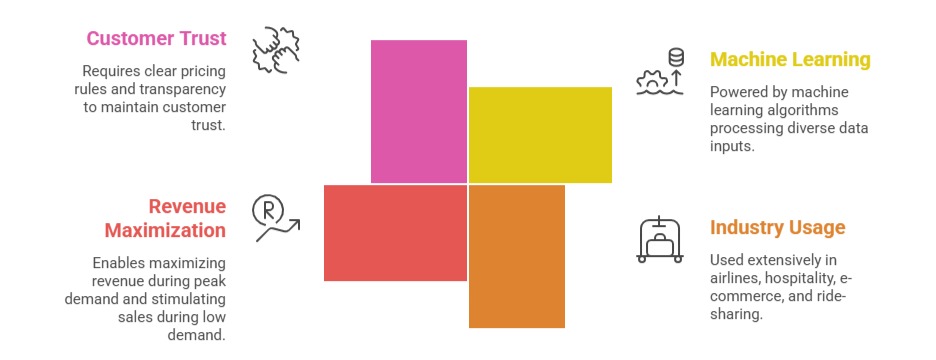
Dynamic pricing enhances agility and responsiveness, optimizing revenue across market conditions.
Revenue Optimization through Price-Volume Relationships
Understanding the interplay between price and sales volume is critical to maximizing total revenue.
1. Pricing too high may reduce volume and decrease revenue; pricing too low might increase volume but not enough to maximize profit
2. Pricing analytics models simulate and identify optimal price points that yield the best revenue or margin.
3. Incorporates elasticity, competitor data, and cost structures to guide decisions.
Effective revenue optimization strategies leverage continuous data analysis to refine pricing dynamically.

Class Sessions
Sales Campaign

We have a sales campaign on our promoted courses and products. You can purchase 1 products at a discounted price up to 15% discount.