USD ($)
$
United States Dollar
Euro Member Countries
India Rupee
د.إ
United Arab Emirates dirham
ر.س
Saudi Arabia Riyal

Structuring Professional Penetration Test Reports

Lesson 41/44 | Study Time: 20 Min

A professional penetration test report is a vital document that effectively communicates the findings, risks, and recommendations derived from an organization’s security assessment.

While technical details are essential for the security team, the report must also be accessible to executive management, compliance officers, and stakeholders without technical backgrounds.

A well-structured report not only provides clarity but also facilitates actionable insights that can drive security improvements. 

Essentials of Penetration Test Reports

To support remediation, governance, and compliance, pen test reports must be both detailed and accessible. Below are the key essentials that guide their structure and purpose.


Key Objectives:


1. Communicate vulnerabilities clearly and accurately.

2. Explain risks and potential impacts in understandable language.

3. Offer prioritized mitigation strategies.

4. Maintain transparency, traceability, and reproducibility.


Audience:


1. Technical teams: Require detailed findings, technical details, and proof-of-concept.

2. Management: Focus on high-level risks, business impacts, and strategic recommendations.

3. Auditors and compliance bodies: Need documented scope, methodology, and evidence for validation.

Core Components of a Penetration Test Report
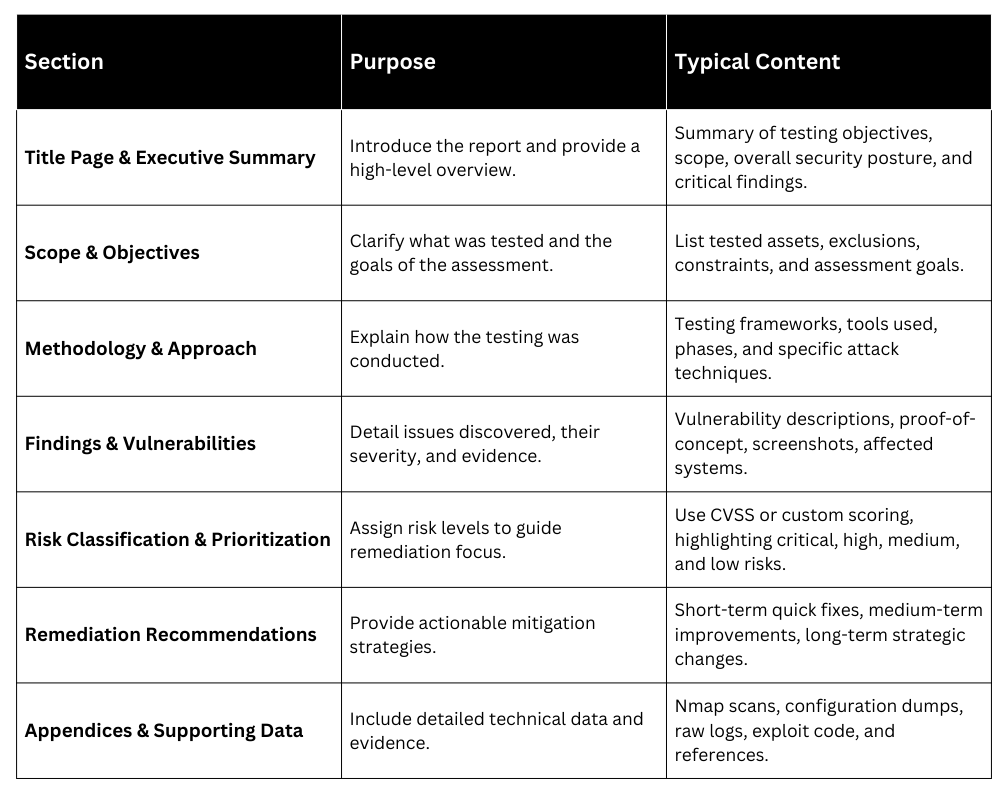
Note: Keep each section concise but detailed enough for the target audience. Use high-level summaries for management and detailed technical descriptions for engineers.

Formatting Best Practices

Well-structured formatting enhances communication and supports accurate analysis. Below are the essential practices that help create polished, reliable security documents.


1. Consistency: Use a clear, uniform template with consistent headers, numbering, and font styles.

2. Clarity: Write in plain language; avoid jargon unless explaining technical terms.

3. Visual Aids: Incorporate tables, charts, and diagrams to illustrate complex points.

4. Reproducibility: Include detailed steps, commands, and tools used to allow verification and follow-up testing.

5. Traceability: Reference findings back to vulnerability identifiers, CVEs, or framework mappings like MITRE ATT&CK.

Industry-Standard Templates & Examples

Many organizations adopt templates from reputable sources such as OWASP and NIST to structure their security assessments. These templates typically include sections covering scope, methodology, findings, risk evaluation, and recommendations.

A variety of open-source and commercial templates are also available—either free or for purchase—and can be customized to align with specific organizational policies and requirements.


Sample Resources:


1. OWASP Penetration Test Reporting Standard (OPTRS) – a structured, machine-readable format.

2. TERASORT or TCM Security templates available online in LaTeX, Word, or Markdown formats.

3. GitHub repositories with example reports (e.g., h0tPlug1n's GitHub repo).
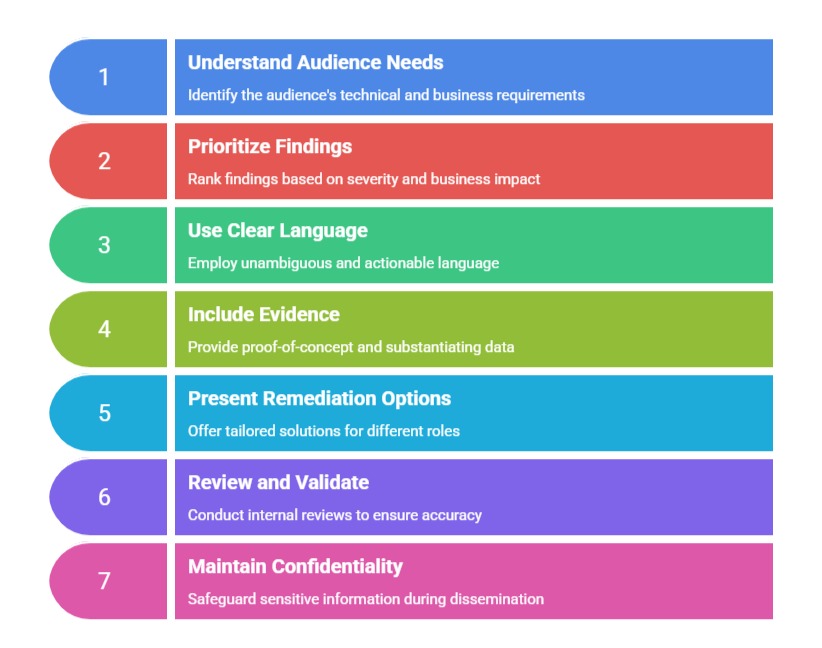
Tips for Writing Effective Penetration Test Reports

Jake Carter

Jake Carter

Product Designer
Profile

Class Sessions

1- Deep Passive Reconnaissance 2- Active Reconnaissance Techniques 3- Traffic Analysis & Packet Crafting Fundamentals 4- Identifying Attack Surface Expansion Paths 5- Advanced Network Mapping & Host Discovery 6- Bypassing Firewalls & IDS/IPS 7- Man-in-the-Middle Attacks (ARP Spoofing, DNS Manipulation) 8- VLAN Hopping, Port Security Weaknesses, and Network Segmentation Testing 9- Windows & Linux Privilege Escalation: Advanced Enumeration & Kernel-Level Attack Paths 10- Exploiting Misconfigurations & File/Service Permission Abuse 11- Bypassing UAC, sudo, and Restricted Shells 12- Credential Dumping & Token/Key Abuse 13- Persistence Techniques (Registry, Scheduled Tasks, SSH Keys) 14- Tunneling & Port Forwarding (SOCKS Proxy, SSH Tunnels, Chisel Basics) 15- Pivoting in Multi-Layered Networks 16- Data Exfiltration Concepts & OPSEC Considerations 17- Server-Side Attacks (Advanced SQL Injection, Template Injection, Server-Side Template Injection - SSTI) 18- Authentication & Authorization Attacks (JWT Abuse, Session Misconfigurations) 19- SSRF, XXE, Deserialization & Logic Flaw Identification 20- Advanced API Security Testing (Token Handling, Rate-Limiting Bypass Concepts) 21- Wi-Fi Security Attacks (WPA3 Considerations, Enterprise Networks) 22- Rogue APs & Evil Twin Concepts 23- Mobile App Security Overview (Android & iOS Attack Surface, Static/Dynamic Testing) 24- IoT Device Weaknesses (Firmware Analysis Basics, Insecure Protocols, Hardcoded Credentials) 25- Cloud Service Models & Shared Responsibility (AWS, Azure, GCP basics) 26- Cloud Misconfigurations (IAM, Storage Buckets, Exposed Services) 27- Container & Kubernetes Security (Namespaces, Privilege Escalations, Misconfigurations) 28- Virtualization Weaknesses & Hypervisor Attack Concepts 29- Malware Behavior Analysis (Dynamic vs Static) 30- Exploit Development Concepts (Buffer Overflow Fundamentals, Shellcode Basics) 31- Reverse Engineering Essentials (Strings, Disassembly, Logic Flow Understanding) 32- Detection & Evasion Techniques (Sandbox Evasion Concepts) 33- Automating Recon & Scans (Python/Bash/PowerShell Basics) 34- Writing Custom Enumeration Scripts 35- Tool Customization (Modifying Payloads, Extending Existing Tools Ethically) 36- Data Parsing, Reporting & Workflow Automation 37- Threat Intelligence Integration & TTP Mapping 38- Attack Path Mapping (MITRE ATT&CK Alignment) 39- Social Engineering Campaign Planning (Ethical Boundaries & Simulations) 40- Blue Team Evasion Concepts (OPSEC, Log Evasion Principles) 41- Structuring Professional Penetration Test Reports 42- Mapping Findings to Risk Ratings (CVSS, Impact Assessment) 43- Presenting Findings to Executives and Technical Teams 44- Prioritizing Remediation and Security Hardening Guidance