In modern cybersecurity and risk management landscapes, generating accurate, timely, and comprehensive reports is vital for decision-making and communication across technical teams, management, and stakeholders.
Manual report drafting, especially for complex risk assessments, can be time-consuming, error-prone, and inconsistent. Artificial Intelligence (AI) significantly transforms this process by automating report generation, including risk summaries and executive overviews.
AI-powered tools analyze large datasets, extract key insights, and compose coherent, tailored reports that enhance clarity, consistency, and efficiency.
AI Techniques for Automated Report Drafting
Creating automated reports becomes more efficient and insightful through specialized AI methods. The following techniques highlight how AI supports smarter document generation.
1. Natural Language Generation (NLG): Converts structured and unstructured data into human-like text summaries, generating narrative explanations, insights, and recommendations.
2. Data Extraction and Summarization: AI extracts critical metrics, threat patterns, and assessment results from raw data, synthesizing them into concise risk summaries.
3. Template and Style Customization: Supports flexible report formats customized for different audiences (technical vs. executive), maintaining tone and terminology consistency.
4. Multimodal Content Integration: Combines textual data with visuals like charts, graphs, and heatmaps automatically for enriched understanding.
5. Contextual Intelligence: Incorporates organizational context, historical reports, and domain knowledge to generate relevant, actionable narratives.
6. Interactive Drafting Assistance: Enables users to prompt AI for specific sections, edits, or focus areas, enhancing collaborative report refinement.
These capabilities reduce manual overhead and facilitate timely, quality report delivery.
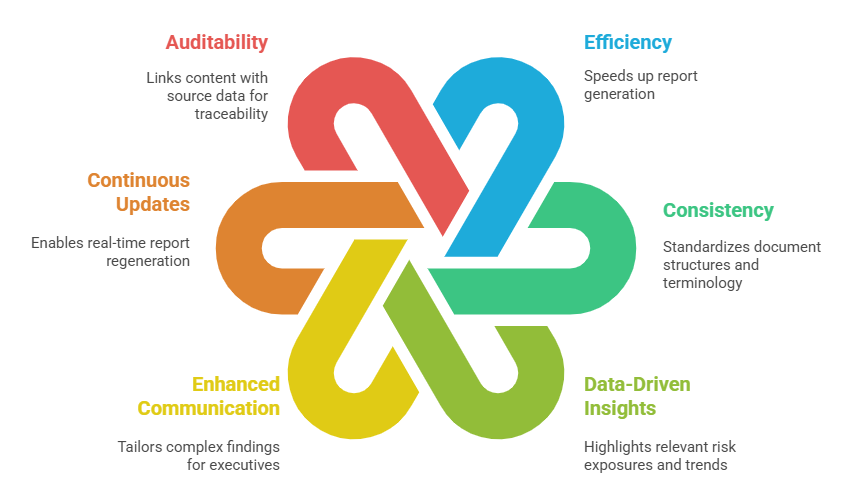
Benefits of AI-Assisted Risk Summary and Executive Overview Drafting
AI-driven tools help organizations turn complex data into polished, consistent executive insights. The following points highlight the key benefits of this approach.
Challenges and Best Practices
As AI transforms reporting workflows, certain complexities must be managed to ensure quality and trust. Here’s a list of challenges and the best practices that help overcome them.
1. Data Quality: AI-generated reports rely heavily on the accuracy and completeness of source data inputs.
2. Model Trust and Explainability: Users require transparency into AI logic and data grounding to trust automated narratives.
3. Customization Balance: Tailoring reports for diverse audiences requires precise tuning of models and templates.
4. Security and Privacy: Ensuring sensitive data is handled securely during AI processing and report distribution.
5. Human Oversight: Maintaining expert review workflows to validate or augment AI-generated content for critical reports.
