Question Answering (QA) Systems and Chatbots have become foundational components of modern NLP-driven applications, enabling machines to deliver direct, contextually appropriate responses instead of returning raw text or documents.
These systems combine language understanding, reasoning, and information retrieval to interpret user queries and deliver concise answers.
With advancements in deep learning, transformers, and large-scale pre-trained models, QA systems can now analyze intent, extract relevant knowledge, and adapt responses based on user behavior.
Chatbots, on the other hand, serve as interactive conversational agents capable of managing dialogues, maintaining context, and automating tasks such as customer support, tutoring, and personalized recommendations.
They leverage sophisticated architectures that process semantics, tone, and domain-specific instructions to ensure more natural and human-like interactions.
In contemporary settings, both QA systems and chatbots are deployed across healthcare, finance, education, and retail industries, where rapid, reliable information access is essential.
Their increasing integration with multimodal data and enterprise knowledge sources continues to push the boundaries of automation and real-time decision-making.
Question Answering Systems
Question Answering Systems enable machines to understand natural language questions and deliver precise, context-aware answers from text or knowledge sources.
They form a core component of intelligent search, virtual assistants, and automated knowledge discovery platforms.
1. Machine Reading Comprehension (MRC)
MRC models interpret passages and answer queries by understanding context, linguistic cues, and logical relations.
These systems analyze text structures, identify supporting evidence, and map user questions to relevant parts of the passage.
Modern approaches utilize transformer-based architectures that excel at grasping long-range dependencies, enabling more precise reasoning.
They operate effectively in domains like academic exams, customer service portals, and digital documentation platforms.
For instance, an MRC engine could answer: “What causes engine overheating?” by scanning an automotive manual and extracting the precise sentence.
Their key strength lies in extracting targeted answers rather than returning entire documents, which improves efficiency.
2. Open-Domain Question Answering
Open-domain QA systems respond to queries without depending on a single fixed dataset, retrieving information from broad sources such as web pages, databases, or organizational knowledge graphs.
They use hybrid pipelines combining retrieval modules with neural response generators that synthesize answers in natural language.
These systems require strong filtering capabilities to eliminate irrelevant or conflicting information, ensuring that responses remain trustworthy and coherent.
An example includes a system answering: “Who led the Apollo 11 mission?” by retrieving and summarizing verified sources.
This approach supports virtual assistants, search engines, and research tools, enabling users to obtain answers without navigating extensive content manually.
3. Extractive vs. Abstractive QA
Extractive systems locate exact spans of text from source material, while abstractive systems generate new phrasing based on semantic understanding.
Extractive methods are more grounded in the original content, ensuring factual reliability, while abstractive methods provide more natural, concise explanations.
Both require careful alignment between context and query interpretation to avoid hallucination or misinterpretation.
For instance, extractive QA might highlight: “Photosynthesis occurs in chloroplasts,” whereas an abstractive model might respond with: “Plants perform photosynthesis inside structures called chloroplasts.”
This duality offers flexibility depending on task complexity and domain-specific needs.
Chatbots
Chatbots are conversational AI systems that simulate human dialogue to provide information, assistance, and task automation through natural language interaction.
They play a vital role in customer service, virtual assistance, and intelligent user engagement across digital platforms.
1. Intent Recognition and Context Management
Chatbots rely on intent classification to identify user goals and maintain continuity across multi-turn conversations.
They analyze phrasing patterns, semantic cues, and previous exchanges to predict what users want, even when queries are ambiguous or incomplete.
Effective context tracking enables the bot to preserve conversational memory, making interactions feel coherent and human-like.
For instance, if a user asks, “Track my parcel” followed by “How long will it take?”, the bot must connect the second question with existing conversation details.
This capability is crucial for service industries, technical support, and interactive platforms where logical flow directly affects user satisfaction.
2. Task-Oriented Chatbots
These bots are designed for structured interactions like booking appointments, processing returns, or guiding users through troubleshooting steps.
They operate using predefined workflows combined with predictive language models that adapt responses to user inputs.
Task-oriented systems excel in environments that require accuracy, consistency, and minimal ambiguity.
A healthcare chatbot, for example, could assist patients with symptom checks, appointment reminders, or medication instructions based on verified protocols.
Their value lies in reducing operational load while maintaining high service standards across large user populations.
3. Generative Conversational Agents
Generative chatbots utilize large language models to produce free-form responses that mirror human conversational style.
They adapt dynamically to tone, context, and user-specific nuances, allowing for open-ended dialogue.
These agents are adept at education, creativity, mental well-being support, and personalized assistance due to their expressive language capabilities.
They can explain complex concepts, simulate debates, or generate suggestions tailored to a user’s preferences.
For example, a generative model can guide students through step-by-step mathematics explanations or assist programmers with debugging ideas. Their flexibility makes them ideal for broader conversational ecosystems.
Challenges and Limitations of Question Answering Systems & Chatbots
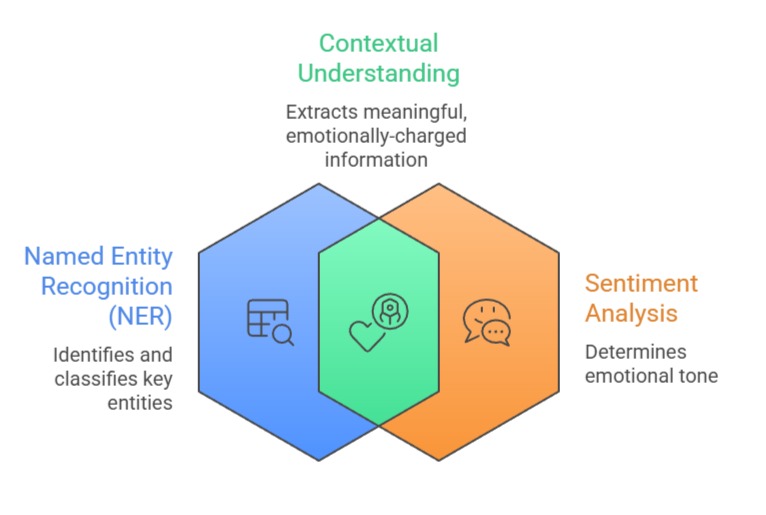 1. Ambiguity and Context Misinterpretation
A major challenge is accurately interpreting user intent, especially when the input is vague, incomplete, or contextually complex.
Users often rely on implicit clues or prior conversation details that the system may not capture effectively, leading to irrelevant or misleading responses.
Even sophisticated models struggle when multiple interpretations exist or when subtle linguistic differences change the meaning.
For example, a chatbot asked, “Can you tell me the status?” may misinterpret whether it refers to delivery, a ticket, or a service request.
Maintaining long-term conversational context also becomes difficult in multi-turn dialogues. These misinterpretations reduce trust and effectiveness in real-world deployments.
2. Dependency on Training Data Quality
The performance of QA systems and chatbots depends heavily on the dataset used for training. If the data is noisy, biased, incomplete, or lacks domain diversity, the model will replicate those deficiencies in its responses.
This can result in skewed interpretations, unfair decision-making, or factual errors, especially in sensitive areas like healthcare or legal assistance.
Models trained on outdated information may also generate obsolete answers, making continuous data-refresh cycles essential.
Additionally, systems trained on general-purpose corpora often struggle when deployed in niche or highly technical environments.
This dependency creates a barrier for organizations that lack large domain-specific datasets.
3. Handling Out-of-Scope or Unanswerable Queries
Many systems fail when faced with questions that fall outside their knowledge base. Instead of acknowledging uncertainty, they often generate incorrect or fabricated responses to appear helpful.
This becomes problematic in mission-critical settings where reliability is more important than answer fluency.
Detecting whether a question is answerable requires sophisticated mechanisms that many models still lack.
For instance, if a user asks a financial chatbot about medical procedures, the system may still attempt a guess.
The inability to decline or redirect irrelevant queries creates harmful user experiences and risks misinformation.
4. Limited Reasoning and Logical Inference
While language models excel at matching patterns, they still struggle with multi-step reasoning, symbolic logic, and tasks requiring structured thought.
QA systems may provide textually similar answers without fully understanding causal relationships or numerical reasoning within the query.
Chatbots may also give inconsistent responses when users ask follow-up questions that demand deductive or commonsense reasoning.
For example, a bot might correctly answer, “Tom is older than Jake,” but fail when asked, “Who is younger?” Limitations in reasoning capabilities restrict their application in fields like diagnostics, legal compliance, and technical troubleshooting.
5. Difficulty Maintaining Long Conversations
Chatbots often lose track of information over extended interactions, especially when users shift topics or revisit previous contexts.
Sustaining a coherent long-term dialogue requires memory persistence, coreference resolution, and the ability to reprioritize historical cues all of which remain challenging for most systems.
As a result, conversations may feel robotic or repetitive, leading to user frustration.
This limitation is especially evident in support workflows where customers discuss multi-step problems.
When context resets unexpectedly, the system may ask repetitive clarifying questions or provide solutions that have already been attempted.
6 Ethical Concerns and Misinformation Risks
QA systems and chatbots may unintentionally produce biased, offensive, or factually inaccurate content if not carefully monitored.
Even well-trained models may propagate stereotypes or amplify harmful patterns embedded in their training datasets.
In regulated domains such as healthcare, finance, and education, an incorrect answer can have serious consequences.
Moreover, generative chatbots can create authoritative-sounding misinformation, making it difficult for users to distinguish between validated answers and speculative outputs.
Ensuring safety, fairness, and factual integrity requires robust oversight mechanisms that many organizations still lack.
7 Scalability and Real-Time Computation Constraints
Delivering fast and accurate responses requires significant computational resources, especially for large transformer-based models.
Deploying these systems at scale—serving thousands or millions of users simultaneously—can quickly become expensive.
Latency becomes an issue in real-time environments like customer service or virtual assistants, where users expect instant replies.
Optimization techniques such as quantization or model distillation help, but they may reduce accuracy.
For smaller organizations, the infrastructure and cost barriers limit adoption.
Additionally, managing continuous model updates without interrupting service is a complex operational challenge.
8 Integration with External Systems
Chatbots often need to interact with APIs, databases, and enterprise software to deliver actionable results rather than just text.
However, establishing reliable integrations poses challenges related to data security, system consistency, and error handling.
If a backend system is unavailable or slow, the chatbot may deliver incomplete or incorrect responses.
Coordinating between NLP components and business logic modules requires robust engineering practices that many deployments overlook.
For example, a travel chatbot may fail to fetch booking details if the airline API is down, leading to user dissatisfaction.
This dependency chain introduces fragility into the overall system.

Class Sessions
Sales Campaign

We have a sales campaign on our promoted courses and products. You can purchase 1 products at a discounted price up to 15% discount.