Ethical hackers follow a strict code of conduct that governs their professional behavior, ensuring their activities promote security without causing harm. This code establishes accountability, trust, and professionalism in the cybersecurity community, protecting both the ethical hacker and the client.
Core Principles of the Ethical Hacker Code of Conduct
The effectiveness and credibility of ethical hacking depend on observance of well-established ethical norms. Outlined here are the central principles every ethical hacker is expected to uphold:
1. Obtain Proper Authorization: Ethical hackers must have explicit, documented permission from the organization before conducting any security testing or vulnerability assessments. Unauthorized testing is illegal and unethical.
2. Respect Privacy and Confidentiality: Maintain strict confidentiality about the data, systems, and vulnerabilities discovered. Do not disclose sensitive client information to unauthorized parties.
3. Operate Within Scope: Only test systems, networks, or applications explicitly included in the agreed-upon scope. Avoid accessing or interacting with out-of-scope resources or data.
4. Act Legally and Ethically: Ethical hackers must adhere to relevant laws and regulations, avoiding any activities that could damage systems or data intentionally or negligently.
5. Do No Harm: Conduct testing in a manner that minimizes risk of service disruption, data loss, or other impacts to systems and users. Use defensive techniques to avoid unintended consequences.
6. Report Findings Transparently: Provide clear, accurate, and comprehensive reports to the client, including all vulnerabilities found, their risk levels, and recommended remediation steps. Avoid deliberately withholding or misrepresenting information.
7. Avoid Conflicts of Interest: Do not engage in activities that could result in personal gain conflicting with professional responsibilities.
8. Continuous Learning and Professionalism: Stay current with cybersecurity knowledge, tools, and best practices. Maintain professional behavior in all communications and interactions.
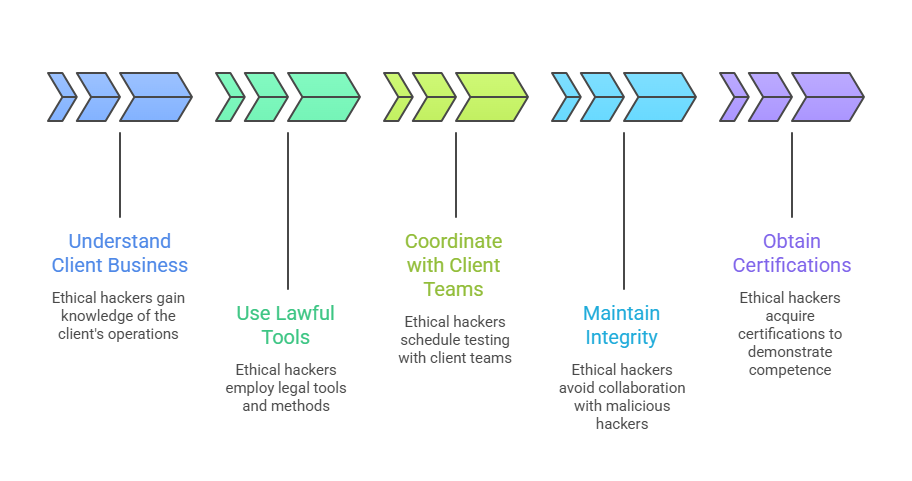
Responsibilities of Ethical Hackers
 Consequences of Violating the Code
Failure to follow the code of conduct compromises trust, safety, and legal integrity. The following points illustrate the potential consequences individuals may face:
1. Damage to client systems, loss of trust, and legal repercussions.
2. Blacklisting or loss of certification and professional standing.
3. Potential civil or criminal liability depending on jurisdiction and severity.
Example Code of Ethics Statements
1. “I will respect all applicable laws and regulations of any relevant jurisdiction.”
2. “I will disclose all vulnerabilities discovered to the proper authorities in the client organization.”
3. “I will not knowingly cause harm to the client’s systems or data.”
4. “I will conduct security testing only after explicit authorization.”
5. “I will maintain confidentiality regarding findings and client information.”

Class Sessions
Sales Campaign

We have a sales campaign on our promoted courses and products. You can purchase 1 products at a discounted price up to 15% discount.