In cybersecurity, understanding the concepts of vulnerability, threat, and exploit is fundamental for effective risk management and defense strategy development. These terms describe different but interrelated aspects of security incidents, mapping out how weaknesses in systems can become entry points for attacks and potential harm.
Vulnerability
A vulnerability is a weakness or flaw in a system, network, application, or process that can potentially be used by an attacker to gain unauthorized access or cause damage. Vulnerabilities can arise from software bugs, misconfigurations, weak passwords, unpatched systems, insecure coding practices, or human error.
By themselves, vulnerabilities do not cause harm but represent potential entry points or attack surfaces that adversaries can exploit. Examples include unpatched operating system flaws, SQL injection vulnerabilities in web applications, or default credentials on devices.
Threat
A threat refers to any potential or actual malicious activity, event, or actor capable of exploiting a vulnerability to compromise security. Threats can be intentional, such as hackers, malware, insider attacks, or unintentional, like system failures or natural disasters that disrupt services.
In cybersecurity, threats focus on actions that impact the confidentiality, integrity, or availability of information systems. Examples include ransomware campaigns, phishing attacks targeting credentials, or nation-state hacking groups targeting sensitive infrastructure.
Exploit
An exploit is the method or tool an attacker uses to take advantage of a vulnerability and launch an attack. Exploits can be pieces of malicious software, scripts, or sequences of commands tailored to breach or manipulate a vulnerable system.
Using exploits, attackers can gain unauthorized access, execute malicious code, steal data, or disrupt system operations. Examples include buffer overflow attacks, SQL injection payloads, or phishing emails crafted to exploit weaknesses in user security awareness.
Practical Implications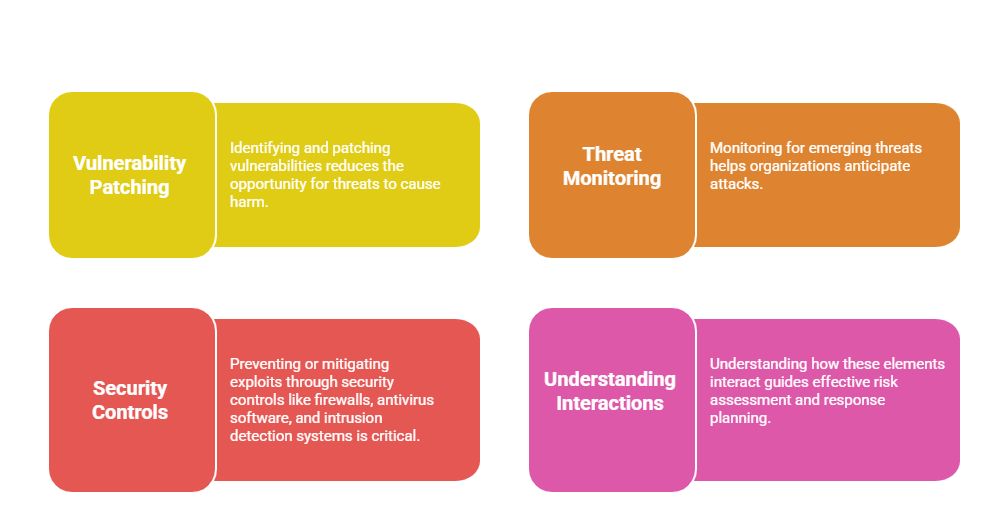

Class Sessions
Sales Campaign
We have a sales campaign on our promoted courses and products. You can purchase 1 products at a discounted price up to 15% discount.