USD ($)
$
United States Dollar
Euro Member Countries
India Rupee
د.إ
United Arab Emirates dirham
ر.س
Saudi Arabia Riyal

Applications in Customer Segmentation and Fraud Detection

Lesson 23/44 | Study Time: 20 Min

Customer segmentation and fraud detection are two critical application areas of machine learning and data analytics that help businesses optimize operations, enhance customer experience, and reduce losses. By leveraging data-driven insights, organizations can tailor marketing efforts, improve product offerings, and detect fraudulent activities proactively. 

Introduction to Customer Segmentation

Customer segmentation is the process of dividing a customer base into distinct groups sharing common characteristics such as demographics, behavior, preferences, or purchase history.

This segmentation allows businesses to deliver personalized marketing, offers, and experiences tailored to each group's needs and habits. Machine learning algorithms analyze transactional data, web interactions, and other behavioral metrics to form these segments dynamically.


Key Benefits:


1. Enhanced targeting and personalization

2. Improved customer retention and loyalty

3. More effective promotion and pricing strategies

4. Efficient resource allocation by focusing on high-value segments
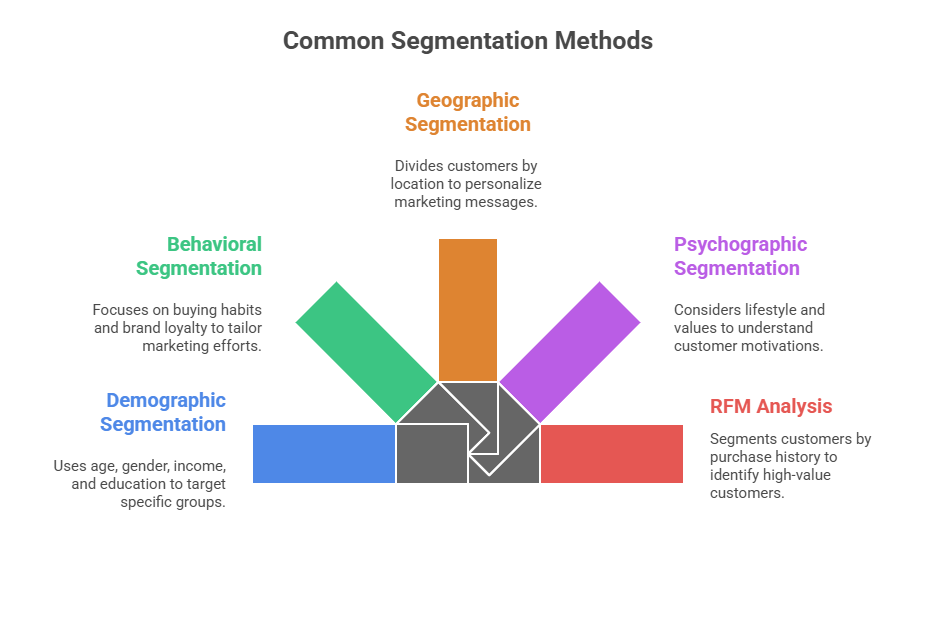
Advanced Applications in Customer Segmentation


1. Activation of new users by identifying early engagement patterns.

2. Predictive segmentation to anticipate churn risk or propensity to buy.

3. Localized marketing campaigns driven by geographic and temporal trends.

4. Dynamic personalization across channels to improve conversion rates.

Introduction to Fraud Detection

Fraud detection involves identifying and preventing unauthorized, deceptive, or illegal transactions across digital platforms, financial services, and other industries. Fraudsters continually evolve tactics, making machine learning indispensable for detecting subtle and emerging fraud patterns from massive volumes of transaction data.


Fraud Detection Workflow:


1. Data Collection: Gathering transaction data, user behavior, and device fingerprints.

2. Training Models: Using historical labeled data to recognize normal versus fraudulent patterns.

3. Real-time Scoring: Monitoring live transactions for anomalies.

4. Alert Generation and Investigation: Flagging suspicious activities for further review.
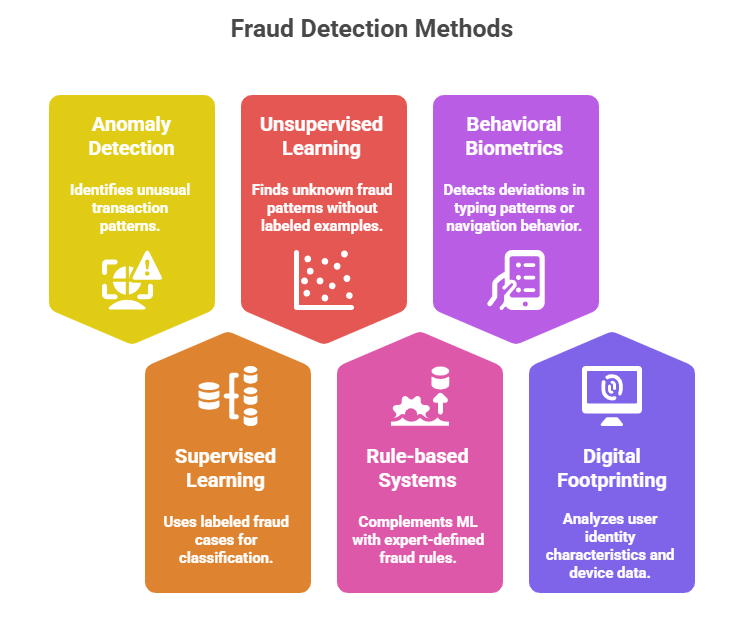

Impact and Use Cases


1. Minimizing financial losses due to fraudulent transactions.

2. Compliance with regulatory requirements such as Anti-Money Laundering (AML).

3. Enhancing customer trust by preventing account takeovers and scams.

4. Industry adoption spans banking, e-commerce, insurance, telecommunications, and government.

Chase Miller

Chase Miller

Product Designer
Profile

Class Sessions

1- What is Artificial Intelligence? Types of AI: Narrow, General, Generative 2- Machine Learning vs Deep Learning vs Data Science: Fundamental Differences 3- Key Concepts in Machine Learning: Models, Training, Inference, Overfitting, Generalization 4- Real-World AI Applications Across Industries 5- AI Workflow: Data Collection → Model Building → Deployment Process 6- Types of Data: Structured, Unstructured, Semi-Structured 7- Basics of Data Collection and Storage Methods 8- Ensuring Data Quality, Understanding Data Bias, and Ethical Considerations 9- Exploratory Data Analysis (EDA) Fundamentals for Insight Extraction 10- Data Splitting Strategies: Train, Validation, and Test Sets 11- Handling Missing Values and Outlier Detection/Treatment 12- Encoding Categorical Variables and Scaling Numerical Features 13- Feature Engineering: Selection vs Extraction 14- Dimensionality Reduction Techniques: PCA and t-SNE 15- Basics of Data Augmentation for Tabular, Image, and Text Data 16- Regression Algorithms: Linear Regression, Ridge/Lasso, Decision Trees 17- Classification Algorithms: Logistic Regression, KNN, Random Forest, SVM 18- Model Evaluation Metrics: Accuracy, Precision, Recall, AUC, RMSE 19- Cross-Validation Techniques and Hyperparameter Tuning Methods 20- Clustering Algorithms: K-Means, Hierarchical Clustering, DBSCAN 21- Association Rules and Market Basket Analysis for Pattern Mining 22- Anomaly Detection Fundamentals 23- Applications in Customer Segmentation and Fraud Detection 24- Neural Networks Fundamentals: Architecture and Key Components 25- Activation Functions and Backpropagation Algorithm 26- Overview of Deep Learning Architectures 27- Basics of Computer Vision: CNN Concepts 28- Fundamentals of Natural Language Processing: RNN and LSTM Concepts 29- Transformers Architecture 30- Attention Mechanism: Concept and Importance 31- Large Language Models (LLMs): Functionality and Impact 32- Generative AI Overview: Diffusion Models and Generative Transformers 33- Hyperparameter Tuning Methods: Grid Search, Random Search, Bayesian Approaches 34- Regularization Techniques: Purpose and Usage 35- Handling Imbalanced Datasets Effectively 36- Model Monitoring for Drift Detection and Maintenance 37- Fairness and Mitigation of Bias in AI Models 38- Interpretable Machine Learning Techniques: SHAP and LIME 39- Transparent and Ethical Model Development Workflows 40- Global Ethical Guidelines and AI Governance Trends 41- Introduction to Model Serving and API Development 42- Basics of MLOps: Versioning, Pipelines, and Monitoring 43- Deployment Workflows: Local Machines, Cloud Platforms, Edge Devices 44- Documentation Standards and Reporting for ML Projects

Sales Campaign

Sales Campaign

We have a sales campaign on our promoted courses and products. You can purchase 1 products at a discounted price up to 15% discount.
