The rapid growth of Automation and the Internet of Things (IoT) has transformed how organizations operate, how data is collected, and how decisions are made.
From smart devices and industrial sensors to automated systems and AI-driven processes, these technologies offer enormous benefits—greater efficiency, real-time insights, enhanced safety, and improved user experiences.
However, with this expansion comes a critical need for responsible design, deployment, and governance to ensure that automation and IoT systems remain ethical, secure, and trustworthy.
Responsible use focuses on developing systems that respect privacy, minimize unnecessary data collection, and operate transparently so users clearly understand how their data is being captured and used.
It also requires designing automated processes that are fair, explainable, and aligned with human values, avoiding hidden decision-making or excessive surveillance.
As IoT devices often operate continuously and in personal environments, ensuring strong security, secure communication, and safe data-handling practices is essential to prevent misuse or unauthorized access.
Another key aspect is accountability—organizations must clearly define who is responsible for errors, failures, or unintended consequences caused by automated or connected systems.
This includes monitoring system performance, maintaining audit trails, and developing human-in-the-loop mechanisms to ensure oversight where needed.
Ethical automation also considers broader societal impacts, such as job displacement, digital inequality, and the environmental footprint of connected devices.
1. Understanding the Dynamic Nature of Ethical Expectations
Ethical standards in data science are not static—they evolve as society, technology, laws, and cultural norms change.
Data scientists must continuously monitor new expectations around privacy, fairness, transparency, environmental responsibility, and AI accountability.
As technologies become more autonomous, users demand stronger safeguards and clearer explanations of how their data is used. Ethical obligations also shift as new risks emerge, such as deepfakes, hyper-personalization, or algorithmic discrimination.
Adapting to these shifts ensures data scientists stay aligned with public trust and regulatory compliance. It also prevents outdated ethical assumptions from causing harm or unintentionally violating user rights.
2. Integrating Continuous Learning and Skill Upgradation
Because ethical expectations evolve, data scientists must continuously update their technical, legal, and ethical knowledge.
This includes learning new fairness metrics, privacy-preserving techniques, explainability tools, and global regulations like GDPR, HIPAA, and emerging AI Acts.
Staying updated ensures professionals can recognize ethical blind spots and anticipate emerging risks before they become serious problems.
Continuous learning fosters a mindset of responsible innovation, where ethical reflection becomes part of everyday practice.
It also encourages collaboration with ethicists, domain experts, and legal teams to design more ethically robust solutions.
Without ongoing upskilling, ethical compliance quickly becomes outdated or ineffective.
3. Embedding Flexible Ethical Frameworks into Projects
Ethical frameworks must be adaptable rather than rigid checklists, because real-world scenarios often require context-specific evaluation.
Flexible frameworks allow teams to reassess harms, risks, and fairness issues throughout the project lifecycle rather than only at the beginning.
This adaptability ensures that systems remain ethical even when user behavior, data quality, market policies, or societal expectations change.
Continuous ethical impact assessments help identify unintended consequences earlier, enabling timely corrections.
Flexible frameworks also encourage a culture where raising ethical concerns is supported rather than discouraged.
Ultimately, dynamic frameworks enable organizations to future-proof their systems against emerging ethical challenges.
4. Aligning With Global Regulations and Industry Standards
As governments around the world introduce new AI and data protection laws, organizations must adapt rapidly to remain compliant.
This requires understanding cross-border regulations, data residency policies, algorithmic accountability laws, and sector-specific compliance standards.
Adapting to evolving regulations reduces legal risks, financial penalties, and reputational damage.
It helps data scientists create systems that follow “privacy by design,” “fairness by design,” and “security by design” principles.
Regulatory alignment also encourages transparency and responsible data governance practices across the organization.
Staying in sync with global standards fosters trust and allows ethical innovation to scale worldwide.
5. Preparing for Emerging Risks and Unintended Consequences
New ethical risks often arise before standards exist to regulate them—such as generative AI misuse, autonomous system failures, or IoT-driven surveillance.
Data scientists must proactively anticipate these risks by evaluating potential harms and societal impacts early.
This requires scenario analysis, stress testing, ethical foresight exercises, and diverse stakeholder consultations.
Preparing ahead helps organizations avoid crises and respond responsibly to unexpected behaviors in AI or automated systems.
Adapting early also ensures corrective actions can be taken before harms escalate.
This forward-looking approach ensures long-term resilience and ethical stability in fast-evolving technological environments.
6. Encouraging Cross-Disciplinary Ethical Collaboration
Adapting to evolving ethical standards requires continuous collaboration between data scientists, ethicists, policymakers, psychologists, sociologists, and legal experts.
Complex ethical dilemmas—such as predictive policing, biometric surveillance, or autonomous decision-making—cannot be solved by technical teams alone.
Cross-disciplinary input ensures diverse perspectives are considered, preventing bias or narrow interpretations of ethical guidelines.
Collaboration also helps clarify trade-offs between utility, privacy, fairness, and public interest. It strengthens the ethical robustness of solutions and makes systems more socially responsible.
By engaging multiple disciplines, organizations can predict future issues and align their ethical frameworks with broader societal needs.
7. Embedding Ethics into Organizational Culture and Leadership
Adapting to evolving ethical standards is not just a technical requirement—it must become a cultural priority supported by leadership.
Ethical culture encourages employees to raise concerns without fear and promotes transparency in model development, data usage, and decision-making.
When leaders champion ethical values, teams internalize them as part of everyday practice rather than treating ethics as a compliance checkbox.
Organizations with strong ethical cultures respond more quickly to emerging risks and regulatory changes.
This proactive mindset ensures systems remain safe, fair, and accountable even as technology grows more complex.
Ultimately, ethical culture helps organizations maintain public trust and long-term credibility.
8. Implementing Continuous Ethical Audits and Monitoring
Ethical risks do not end once a model is deployed—ongoing audits are essential to detect new harms, shifting biases, or misuse.
Continuous monitoring helps identify system drift, data integrity issues, or unintended behavior caused by changing user environments.
Ethical audits ensure that models remain aligned with societal norms even years after deployment.
They also help organizations stay compliant with new laws and evolving regulatory expectations.
This ongoing evaluation prevents small issues from becoming large crises.
Regular auditing turns ethics into a living, evolving process rather than a one-time project requirement.
9. Prioritizing Transparency and Explainability as Standards Evolve
As AI and data-driven decisions become more complex, transparency is becoming a non-negotiable ethical expectation.
Users, regulators, and stakeholders increasingly demand clear explanations of how algorithms make decisions and why certain outcomes occur.
Adapting to evolving standards means integrating explainability tools, user-friendly documentation, and transparent reporting practices.
This ensures that even complex models like deep learning remain accountable and understandable.
Transparency helps expose biases, increase fairness, and maintain trust in automated systems.
It also reduces confusion, misinformation, and fear among end users interacting with intelligent technologies.
10. Preparing Organizations for Future Ethical Innovations and Regulations
Ethical expectations will continue expanding as technologies like quantum computing, generative AI, neurotechnology, and autonomous robotics evolve.
Organizations must prepare by developing flexible governance structures, rapid compliance strategies, and adaptable AI life-cycle procedures.
Anticipating future ethical obligations allows companies to innovate responsibly without constantly rebuilding their frameworks.
This preparation reduces operational disruptions when new regulations arise and positions organizations as early adopters of responsible technology.
Ultimately, forward-thinking adaptation ensures long-term survival and leadership in a rapidly changing digital landscape.
Importance of Adapting to Evolving Ethical Standards
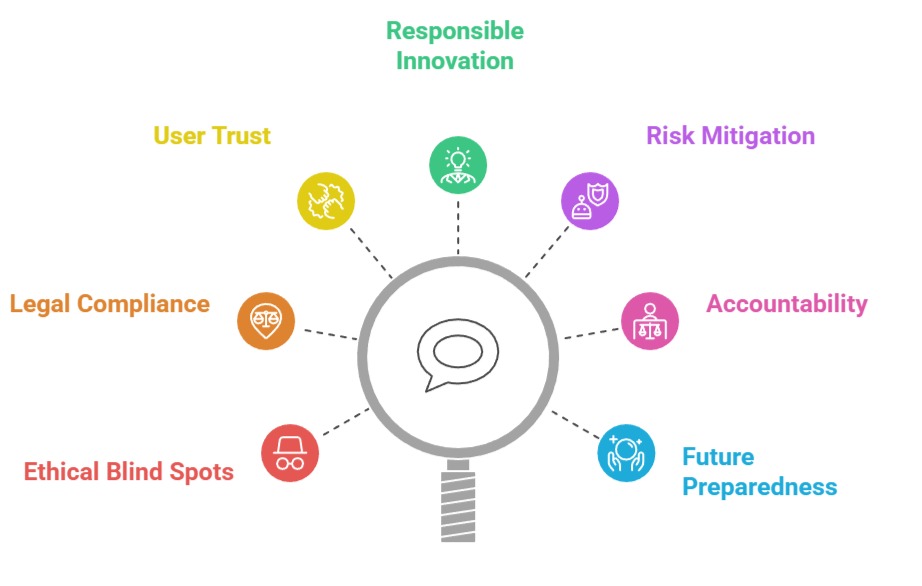 1. Prevents Ethical Blind Spots
As technologies evolve, previously unseen harms emerge—such as biased recommendations, facial recognition errors, or automated surveillance.
Adapting to new ethical insights prevents blind spots from harming users, marginalized groups, or society.
It keeps organizations alert to hidden impacts that outdated frameworks may overlook.
2. Ensures Compliance With Rapidly Changing Laws
Regulations like the EU AI Act, GDPR updates, and AI transparency rules evolve frequently.
Adapting to these standards prevents legal violations, financial penalties, and product bans.
It ensures data systems remain defensible and compliant across global markets and sectors.
3. Builds Long-Term User Trust
Users expect modern systems to protect privacy, be fair, and avoid manipulation.
Adapting to ethical expectations strengthens trust and prevents public backlash.
Trust becomes a competitive advantage, especially in industries dependent on user data and automated decision-making.
4. Supports Responsible Innovation
Ethical evolution ensures that innovation does not outpace safety.
By updating ethical frameworks regularly, organizations can adopt advanced technologies—such as autonomous systems, generative models, or IoT automation—without ignoring potential harms.
This leads to sustainable, responsible innovation.
5. Mitigates Emerging Risks Early
New risks such as deepfake fraud, biased automation, or autonomous failures can cause large-scale harm if ignored.
Constant adaptation helps organizations identify and mitigate these issues before they escalate. Early intervention prevents crises and strengthens system robustness.
6. Improves Organizational Accountability
Evolving ethical standards require organizations to clarify roles, update policies, and maintain transparent documentation.
This fosters accountability by ensuring every decision, model, or data process follows current ethical norms. Accountability reduces confusion, disputes, and internal failures.
7. Prepares Systems for Future Technological Shifts
As AI, automation, robotics, and IoT become more integrated into society, future ethical issues will emerge that we cannot fully predict today.
Adaptability ensures organizations remain prepared for uncertain future challenges. This future-proofing is crucial for long-term relevance and responsibility.

Class Sessions
Sales Campaign

We have a sales campaign on our promoted courses and products. You can purchase 1 products at a discounted price up to 15% discount.