Workplace ethics in data science refers to the professional standards, moral principles, and responsible behaviors expected from data scientists within an organizational environment.
Because data science involves access to highly sensitive data, powerful analytical tools, and decisions that can influence business strategies and people’s lives, workplace ethics is essential for maintaining trust, accountability, and fairness.
Ethical conduct ensures that data scientists act responsibly not only toward their employers but also toward customers, users, and society at large.
It covers areas such as confidentiality, transparency, fairness, respectful collaboration, responsible use of data, and adherence to laws and organizational policies.
Professional Integrity and Ethical Conduct in Data Science
Professional integrity and ethical conduct are foundational to responsible data science practice.
By upholding honesty, accountability, and respect in the workplace, data scientists ensure that data-driven decisions remain trustworthy, lawful, and socially responsible.
1. Respect for Confidentiality and Data Access Boundaries
Data scientists must strictly respect confidentiality by ensuring that sensitive or restricted data is never accessed, shared, or used without proper authorization.
They must follow organizational access controls, encryption protocols, and data classification rules to prevent unauthorized exposure.
Confidentiality extends to client information, business strategies, proprietary algorithms, and internal models.
Professionals must avoid downloading confidential data to personal devices or using it for personal projects.
Maintaining discretion in conversations and internal communications is equally important.
Breaches of confidentiality can result in legal consequences, loss of trust, and reputational damage.
Ethical workplace behavior requires treating all information with the highest-level security.
2. Honest and Accurate Reporting of Findings
Workplace ethics requires data scientists to communicate results honestly without manipulating visualizations, inflating performance metrics, or hiding negative outcomes.
They must disclose limitations, uncertainties, or flaws in models, allowing stakeholders to make informed decisions.
Pressure may arise from management to “massage data” or present overly optimistic insights, but ethical practice demands resisting such influence.
Accurate reporting supports organizational integrity and prevents flawed strategic decisions.
Transparency also builds trust with cross-functional teams who rely on data-driven insights.
Ethical communication ensures that analytics remain a credible tool rather than a means of justification.
3. Avoiding Workplace Bias and Discrimination
Data scientists must treat colleagues with respect, fairness, and impartiality regardless of gender, ethnicity, age, or position.
Ethical workplace behavior requires providing equal opportunities for growth, avoiding favoritism, and ensuring unbiased collaboration.
Bias in team dynamics can lead to unethical practices, limited innovation, and poor morale.
Professionals should also raise concerns if workplace discrimination impacts data decisions or model outcomes.
Ethical teams encourage diverse perspectives, which improves analytical quality and fairness.
A culture free from discrimination strengthens trust and ensures inclusive decision-making.
4. Responsible Use of Organizational Resources and Tools
Data scientists must use company resources—computing power, cloud credits, software licenses, and proprietary tools—strictly for professional purposes.
Unauthorized use for personal projects, external freelancing, or competitive activities violates ethical expectations.
They should also manage these resources efficiently to avoid unnecessary financial burden on the organization.
Ethical practice includes reporting misuse, following cybersecurity protocols, and implementing secure workflows.
Responsible resource use demonstrates professionalism and protects the organization from risk and waste.
It also ensures fairness by preventing resource monopolization.
5. Maintaining Professional Integrity Under Pressure
Data scientists often face pressures to deliver models quickly, adjust results to match desired narratives, or ignore fairness issues to meet deadlines.
Workplace ethics requires maintaining integrity even when under organizational or financial pressure.
Professionals must prioritize accuracy, fairness, and safety over speed or convenience.
Ethical resistance includes politely pushing back when asked to produce misleading reports or bypass required validation steps.
Standing by ethical principles builds long-term trust and protects the organization from reputational or legal losses.
Maintaining integrity under pressure differentiates responsible professionals from merely technical practitioners.
6. Respectful Collaboration and Communication
Data science projects often require collaboration between analysts, engineers, domain experts, and business leaders.
Ethical workplace behavior includes communicating respectfully, valuing diverse perspectives, and resolving disagreements constructively.
Data scientists must avoid using technical knowledge to dominate discussions or dismiss non-technical colleagues.
Clear, jargon-free communication enhances understanding and decision-making.
Respectful teamwork builds a positive culture, accelerates project success, and promotes inclusive innovation. Ethical collaboration ensures smoother workflows and stronger team credibility.
7. Compliance with Legal and Organizational Policies
Data scientists must stay updated with organizational policies, data governance rules, cybersecurity guidelines, and global laws such as GDPR, HIPAA, or India’s DPDP Act.
Ethical workplace behavior requires strictly following these regulations during data collection, model development, and deployment.
Violations can result in penalties, lawsuits, and reputational harm.
Compliance also includes undergoing regular training, participating in risk assessments, and documenting decisions for audits.
Ethical adherence ensures that organizational practices remain lawful, transparent, and accountable.
8. Reporting Unethical or Harmful Practices
Ethical workplace behavior includes speaking up when noticing data misuse, privacy violations, bias, or unethical modeling decisions.
Data scientists must follow organizational whistleblowing procedures to raise concerns safely.
Reporting issues early prevents harm to users, protects the organization, and maintains ethical standards.
Fear of retaliation often stops people from speaking up, so ethical individuals must rely on formal processes that ensure protection.
Proactively identifying risks demonstrates strong professional responsibility.
Importance of Workplace Ethics in Data Science
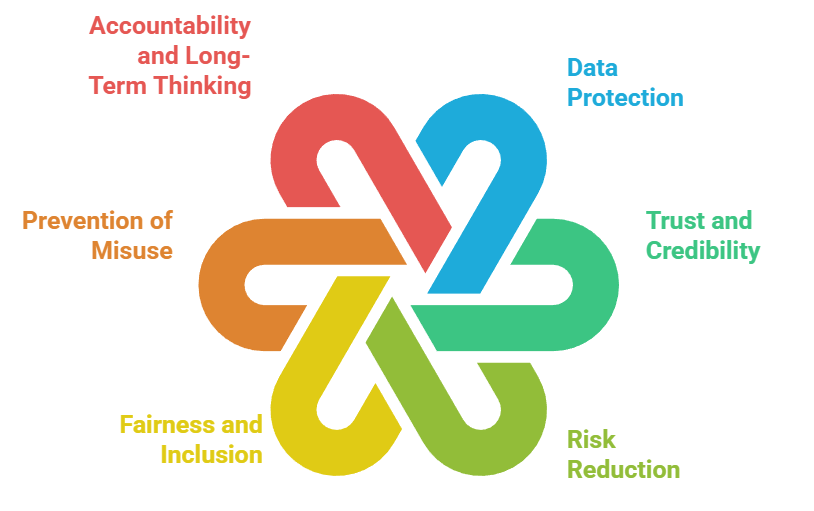
1. Protects Sensitive Data and Prevents Misuse
Workplace ethics ensures that data scientists handle confidential information responsibly and prevent unauthorized access or misuse.
Organizations often deal with personally identifiable information (PII), financial records, health data, customer behavior logs, and proprietary business data.
Without strong ethical boundaries, employees may misuse data for personal gain, expose it accidentally, or leak it intentionally.
Ethical discipline ensures compliance with privacy laws, avoids data breaches, and protects the organization from massive financial penalties.
Ultimately, it safeguards user trust and ensures their data is used respectfully and securely.
2. Ensures Trust and Credibility in Data-Driven Decisions
When data scientists report findings honestly, stakeholders can trust the insights being presented.
Ethical reporting prevents manipulation of graphs, hiding negative results, or exaggerating model performance.
Organizations rely on data science for major decisions—pricing, hiring, fraud detection, marketing targeting, and automation.
Even small unethical behavior can lead to wrong strategies and huge losses.
Ethical integrity enhances credibility across teams and ensures that analytics supports truthful decision-making rather than agenda-driven narratives.
3. Reduces Organizational Risk and Legal Liability
Unethical practices such as mishandling data, bypassing security protocols, or deploying untested models can expose organizations to lawsuits, compliance violations, and regulatory penalties.
Strong workplace ethics minimizes risks by ensuring every action follows documented procedures and legal guidelines.
This becomes especially important in industries like finance, healthcare, and government, where consequences can affect millions of people.
Ethical awareness helps organizations stay compliant, accountable, and safe from reputational damage.
4. Promotes Fairness, Inclusion, and Healthy Team Culture
Ethical workplace behavior improves teamwork, reduces discrimination, and encourages respectful collaboration.
In diverse organizations, ethical conduct ensures every employee feels valued, regardless of gender, background, age, or role.
This boosts creativity, productivity, and retention. When teams behave ethically, they create a climate of trust that directly impacts the quality of data-driven solutions.
Ethical culture also empowers individuals to raise concerns about bias, data misuse, or harmful algorithms without fear.
5. Prevents Manipulation or Misuse of Models and Algorithms
Data scientists often build models that influence customer targeting, credit scoring, hiring, policing, and healthcare.
Without workplace ethics, these models can be misused to manipulate outcomes, exploit vulnerabilities, or discriminate against groups.
Ethical guidelines ensure models are transparent, fair, and used only for intended purposes.
This protects society from harmful AI systems and prevents organizations from exploiting users or hiding behind algorithms.
6. Encourages Accountability and Long-Term Thinking
Ethical workplace culture encourages professionals to think beyond short-term profits or deadlines and focus on long-term impacts.
It promotes accountability for data, models, decisions, and consequences.
When employees follow ethical standards, they contribute to sustainable growth, responsible innovation, and long-term organizational resilience.
Accountability ensures that even when mistakes occur, they are addressed transparently and ethically.
Real-World Case Studies
Case Study 1: Cambridge Analytica (Facebook Data Misuse – Ethical Failure)
What happened: Cambridge Analytica harvested the personal data of over 87 million Facebook users without their consent. The company used the data to influence political campaigns and voter behavior through targeted psychological profiling.
Why it Violated Workplace Ethics
1. Employees knowingly used illegally obtained data.
2. No transparency about how user data was collected or used.
3. Political manipulation was hidden behind “data analytics.”
4. Violated privacy, informed consent, and fairness principles.
Impact
1. Massive global backlash and distrust in data science practices.
2. Facebook faced billions in fines and strict regulatory scrutiny.
3. Showed how unethical behavior inside organizations can destabilize society.
Learning
Ethical workplace behavior must override business pressure. Data must never be used beyond consent or in ways that can manipulate democratic processes.
Case Study 2: Apple Card Gender Bias (Algorithmic Discrimination – Workplace Oversight Failure)
What happened: Apple’s credit card algorithm allegedly gave women significantly lower credit limits than men—even when they had higher credit scores or better financial history.
Workplace Ethics issues
1. Lack of fairness checks before deployment.
2. Insufficient internal monitoring of model decisions.
3. No transparent explanation provided to affected customers.
4. Teams failed to challenge biased model assumptions.
Impact
1. Public outrage and formal investigations.
2. Ethical credibility of the product damaged.
3. Highlighted need for continuous auditing and fairness reviews.
Learning
Ethical responsibility includes testing models for bias, questioning assumptions, and ensuring fairness—even when regulators don’t explicitly require it.
Case Study 3: Google Walkouts (Ethical Culture & Workplace Conduct – Success Story)
What happened: Over 20,000 Google employees walked out in protest of unethical workplace practices, including mishandling of harassment cases and unethical AI projects (e.g., Project Maven).
Why this is a model of Workplace Ethics
1. Employees collectively stood for transparency, fairness, and accountability.
2. Raised concerns about harmful uses of AI in military systems.
3. Promoted ethical decision-making and employee empowerment.
4. Pushed the organization to revise internal policies.
Impact
1. Improved reporting processes.
2. Global attention on ethical responsibility in tech workplaces.
3. Strengthened culture of speaking up against unethical behavior.
Learning
Workplace ethics is not only about compliance—it includes actively questioning decisions that may cause harm or violate moral values.

Class Sessions
Sales Campaign

We have a sales campaign on our promoted courses and products. You can purchase 1 products at a discounted price up to 15% discount.