The importance of ethics in data science has grown significantly as algorithms increasingly shape decisions in finance, healthcare, employment, education, security, and daily digital interactions.
With the massive surge in data availability and the rise of artificial intelligence, organizations now possess the power to analyze and predict human behavior at an unprecedented scale.
While this creates opportunities for innovation, efficiency, and societal progress,
it also introduces risks related to privacy violations, biased outcomes, discrimination, manipulation, and loss of trust.
Ethical considerations ensure that data-driven decisions respect human rights, protect vulnerable populations, and maintain fairness and transparency.
Ethics guides data scientists in developing systems that are not only technically accurate but also socially responsible, legally compliant, and aligned with moral principles.
It encourages professionals to look beyond performance metrics and consider broader consequences—how models affect people, communities, and societal structures.
By promoting responsible data governance, explainability, and continuous monitoring, ethics reduces the risks associated with misuse or unintended outcomes of algorithms.
In a world where AI models influence opportunities, behavior, and public perception, ethical thinking becomes central to maintaining trust and ensuring technology serves the public good.
Ultimately, ethics acts as the foundation that keeps data science aligned with values that support equity, accountability, and long-term sustainability.
Importance of Ethics in Data Science
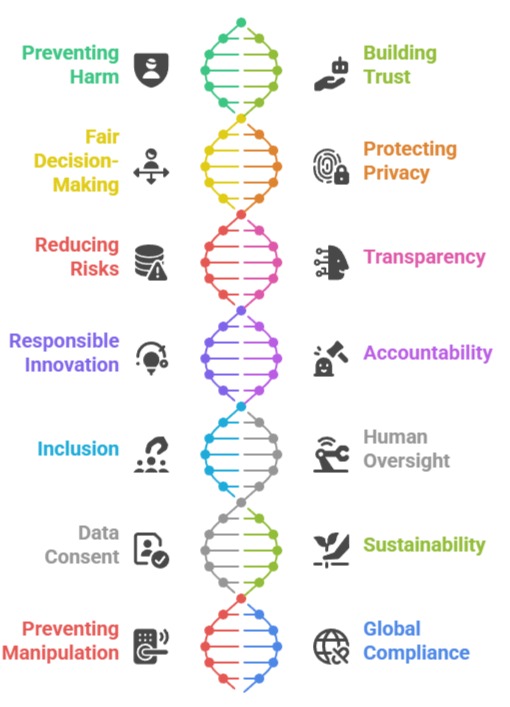
1. Ethics Prevents Harmful and Unintended Consequences
Ethics helps data scientists anticipate and prevent negative outcomes that may arise from biased datasets, flawed models, or careless deployment.
Many harmful consequences—such as discrimination in hiring, unequal access to loans, or wrongful criminal risk scoring—occur not from malicious intent but from oversight or lack of ethical consideration.
By integrating ethical thinking early in the pipeline, teams can identify risks before they impact real people.
Ethical frameworks encourage testing for bias, validating assumptions, and challenging data quality issues.
This minimizes the likelihood of unintentional harm caused by automated systems.
Ultimately, ethics ensures that data science solutions contribute positively to society rather than amplifying inequality or causing accidental damage.
2. Ethics Builds Trust Among Users, Stakeholders, and the Public
Trust is essential for the adoption of AI and data-driven systems, and ethical behavior plays a central role in establishing that trust.
When data scientists prioritize fairness, transparency, and accountability, it reassures users that their information is handled responsibly.
Clear communication about data usage, model decisions, and privacy safeguards encourages public confidence.
Without ethical considerations, even technically strong systems can face opposition, backlash, or regulatory intervention due to perceived risks. Ethical practices demonstrate respect for individuals’ rights and help avoid scandals related to data misuse.
As trust grows, organizations can innovate more freely, leading to better engagement and long-term success in data-driven initiatives.
3. Ethics Ensures Fair and Equitable Decision-Making
Ethical principles guide data scientists in creating models that treat all demographic groups fairly, reducing biases embedded in historical or incomplete datasets.
Many real-world datasets contain imbalances that reflect systemic inequalities, and without ethical oversight, algorithms may replicate or worsen these patterns.
Ethics encourages evaluation across gender, race, age, location, and socio-economic status to ensure equitable outcomes.
Fairness also requires ongoing monitoring as models may drift or perform differently across populations over time.
Ethical interventions help organizations adopt fairness metrics, bias detection tools, and transparent model evaluation practices.
This ensures that AI-driven decisions support inclusion and equality. Ultimately, fairness strengthens social trust and reflects a commitment to justice in automated systems.
4. Ethics Protects Privacy and Personal Data Rights
In the age of big data, ethical considerations ensure that personal data is collected, processed, and stored responsibly.
Privacy violations can lead to severe consequences including identity theft, manipulation, surveillance, and emotional or financial harm.
Ethics encourages responsible consent practices, data minimization, anonymization, and compliance with global regulations such as GDPR and emerging AI governance laws.
Beyond legal requirements, ethics emphasizes that individuals deserve dignity and control over their information.
It guides teams to question whether certain data should be collected at all, and whether its use aligns with user expectations.
Ethical attention to privacy strengthens security practices and reduces organizational risk. Ultimately, it protects individuals from exploitation while supporting trustworthy data ecosystems.
5. Ethics Reduces Legal, Financial, and Reputational Risks
Organizations that ignore ethical principles often face legal penalties, regulatory scrutiny, or public backlash—significantly affecting brand reputation and financial stability.
Ethical practices reduce these risks by ensuring compliance with laws, guidelines, and industry standards related to AI, data governance, and consumer protection.
When ethical frameworks are integrated into workflows, organizations are better prepared for audits, documentation requirements, and transparency mandates.
This proactive approach prevents costly mistakes such as discriminatory outcomes or privacy breaches. Ethical awareness also encourages responsible leadership and decision-making processes.
By reducing legal and reputational exposure, ethics enhances resilience and supports long-term organizational success.
6. Ethics Supports Transparency and Explainable AI
As AI systems grow more complex, transparency becomes essential to help users and regulators understand how predictions and decisions are made.
Ethics drives the need for explainability, ensuring that data scientists document models, clarify assumptions, and communicate results clearly. Transparent practices empower users to question outcomes and seek recourse if they face unfair treatment.
Ethical transparency also assists auditors and internal teams in evaluating model reliability, fairness, and performance.
It helps prevent “black-box” systems from making high-impact decisions without accountability.
By promoting open communication, ethics makes AI more accessible and understandable, ultimately strengthening public acceptance and trust.
7. Ethics Encourages Responsible Innovation
Ethics ensures that technological progress is pursued thoughtfully, considering long-term consequences and societal impact rather than only short-term efficiency.
Responsible innovation evaluates how emerging technologies like generative AI, hyper-personalization, or real-time surveillance may influence individual freedoms, mental health, and social structures.
Ethical thinking pushes teams to implement safeguards, conduct risk assessments, and prioritize human well-being throughout development cycles.
It also supports creating AI systems that are sustainable, energy-efficient, and aligned with environmental considerations.
By integrating responsibility into innovation, data science becomes a force for positive, lasting transformation rather than a source of new risks. Ethics ultimately aligns technological advancement with human values.
8. Ethics Ensures Accountability Across the Data Science Lifecycle
Ethics establishes clear responsibility for every stage of the data science workflow, from data collection to model deployment and monitoring.
Without ethical accountability, harmful outcomes may go unnoticed or unaddressed, especially when multiple teams contribute to a project.
Ethical guidelines ensure that each member understands their role in preventing bias, protecting privacy, and ensuring fairness.
Accountable processes include documentation, audit trails, and impact assessments that track how decisions are made.
This reduces the possibility of blame-shifting when issues arise. Ultimately, ethics makes the entire lifecycle transparent and structured, ensuring that systems operate safely and responsibly.
9. Ethics Encourages Inclusion and Reduces Social Inequalities
Ethical data science actively considers whether models impact marginalized or underrepresented groups unfairly.
Many datasets reflect historical inequalities that, if not corrected, can reinforce social biases in areas like finance, housing, and employment.
Ethical practices promote inclusive dataset creation, diverse evaluation techniques, and sensitivity to cultural differences.
This helps ensure that AI systems serve all communities rather than benefiting only specific groups.
Ethical inclusion fosters equitable access to opportunities and services, making data science a tool for reducing rather than amplifying inequality.
As AI becomes more integrated into governance, ethics becomes crucial for protecting democratic and social values.
10. Ethics Helps Maintain Human Oversight Over Automated Systems
As automation and AI models become more autonomous, ethical guidelines ensure that meaningful human control remains present.
Without oversight, algorithms could make decisions that humans cannot explain or override, creating risks in high-stakes environments like healthcare, policing, and financial services.
Ethics encourages establishing checkpoints where humans can review, question, or adjust algorithmic outputs.
It also promotes setting limitations on AI autonomy, ensuring machines do not replace human judgment in critical scenarios.
This balance between automation and human supervision enhances safety, reliability, and public trust.
Ethical oversight ensures that AI supports human decision-making rather than dominating it.
11. Ethics Supports Transparency in Data Collection and Consent
Ethics demands that organizations be open about what data they collect, why they collect it, and how it will be used.
Many users today feel uncomfortable due to hidden tracking, unauthorized data sharing, or opaque consent agreements.
Ethical data practices require clear consent mechanisms, easy-to-understand privacy policies, and the right for individuals to review or delete their data.
Transparent data handling creates a culture of respect and responsibility within organizations.
It reduces conflicts, regulatory issues, and public outrage caused by secretive practices. Ultimately, ethics ensures that data is collected with honesty and user dignity in mind.
12. Ethics Promotes Sustainability in AI Development
Modern AI systems, especially large machine learning models, consume enormous computational resources and energy.
Ethics encourages organizations to consider environmental impacts when designing, training, and deploying models.
This includes using efficient architectures, reducing unnecessary complexity, and monitoring carbon footprints associated with large-scale training.
Ethical thinking also supports responsible model reuse rather than repeatedly training redundant systems.
By prioritizing sustainability, data science aligns with global environmental goals and reduces long-term ecological harm.
Ethical AI development ensures that technological progress does not come at the cost of environmental damage.
13. Ethics Helps Prevent Manipulation and Misuse of Data
Data and algorithms can be used to manipulate opinions, behavior, or consumer choices—often without users realizing it.
Ethical principles ensure that systems do not exploit psychological vulnerabilities, spread misinformation, or manipulate public sentiment for profit or political gain.
This is especially important in recommender systems, targeted advertising, and generative AI content.
Ethics encourages building guardrails that detect misuse, prevent harmful influence, and promote responsible communication.
Transparent algorithms help users understand why they see certain content. Ethical protection reduces manipulation risks and defends democratic processes, personal autonomy, and digital well-being.
14. Ethics Enhances Global Compliance in an Evolving Regulatory Landscape
As governments worldwide introduce strict AI, privacy, and data governance regulations, ethics helps organizations stay ahead of legal requirements.
Ethical practices make it easier to adapt to frameworks like the EU AI Act, GDPR, India’s DPDP Act, and emerging AI risk classifications.
Instead of reacting defensively to regulations, organizations that prioritize ethics naturally align with these expectations from the beginning.
This reduces penalties, accelerates product approvals, and strengthens international operational stability.
Ethics also supports cross-border data usage in a respectful and legally sound way. Ultimately, it future-proofs organizations against rapidly changing compliance environments.

Class Sessions
Sales Campaign

We have a sales campaign on our promoted courses and products. You can purchase 1 products at a discounted price up to 15% discount.