The societal impact of data science refers to how data-driven technologies influence communities, institutions, economies, and human behavior.
As data becomes central to decision-making, algorithms now shape critical areas such as healthcare, employment, transportation, finance, public safety, and social interactions.
While data science unlocks immense opportunities—improved diagnostics, smarter cities, predictive governance, fraud prevention, and personalized services—it also introduces complex risks that affect society at scale.
Issues like algorithmic discrimination, data misuse, misinformation, surveillance capitalism, erosion of privacy, and unequal technological access have become major concerns.
As AI models and automated systems increasingly influence social decisions, the ethical responsibility of data scientists extends beyond technical accuracy to societal consequences.
A model may be statistically valid yet socially harmful if it reinforces inequalities, denies access to essential services, or manipulates behavior.
For this reason, understanding societal impact is now essential for designing data-driven systems that are transparent, accountable, inclusive, and aligned with public interest.
Data Science and Its Transformative Impact on Society
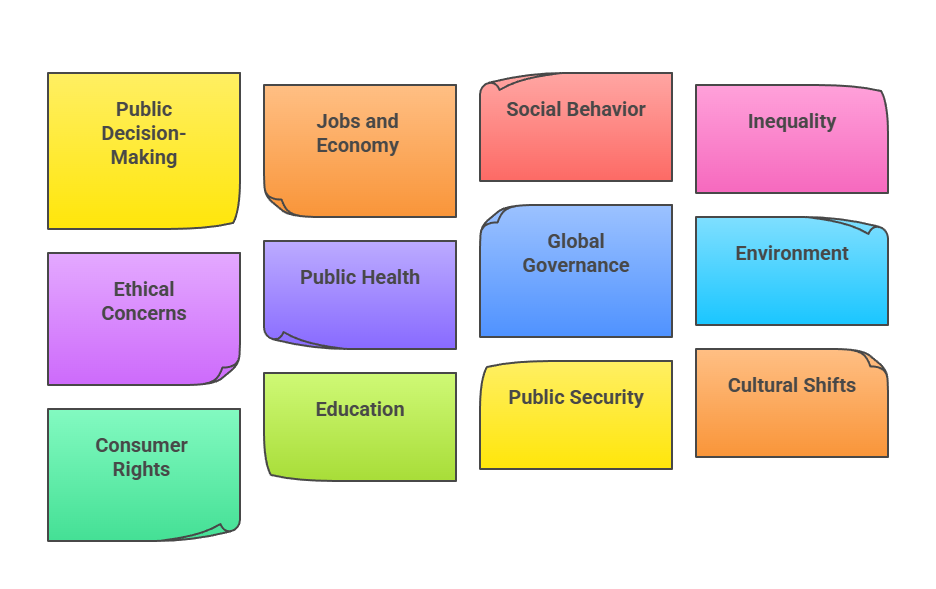 1. Data Science Influences Public Decision-Making at Scale
Data science enables governments to make faster, more informed decisions in areas like public health, law enforcement, disaster prediction, and social welfare.
However, algorithmic systems may unintentionally disadvantage certain communities if training data is incomplete or biased.
Predictive policing tools, for instance, have been criticized for targeting minority neighborhoods due to historical crime data patterns.
This creates a feedback loop where the same areas receive disproportionate scrutiny. Therefore, public-sector algorithms must be transparent, well-audited, and accountable to citizens.
2. Impact on Jobs, Economy, and Workforce Dynamics
Automation, AI-driven tools, and predictive analytics are reshaping industries by optimizing operations and reducing human labor requirements.
While this creates efficiency, it also raises concerns about job displacement, skill gaps, and unemployment risks in manufacturing, retail, customer service, and administrative roles.
At the same time, new opportunities emerge in AI maintenance, data engineering, and digital governance.
Societal readiness depends on reskilling programs, regulatory support, and inclusive economic planning to ensure automation benefits are distributed fairly.
3. Influence on Social Behavior and Human Interaction
Platforms powered by recommender systems, engagement algorithms, and predictive marketing significantly shape public behavior.
Data-driven personalization can improve user experience, but it can also amplify addictive digital habits, create echo chambers, and manipulate consumer decisions.
Social media algorithms often prioritize emotionally charged content, influencing public opinion and political behavior.
Understanding these effects is crucial to balancing personalization with societal well-being.
4. Data Science and Inequality: Bridging or Widening the Gap
Data-driven systems can either reduce inequalities by offering accessible digital services or widen gaps by excluding individuals lacking connectivity, digital literacy, or representation in datasets.
Poor communities, rural populations, and marginalized groups are often underrepresented in data, causing models to misinterpret their needs.
Ensuring inclusive datasets, universal access to technology, and ethical governance frameworks helps prevent data science from reinforcing existing social disparities.
5. Ethical Concerns Around Surveillance and Loss of Privacy
Widespread use of facial recognition, mobile tracking, and predictive analytics has increased surveillance by both private companies and governments.
While these systems enhance security and personalization, they raise concerns about intrusive monitoring, consent, and potential misuse of behavioral data.
Surveillance technologies can disproportionately affect certain communities, creating distrust and fear.
Ethical data science must balance security needs with civil liberties, transparency, and public trust.
6. Role of Data Science in Public Health and Social Well-Being
In healthcare, data science improves diagnosis, outbreak prediction, treatment planning, and patient monitoring.
However, misuse of health data can expose sensitive personal information, leading to discrimination in insurance or employment.
During pandemics, AI-driven tracking systems helped manage spread but also triggered debates about privacy and state control.
These scenarios highlight the need for strong ethical policies when handling health-related datasets.
7. Impact on Global Governance, Policy, and Democracy
Data-driven campaigning, microtargeting, and political analytics have changed how elections are conducted worldwide.
AI models can now predict voter behavior and tailor persuasive content at massive scale.
While this enhances campaign efficiency, it also introduces risks of manipulation, misinformation, and polarization.
Ensuring ethical boundaries in political data science is crucial for protecting democratic values and maintaining public trust in governance.
8. Environmental and Sustainability Implications of Data Technology
AI systems, cloud platforms, and data centers consume large amounts of energy, contributing to environmental strain.
At the same time, data science is also used to monitor pollution, optimize energy consumption, and design sustainable infrastructure.
Balancing the environmental cost of computation with its potential to combat climate change is an emerging societal challenge.
Responsible data science requires adopting greener technologies and promoting efficient algorithmic design.
9. Data Science’s Role in Shaping Consumer Rights and Digital Autonomy
Modern businesses rely heavily on behavioral analytics, clickstream data, and predictive modeling to shape consumer decisions.
While this improves personalization and convenience, it can also reduce consumer autonomy by nudging or manipulating choices without explicit awareness.
Practices like dynamic pricing can unfairly charge different customers based on browsing history or perceived purchasing power.
Ensuring transparency, user control, and ethical consent mechanisms is essential to maintain trust and protect digital rights in an algorithm-driven marketplace.
10. Impact on Education, Learning Access, and Student Profiling
Learning platforms and EdTech companies now use data to personalize learning paths, assess student weaknesses, and predict academic outcomes.
However, these systems risk stereotyping students, reinforcing achievement gaps, or mislabeling abilities due to incomplete or biased data.
Schools adopting algorithmic tools for admissions or performance evaluation may unintentionally disadvantage certain socioeconomic groups.
Ethical oversight ensures that educational analytics uplift learners rather than limiting their opportunities based on data-driven assumptions.
11. Social Safety, Public Security, and Predictive Governance
Predictive models help governments forecast crime hotspots, assess disaster impacts, and allocate emergency resources.
While these models improve efficiency and safety, they can also perpetuate bias if trained on historically skewed data.
Communities overrepresented in crime datasets may experience excessive policing, surveillance, and stigma.
Ethical governance requires involving communities, auditing systems regularly, and ensuring decisions are not solely driven by algorithms but balanced with human judgment.
12. Cultural Shifts and Human Identity in a Data-Driven Era
Data science influences cultural expression, identity formation, and societal norms through social media algorithms that shape trends, narratives, and public discourse.
AI-generated content, deepfakes, and recommendation engines contribute to cultural diffusion but also blur lines between real and synthetic media.
This creates challenges in maintaining authenticity, trust, and responsible communication. Institutions must promote media literacy and ethical content moderation to help society navigate digital complexity.
Real-World Failures
Real-world failures highlight how unethical data practices and biased algorithms can cause serious harm when deployed at scale.
These examples show why privacy, transparency, and fairness are essential to prevent technology from reinforcing social and institutional inequalities.
1. COMPAS Algorithm – Racial Bias in Criminal Justice (USA):
COMPAS, used to predict recidivism, was found to assign higher risk scores to Black defendants than white defendants with similar profiles.
This resulted in unfair sentencing recommendations and highlighted the dangers of opaque, biased models.
Societal Impact: Reinforced systemic discrimination and triggered global discussions about algorithmic fairness.
2. Amazon AI Hiring Tool – Gender Discrimination
Amazon developed a recruitment AI that learned from historical hiring data dominated by male applicants.
The model penalized résumés that included the word “women” or came from women's colleges.
Societal Impact: Demonstrated how biased datasets can institutionalize workplace discrimination.
3. Cambridge Analytica Scandal – Political Manipulation: Facebook data from millions of users was harvested without consent and used for targeted political ads influencing elections.
Societal Impact: Global outrage over privacy invasion, manipulation, and the ethical dangers of microtargeting.
4. Apple Card Credit Limit Bias: Women reported receiving lower credit limits than men with similar or better financial profiles. The opaque credit algorithm raised concerns about gender bias and lack of transparency.
Societal Impact: Prompted investigations into fairness in financial AI systems.
5. Google Photos Tagging Incident: Google’s early image recognition system mistakenly labeled Black individuals as “gorillas,” exposing racial bias in training datasets.
Societal Impact: Urgent calls to improve dataset diversity and fairness in computer vision.
Real-World Success Stories
Real-world success stories show how responsible data science can create meaningful, positive impact across society.
When ethical data practices are combined with advanced analytics, technology becomes a powerful tool for solving complex global and human challenges.
1. COVID-19 Early Detection & Outbreak Prediction: Data science models used by platforms like BlueDot successfully identified early signs of COVID-19 spread before official announcements.
Societal Impact: Helped governments respond faster and allocate medical resources more effectively.
2. Fraud Prevention in Banking & FinTech: Machine learning systems help detect suspicious transactions, prevent card fraud, and protect customer assets in real time.
Societal Impact: Saves billions in financial losses and increases trust in digital banking.
3. Precision Agriculture for Sustainable Farming: Data-driven systems using satellite imagery and IoT sensors help farmers optimize irrigation, fertilizers, and crop monitoring.
Societal Impact: Increased yield, reduced waste, improved food security, and supported sustainable environmental practices.
4. AI-Assisted Medical Diagnosis (Radiology, Oncology): Tools like Google’s DeepMind and IBM Watson assist in detecting cancers, diabetic retinopathy, and other diseases with high accuracy.
Societal Impact: Improved early diagnosis, reduced medical burden, and democratized advanced healthcare.
5. Urban Planning & Smart Cities: Cities like Singapore and Barcelona use real-time data analytics for traffic management, energy consumption, and pollution monitoring.
Societal Impact: Improved public safety, reduced emissions, and enhanced quality of life.

Class Sessions
Sales Campaign

We have a sales campaign on our promoted courses and products. You can purchase 1 products at a discounted price up to 15% discount.