When working with data in AI and machine learning, you constantly deal with large collections of numbers — pixel values, sensor readings, model weights, and dataset features.
Python lists can store numbers, but they are slow and limited for mathematical operations. NumPy solves this.
NumPy (Numerical Python) is a foundational library that provides fast, efficient multi-dimensional arrays and a rich set of mathematical operations. It is the backbone of almost every data science and AI library, including Pandas, Scikit-learn, and TensorFlow.
Installing and Importing NumPy
NumPy comes pre-installed with Anaconda. If needed, install it using pip:

Import it into your script using the standard alias np:

NumPy Arrays
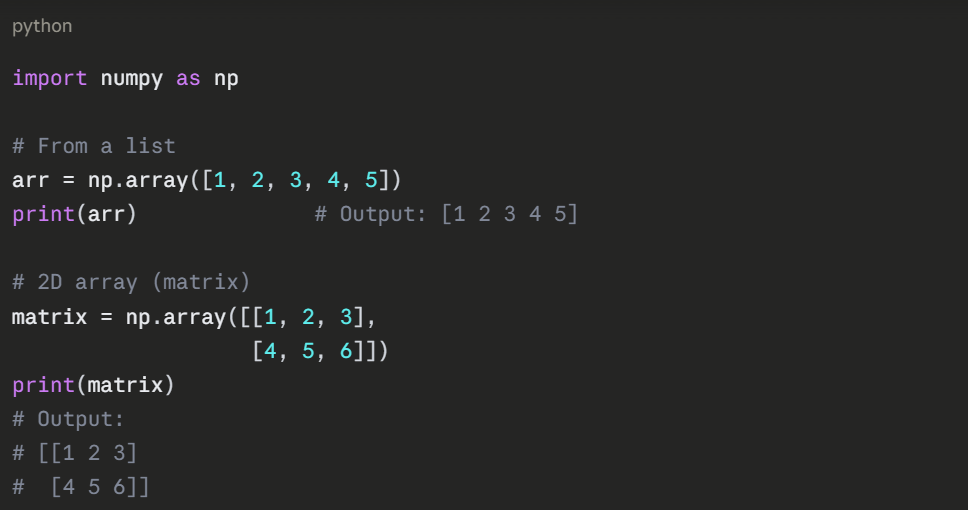
The core of NumPy is the ndarray (n-dimensional array) — a grid of values, all of the same data type, that supports fast mathematical operations.
Creating Arrays
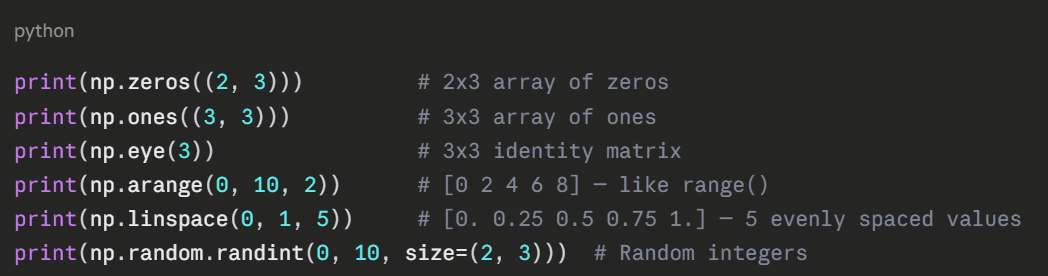
Built-in Array Creation Functions
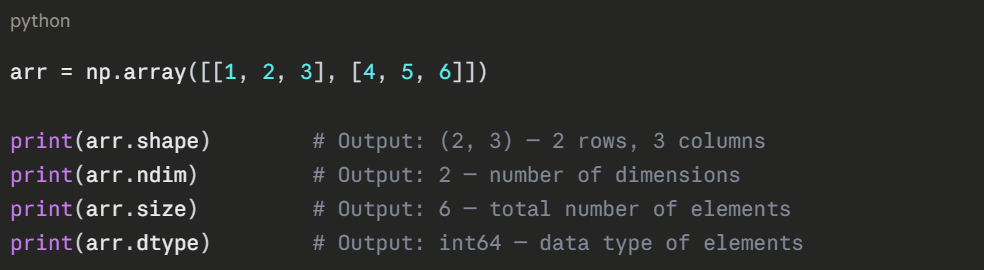
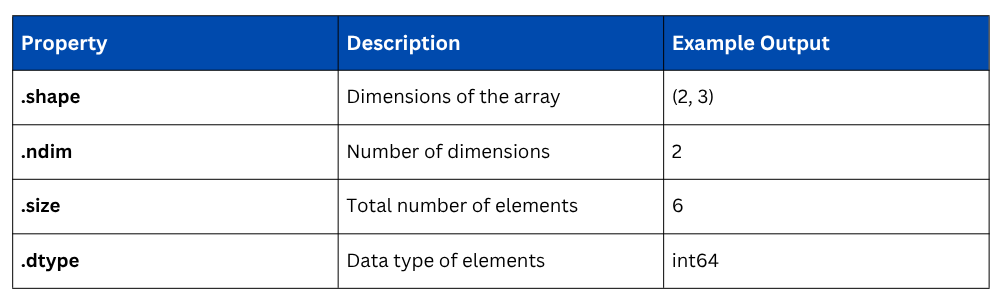
Array Properties
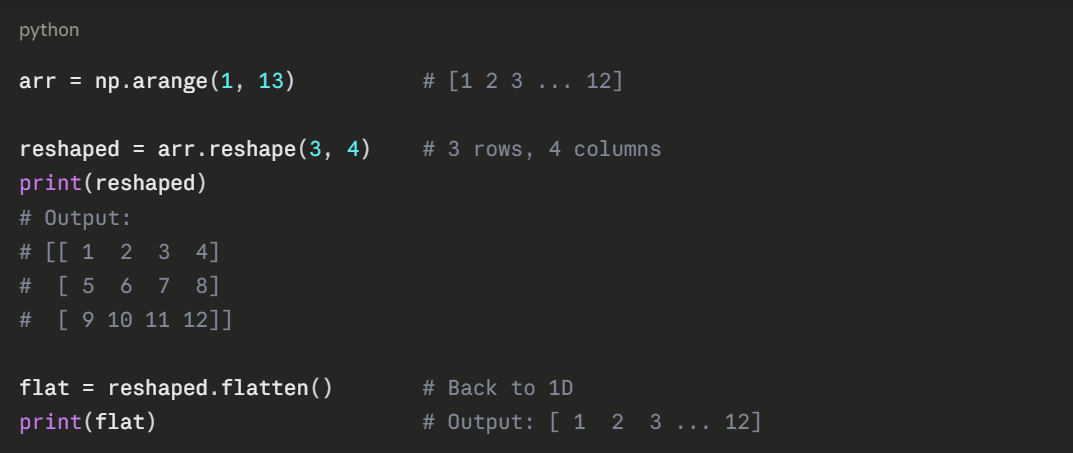
Understanding the shape and structure of your array is critical when working with datasets and AI models.
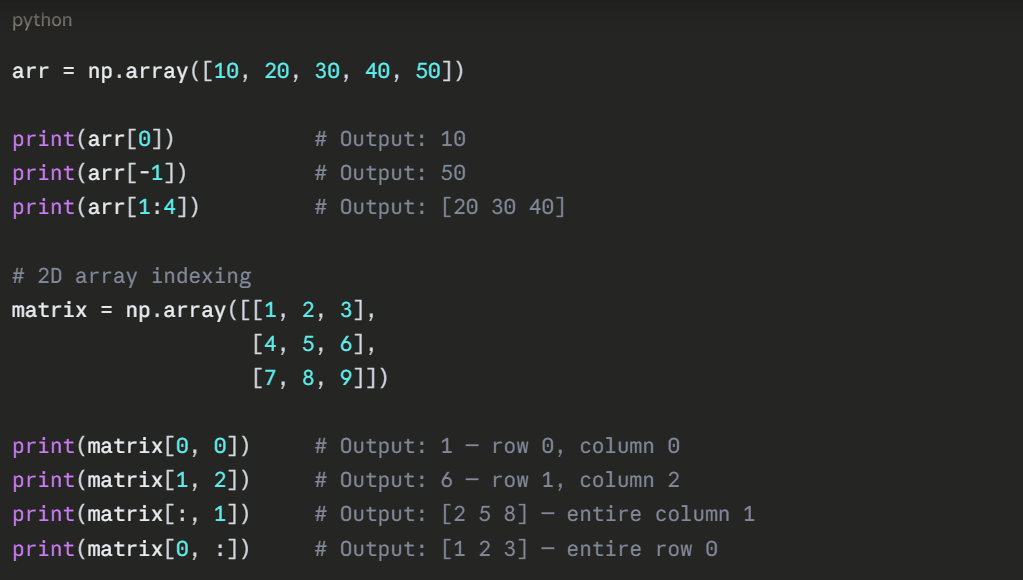
Indexing and Slicing
Accessing elements in NumPy arrays works similarly to lists but extends naturally to multiple dimensions.
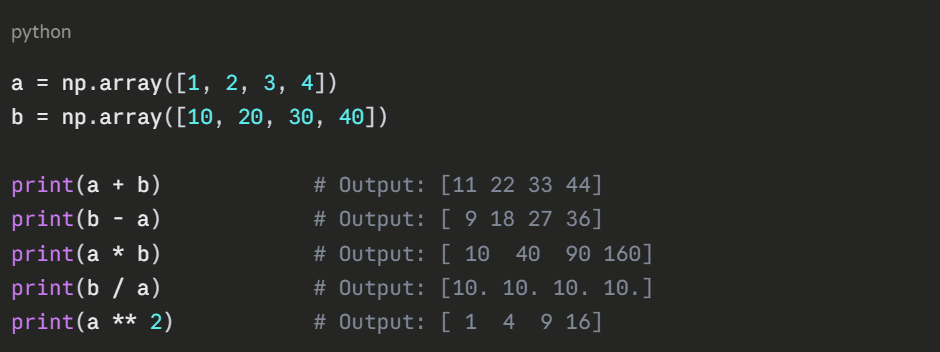
Arithmetic Operations
Scalar Operations
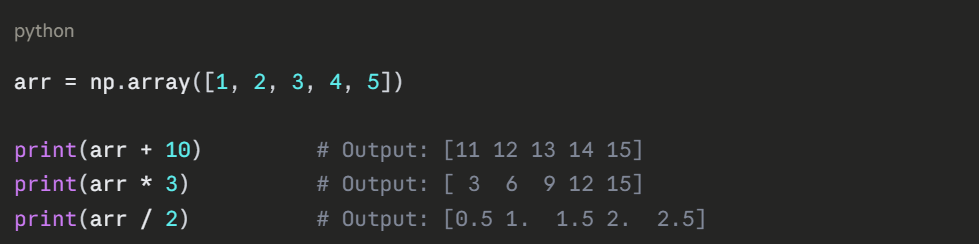
Operations with a single number (scalar) are applied to every element — this is called broadcasting.
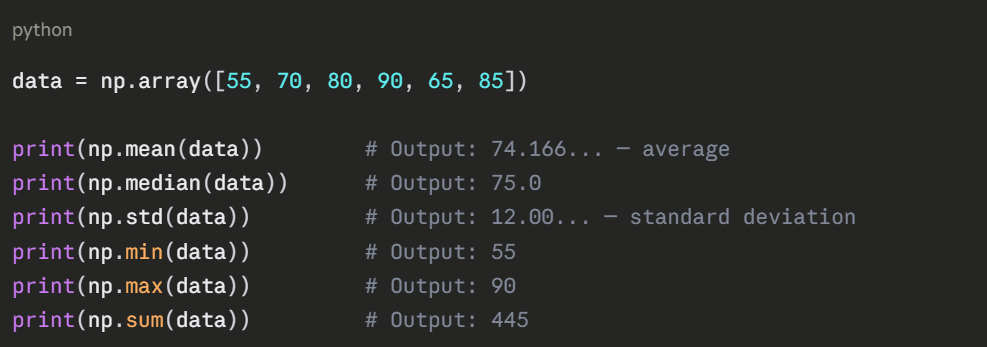
Statistical Operations
NumPy provides fast statistical functions that are heavily used in data analysis and AI preprocessing.
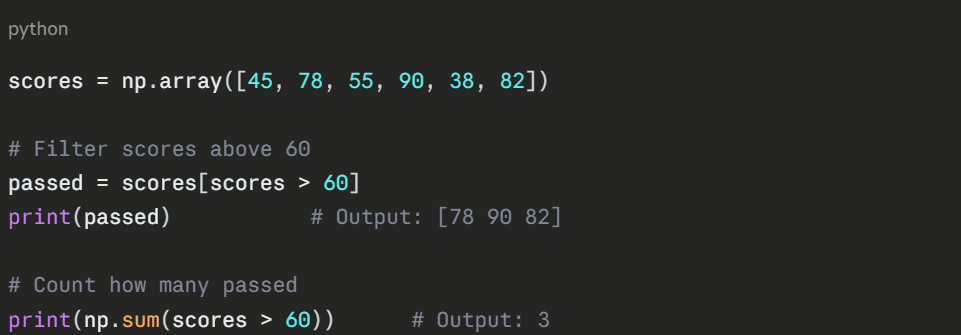
Boolean Filtering
NumPy vs Python Lists
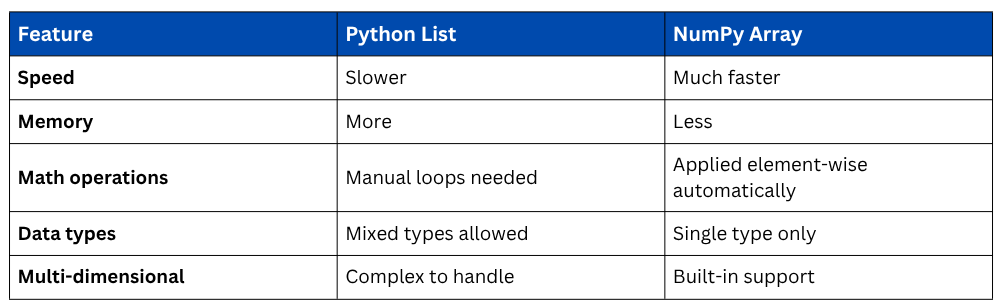
For any numerical or AI task, NumPy arrays are always the better choice over plain Python lists.