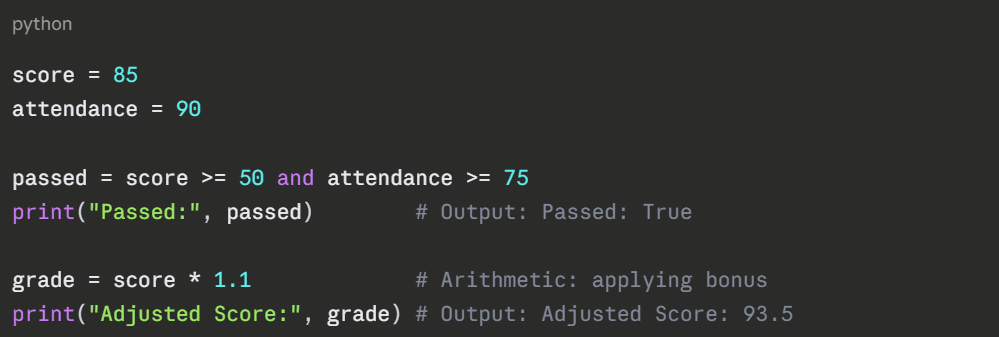
Operators are the building blocks of any program. They allow you to perform calculations, compare values, and make decisions based on conditions. Python provides a clean and intuitive set of operators that are easy to learn and apply.
Arithmetic Operators
Arithmetic operators are used to perform basic mathematical operations on numerical values.
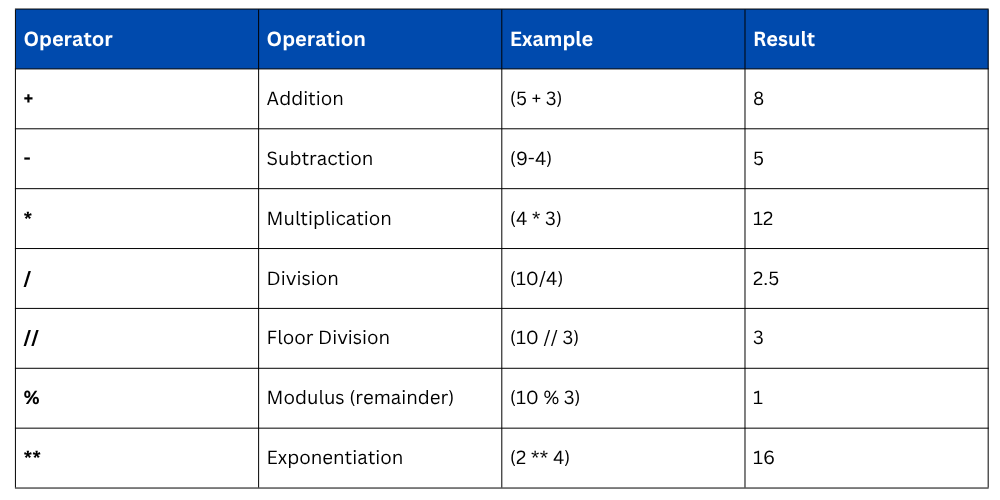
Example in code:
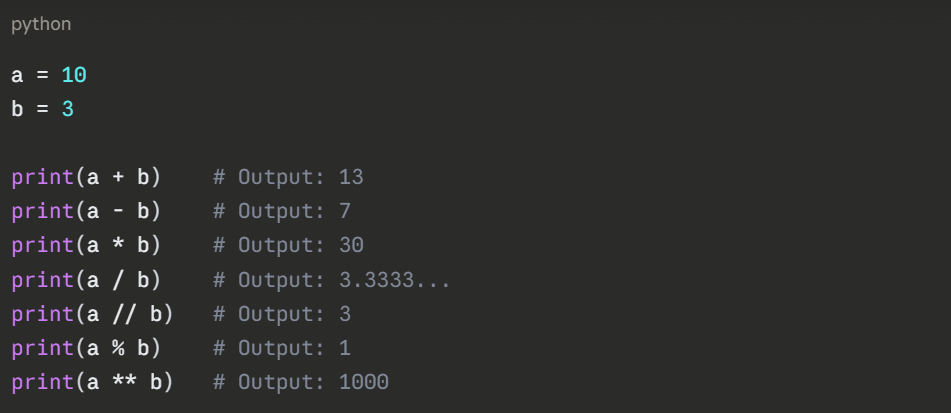
Note: / always returns a float. Use // when you need a whole number result.
Comparison Operators
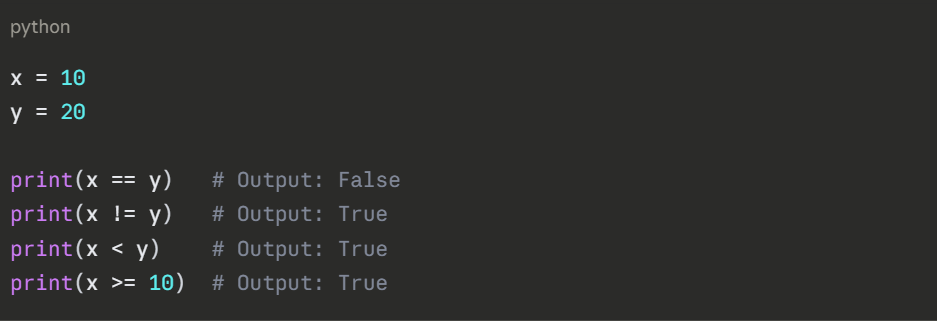
Comparison operators compare two values and always return a Boolean result — either True or False. They are heavily used in conditions and decision-making.
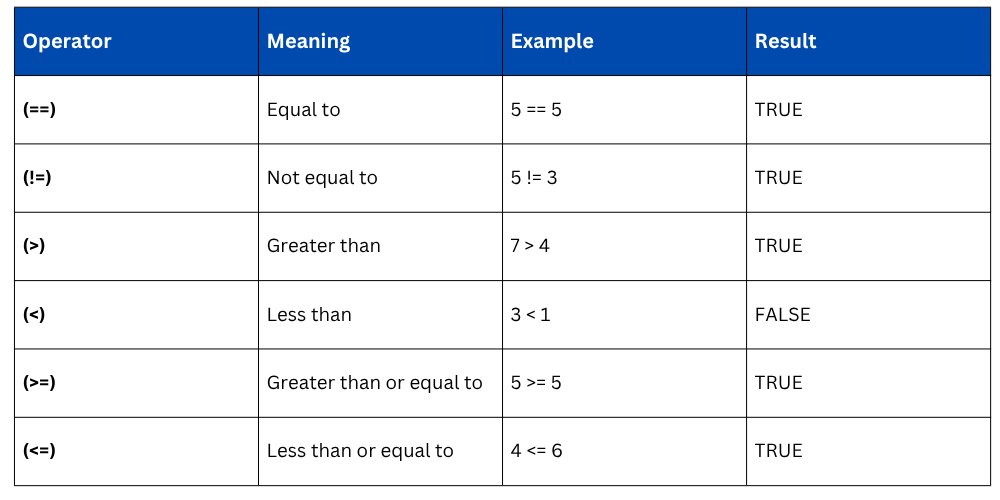
Example in code:
Logical Operators
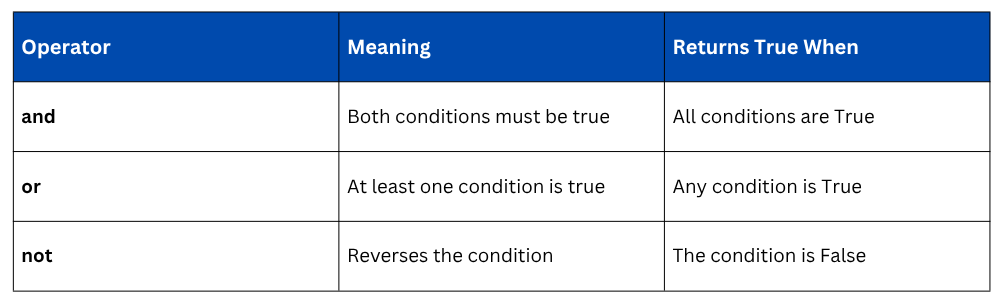
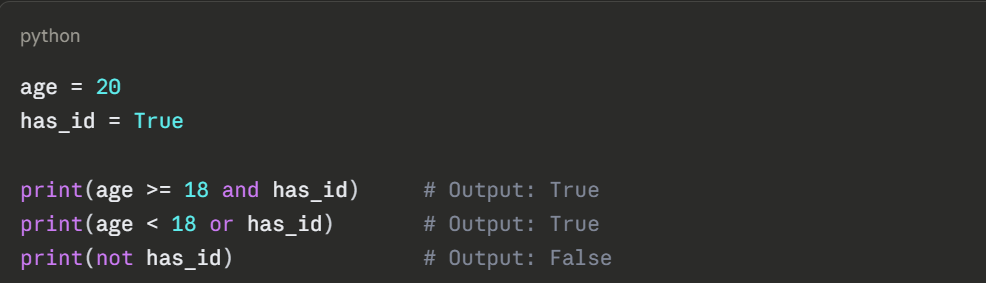
Logical operators are used to combine multiple conditions. They are essential when you need more than one condition to be checked at the same time.
Example in code:
Combining All Three — A Practical Example
Here is how arithmetic, comparison, and logical operators work together in a real scenario: