When writing Python programs, you often need to convert data from one type to another, or interact with the user by taking input and displaying output. These two concepts, type casting and input/output are fundamental to building even the simplest programs.
What is Type Casting?
Type casting means converting a value from one data type to another. Python is dynamically typed, but there are moments when you need to manually change a variable's type. For example, converting a string to an integer before performing a calculation.
There are two kinds of type casting in Python:
1. Implicit Casting: Python converts the type automatically.
2. Explicit Casting: You manually convert the type using built-in functions.
Implicit Type Casting
Python handles this automatically when there is no risk of data loss.
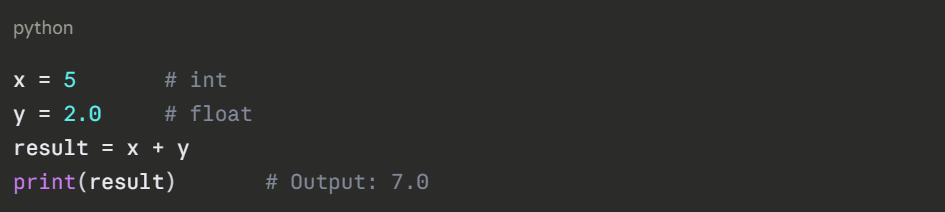
Here, Python automatically converts x from int to float before adding.
Explicit Type Casting
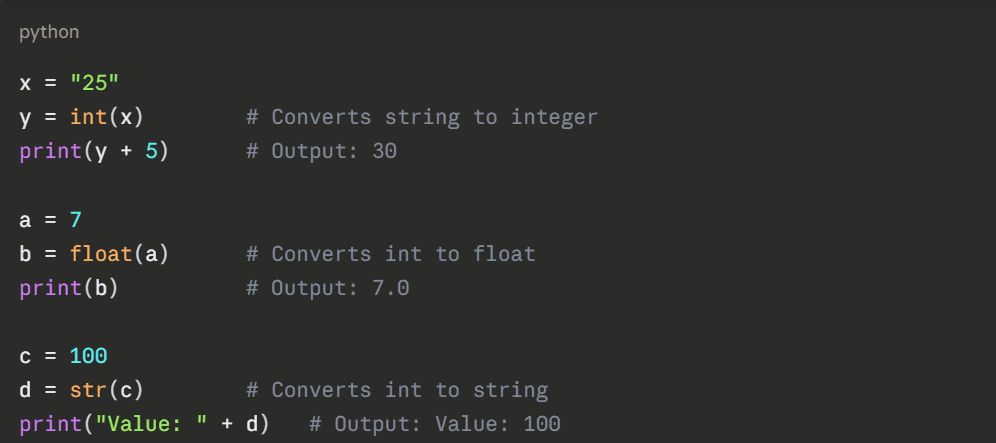
You control the conversion using Python's built-in functions.
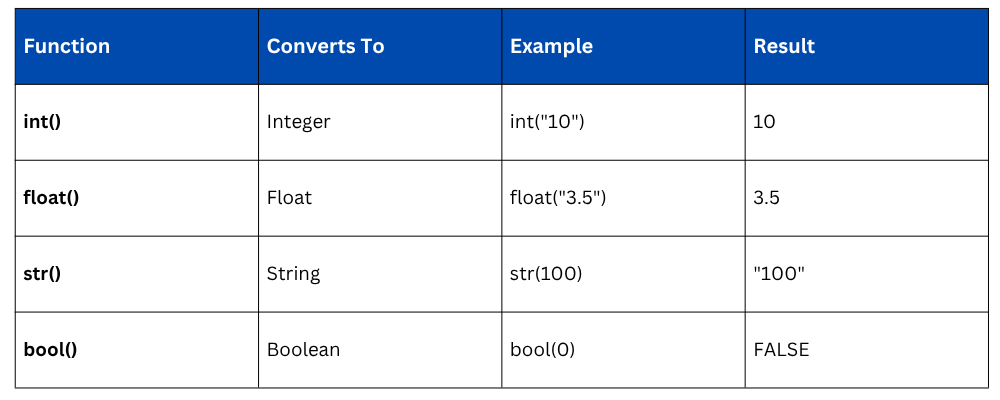
Examples:
Common Casting Errors to Watch Out For
Not all conversions are valid. Trying to cast incompatible types will raise an error.

Always make sure the value is compatible before casting.
Input and output allow your program to communicate with the user. Python makes this very straightforward with just two built-in functions.
Output — print()
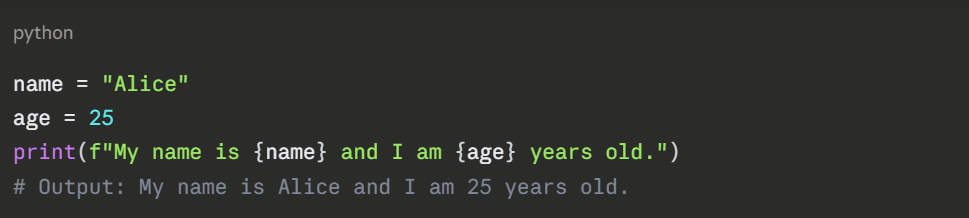
The print() function displays information on the screen.

You can also format output cleanly using f-strings (recommended):
The input() function takes data from the user during program execution. It always returns the value as a string.

Since input() returns a string, you must cast it if you need a number:

Or in a single line:

 vs print().png)