Not every function needs a name. Sometimes you need a small, quick function for a single task, one that is too simple to justify a full def block. That is exactly what lambda functions are for.
A lambda function is a compact, anonymous function defined in a single line. It is not a replacement for regular functions but rather a convenient tool for short, throwaway operations, especially when working with data filtering, sorting, and transformation in Python and AI workflows.
What is a Lambda Function?
A lambda function is defined using the lambda keyword instead of def. It can take any number of parameters but contains only a single expression, which is automatically returned.
Syntax

Regular function vs Lambda — same result
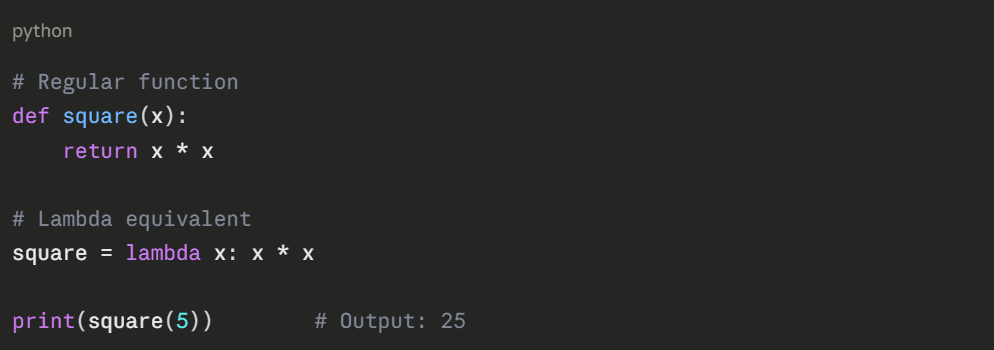
Both do exactly the same thing. The lambda version is simply more concise.
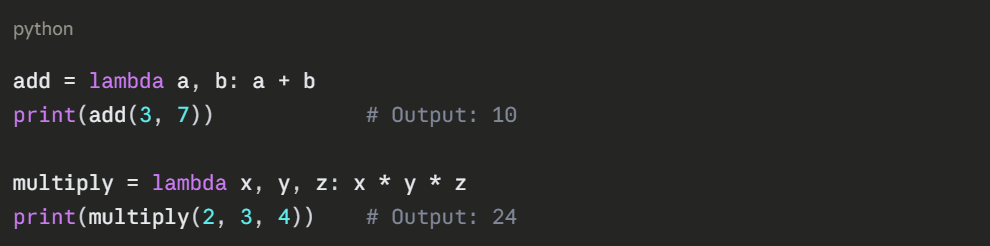
Lambda with Multiple Parameters
Lambda functions can accept more than one parameter, separated by commas.
Lambda with Conditional Logic
A lambda can include a simple conditional (ternary) expression.
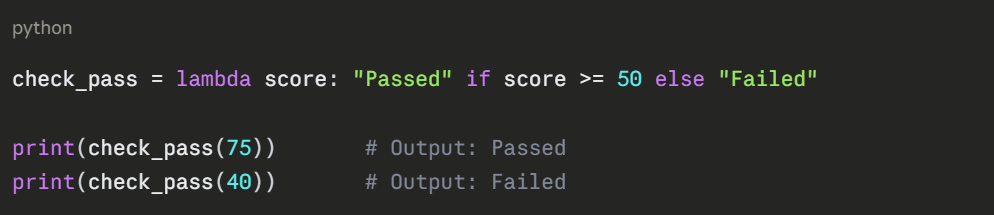
Keep in mind — if the logic becomes more complex than a single expression, a regular function is the better choice.
Lambda with Built-in Functions
The real power of lambda functions shows when they are used alongside Python's built-in functions like map(), filter(), and sorted(). This is where they are most commonly used in practice.
With map()
Apply a function to every item in a list.
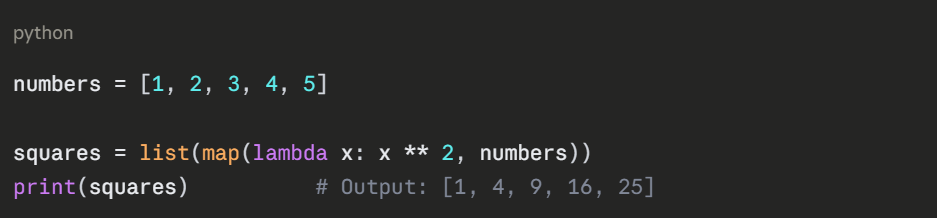
map() applies the lambda to each item and returns the transformed list.
With filter()
Keep only items that meet a condition.
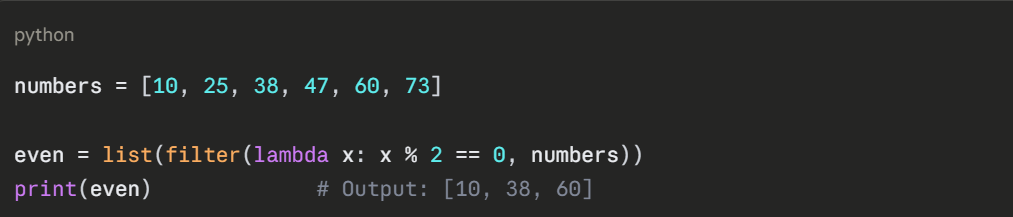
filter() keeps only the items for which the lambda returns True.
With sorted()
Custom sorting logic.
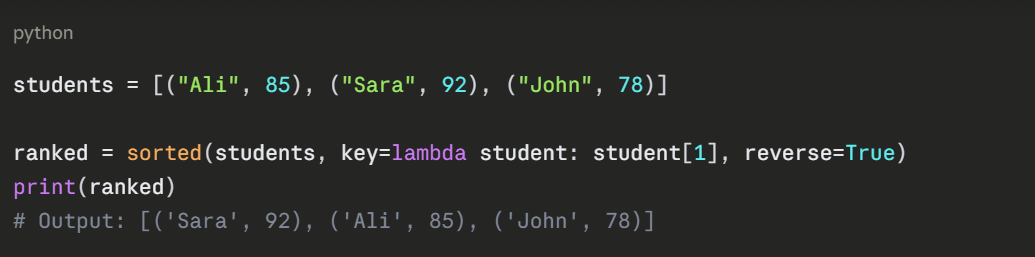
Here, lambda student: student[1] tells sorted() to rank by the score (second element of each tuple).
Lambda in Data Processing — A Practical AI Example
Lambda functions are frequently used in Pandas, the core Python library for data handling in AI to apply quick transformations to data columns.
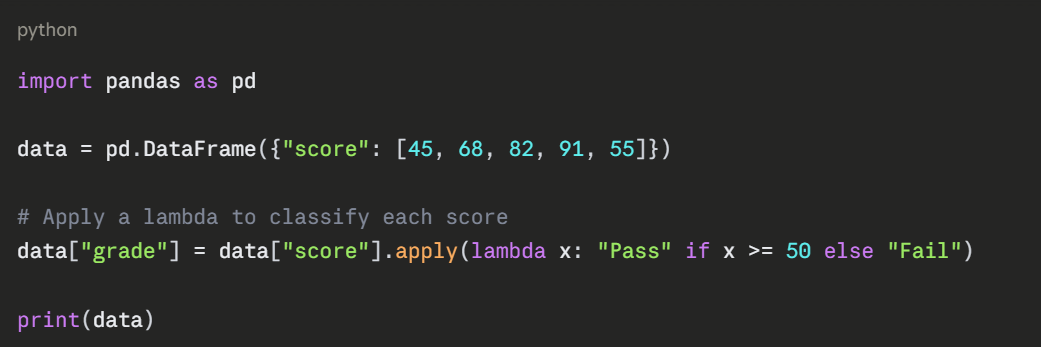
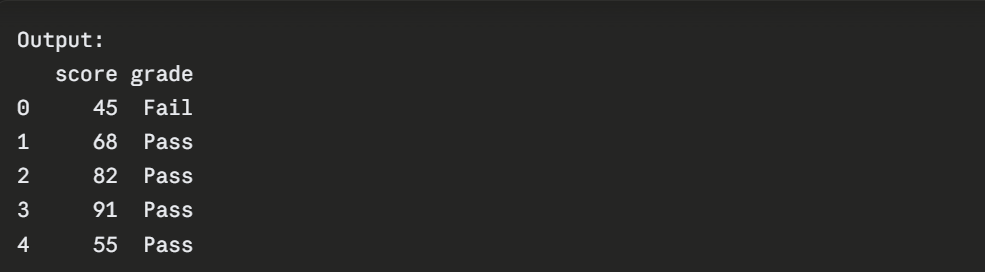
This pattern using apply() with a lambda — is one of the most common operations in AI data preprocessing.
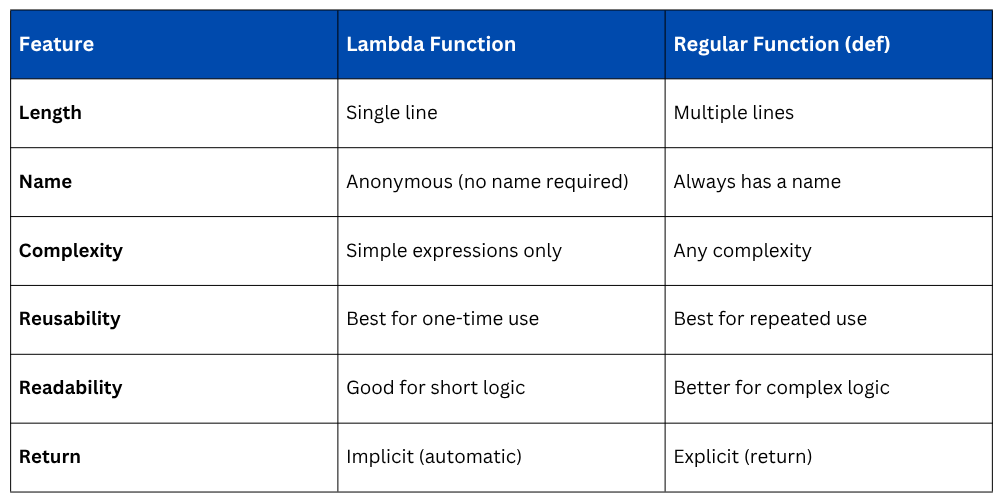
Lambda vs Regular Function — When to Use Which
Common Mistakes to Avoid
1. Using lambda for complex logic — if it needs more than one expression, use def.
2. Overusing lambda — just because it is short does not mean it is always clearer.
3. Forgetting it returns automatically — no need for return inside a lambda.
4. Assigning a name and reusing it — if you are naming it and calling it repeatedly, use a regular function instead.