Not all data is meant to be changed. When you have a collection of values that should remain fixed throughout a program — such as coordinates, dates, or configuration settings, a tuple is the right choice.
A tuple in Python is an ordered, immutable collection, meaning once it is created, its contents cannot be altered. Tuples are lightweight, fast, and ideal for protecting data integrity.
Creating a Tuple
Tuples are defined using parentheses (), with items separated by commas. Like lists, they can hold any data type.
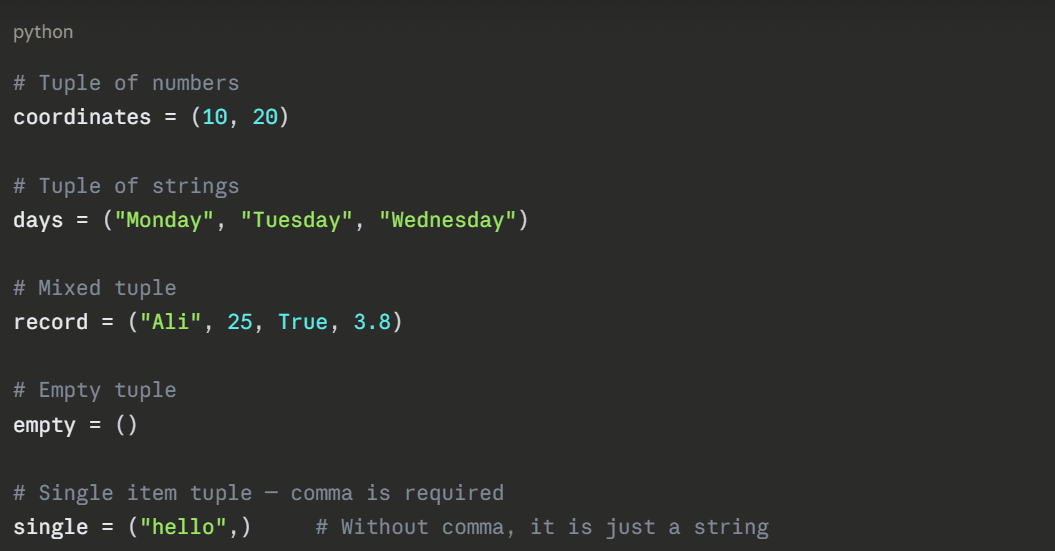
Important: A single-item tuple must have a trailing comma. ("hello") is a string, not a tuple.
Accessing Tuple Items
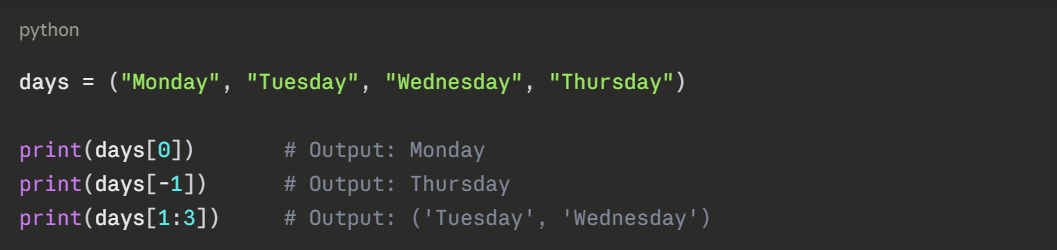
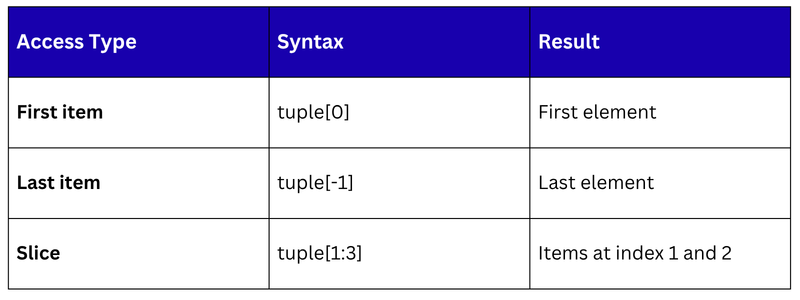
Tuples use the same indexing and slicing rules as lists — zero-based positive indexing and negative indexing from the end.
Tuples are Immutable
The key characteristic of a tuple is that it cannot be modified after creation. You cannot add, remove, or change its items.
python
coordinates = (10, 20)
coordinates[0] = 50 # TypeError: 'tuple' object does not support item assignment
This immutability is intentional, it protects data that should not change during program execution.
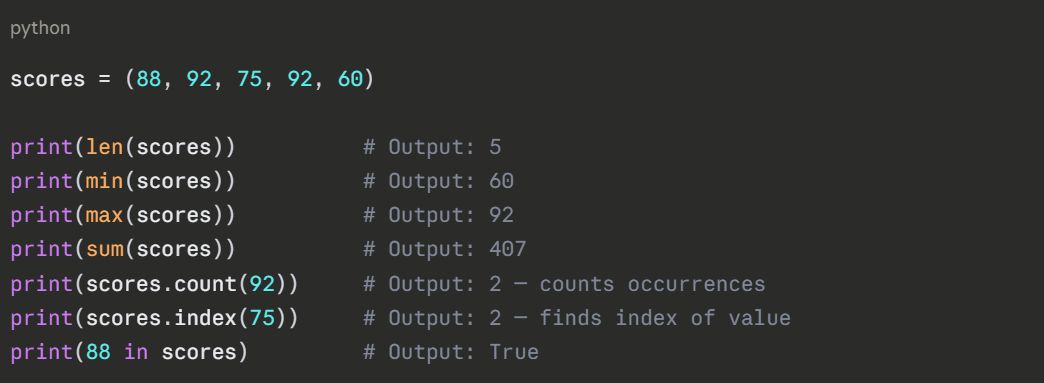
What You Can Do With Tuples
Even though tuples are immutable, several operations are still available:
Tuple Packing and Unpacking
Packing means storing multiple values into a tuple. Unpacking means extracting those values into individual variables — a very clean and readable Python feature.
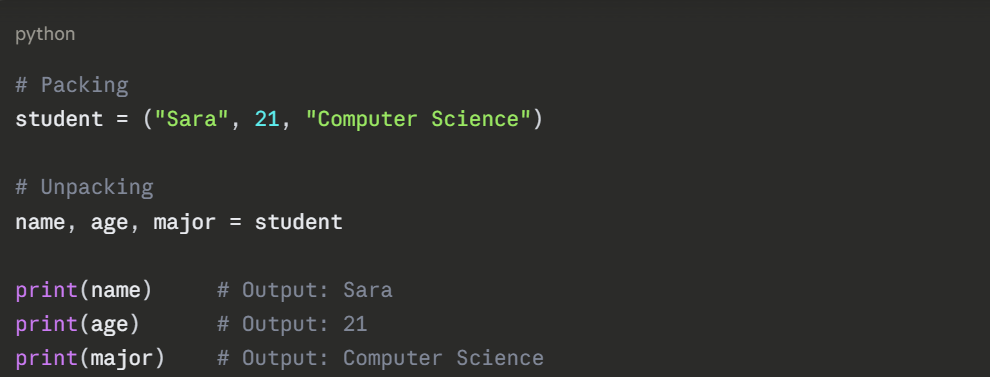
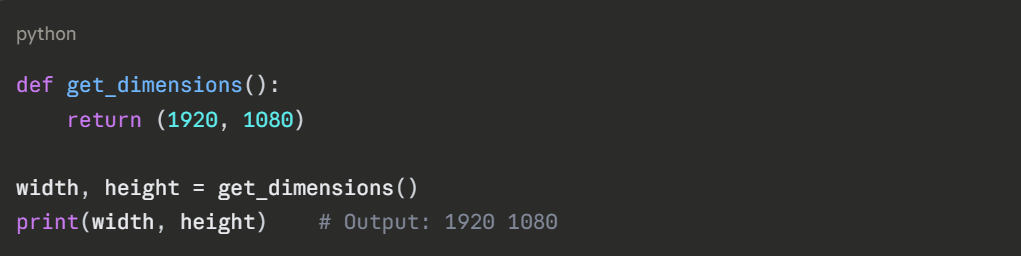
Unpacking is commonly used when a function returns multiple values.
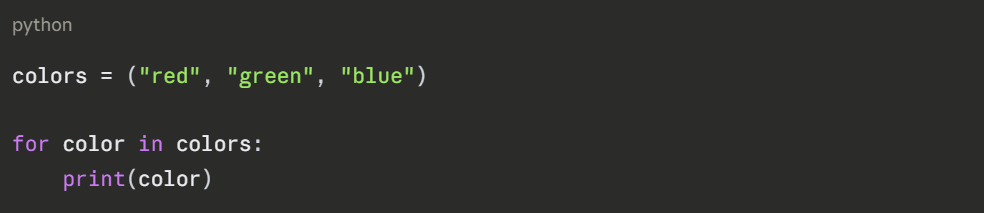
Iterating Over a Tuple
Tuples can be looped through just like lists.

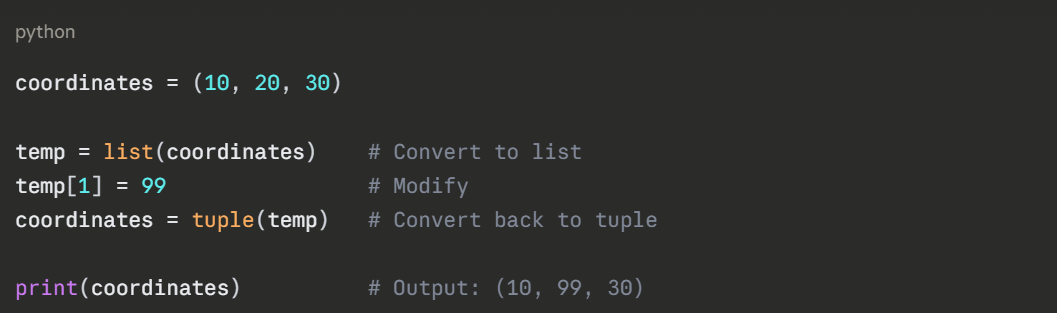
Converting Between Tuple and List
Sometimes you need to modify a tuple temporarily. You can convert it to a list, make changes, then convert it back.
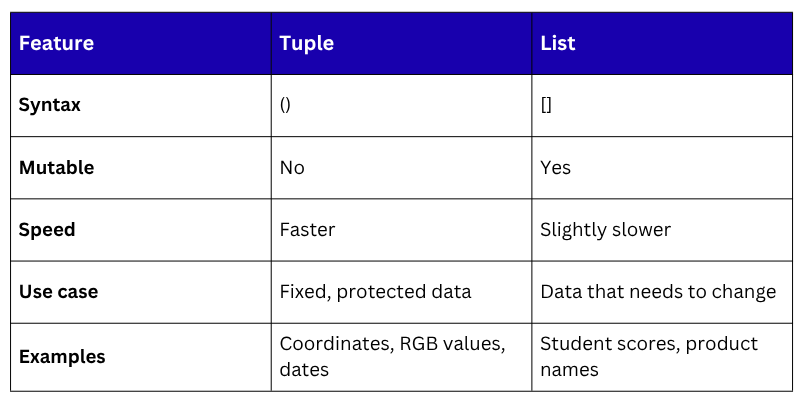
Tuple vs List — When to Use Which
Common Use Cases of Tuples in Python and AI
Tuples are particularly useful in the following scenarios:
1. Storing fixed configurations — model hyperparameters, image dimensions.
2. Returning multiple values from a function — clean and readable.
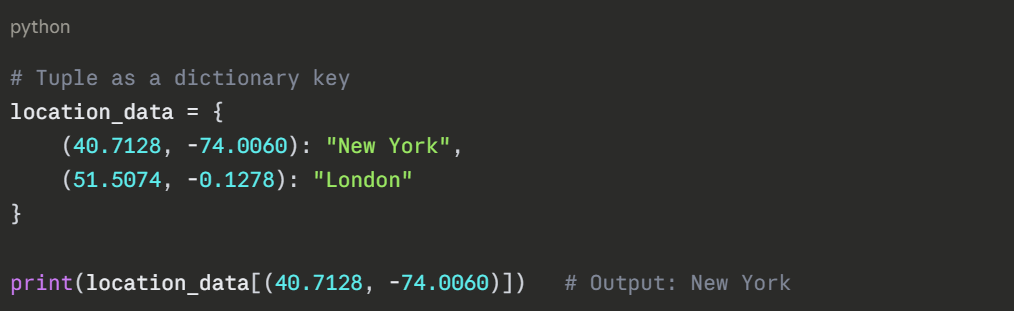
3. Dictionary keys — tuples can be used as keys; lists cannot.
4. Data records — representing a row of data (name, age, score).

Class Sessions
Sales Campaign

We have a sales campaign on our promoted courses and products. You can purchase 1 products at a discounted price up to 15% discount.