Writing code that works is important, but writing code that others (and your future self) can easily read and understand is equally important. Clean code is not just about aesthetics; it reduces errors, makes debugging easier, and improves collaboration.
Python was designed with readability in mind, and following its conventions will make you a more effective developer from the very beginning.
Use Meaningful Variable Names
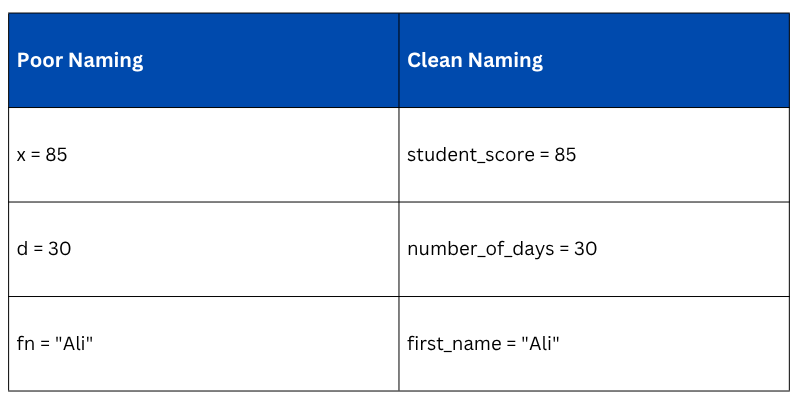
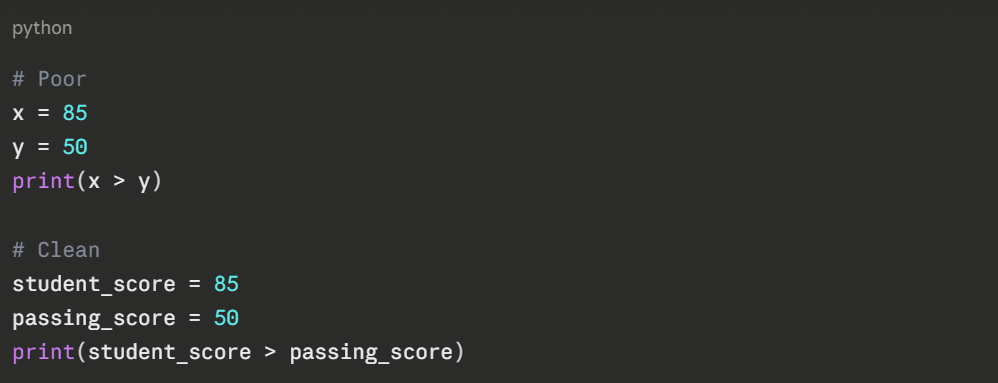
Variable names should clearly describe what they store. Avoid single letters or vague names unless used in short loops.
Follow Proper Indentation
Python uses indentation to define code blocks. Consistent indentation — 4 spaces per level is both a Python rule and a readability best practice.
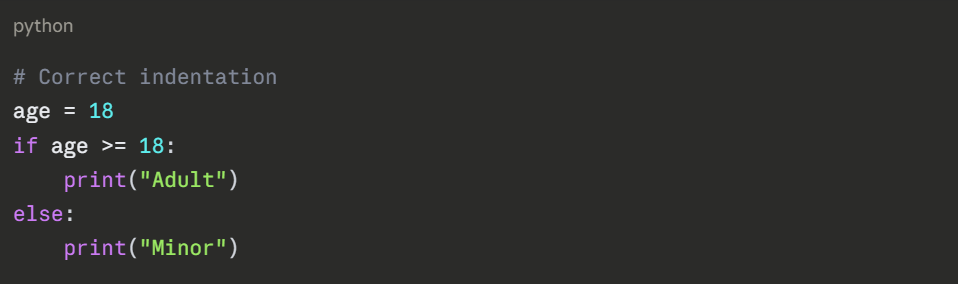
Mixing tabs and spaces will cause errors. Stick to 4 spaces throughout your code.
Write Comments Where Needed
Comments explain the purpose of code. They are ignored by Python but are invaluable for readers. Use them wisely, not to state the obvious, but to explain the why.
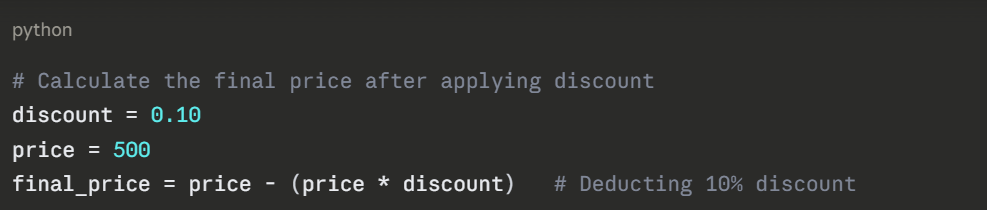
1. Use # for single-line comments.
2. Use triple quotes """ """ for multi-line explanations or docstrings.
Keep Lines Short and Focused
PEP 8 — Python's official style guide recommends keeping lines under 79 characters. Long lines are hard to read and follow.
python
# Hard to read
total = student_score + bonus_marks + extra_credit - penalty_marks + attendance_score
# Cleaner — break into steps
base_score = student_score + bonus_marks + extra_credit
final_score = base_score - penalty_marks + attendance_score
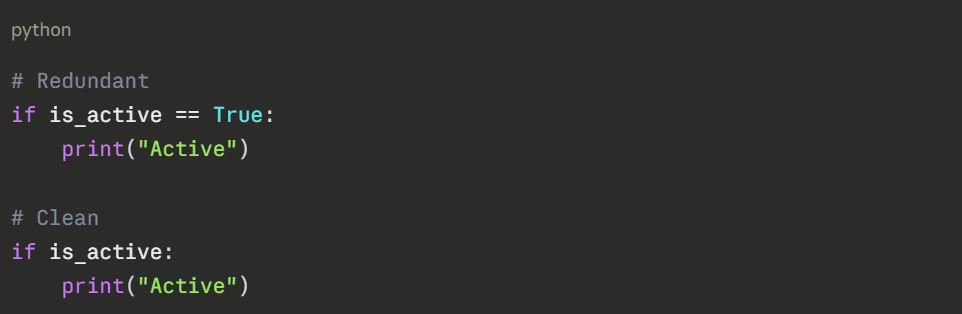
Avoid Unnecessary Code
Every line should serve a purpose. Remove unused variables, redundant conditions, and repeated logic.
Use Blank Lines to Separate Logic
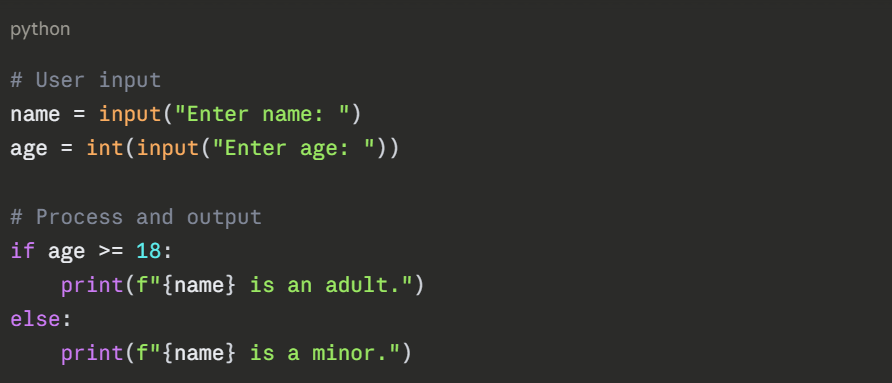
Group related lines together and separate distinct blocks with a blank line. This makes the flow of the program visually clear.
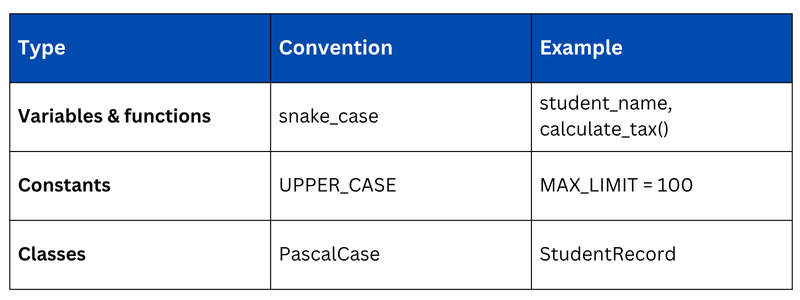
Follow Naming Conventions
Python has standard naming conventions that every developer is expected to follow.
PEP 8 — Python's Style Guide
PEP 8 is the official document that defines Python coding standards. You do not need to memorize it, but following its key rules consistently is good practice.
1. 4 spaces for indentation.
2. Two blank lines before and after a function definition.
3. Spaces around operators: x = 5 + 3 not x=5+3.
4. Lowercase with underscores for variable and function names.