As organizations increasingly rely on data to drive decisions and innovation, ethical considerations in data usage have become paramount. Ethical data use ensures respect for individual privacy, fairness, transparency, and accountability, balancing business objectives with societal expectations and legal requirements. Failing to address ethics in data collection, analysis, and sharing can lead to harm, bias, mistrust, and potential legal consequences.
Key Ethical Principles in Data Usage
Adhering to ethical standards in data usage strengthens compliance and public confidence. Below are the main principles organizations should integrate into their operations.
1. Transparency
It requires organizations to clearly explain what data is collected, why it is collected, how it will be used, and with whom it will be shared. By presenting this information in a simple and understandable way, organizations enable individuals to make informed decisions and build trust without forcing users to navigate complex legal language.
2. Consent and Control
They ensure that individuals maintain authority over their personal data. Organizations must obtain informed and voluntary consent before collecting data, especially when handling sensitive information. Individuals should also be able to access, correct, delete, or limit the use of their data, reinforcing their right to manage how their personal information is handled.
3. Privacy and Security
It focus on protecting personal data from unauthorized access, breaches, and misuse. Strong security measures, combined with data minimization practices that limit data collection to what is necessary, reduce overall risk. Privacy by design further ensures that protective measures are built into data systems and business processes from the start.
4. Fairness and Non-Discrimination
Fairness and non-discrimination require that data and algorithms do not create or reinforce bias against individuals or groups. Regular audits of datasets and automated systems help identify and correct unfair outcomes. Ethical AI practices support equal treatment and promote inclusive and unbiased decision-making.
5. Accountability and Governance
Accountability and governance ensure that organizations take responsibility for every stage of data handling. By implementing clear data governance frameworks, defining roles and policies, and maintaining strong oversight, organizations can comply with legal and ethical standards. Auditing, reporting, and redress mechanisms further ensure that any errors or misuse are addressed transparently and effectively.
Ethical Challenges in Data Usage
Responsible data usage requires awareness of ethical pitfalls that can impact individuals and society. Key challenges in this area include the following.
1. Re-Identification Risks: Even anonymized data can reveal identities when combined with other datasets.
2. Bias in Data and Models: Incomplete or unrepresentative datasets can lead to prejudiced outcomes.
3. Informed Consent Complexity: Users often struggle to understand consent implications, leading to uninformed agreement.
4. Purpose Limitation: Using data beyond the originally consented purposes raises ethical and regulatory concerns.
5. Surveillance and Behavioral Profiling: Overreach in monitoring and profiling can infringe on individual freedoms and dignity.
Best Practices for Ethical Data Usage
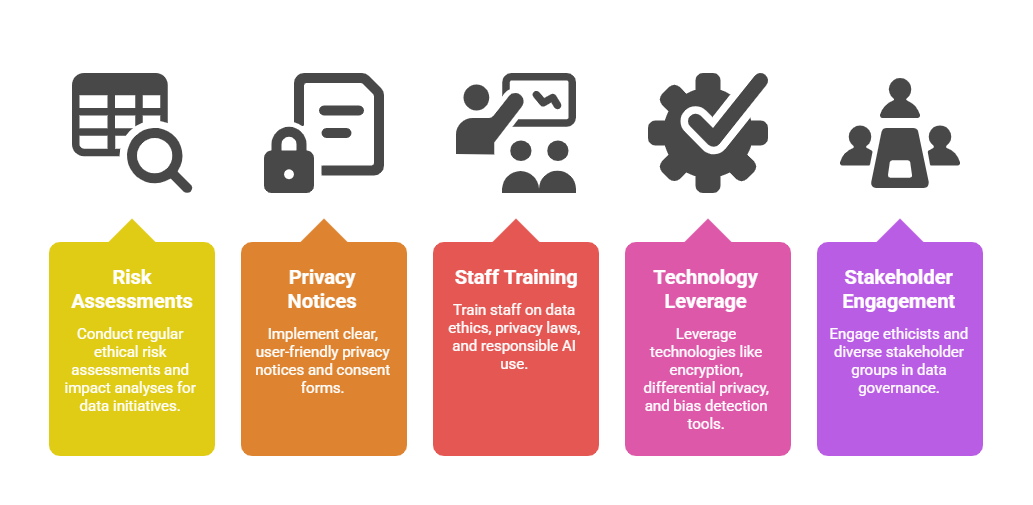
From staff training to technological safeguards, ethical data use relies on proactive measures. The following practices can help embed ethics into everyday data workflows.

Class Sessions
Sales Campaign

We have a sales campaign on our promoted courses and products. You can purchase 1 products at a discounted price up to 15% discount.