Data privacy and compliance have become critical concerns for businesses managing personal data in a highly regulated global environment. Regulations such as the General Data Protection Regulation (GDPR) in the European Union and the California Consumer Privacy Act (CCPA) in the United States establish stringent rules for collecting, processing, storing, and sharing personal information.
Achieving compliance not only helps organizations avoid heavy fines and reputational damage but also fosters customer trust by respecting privacy rights.
Overview of GDPR and CCPA
GDPR: Enforced since 2018, GDPR governs personal data protection for individuals within the EU and European Economic Area (EEA). It emphasizes explicit consent, data minimization, transparency, and comprehensive individual rights over data.
CCPA: Effective since 2020, CCPA applies to California residents and mandates businesses to provide transparency on data collection, enable consumers to opt out of data sales, and grant rights to access, delete, and restrict personal information use.
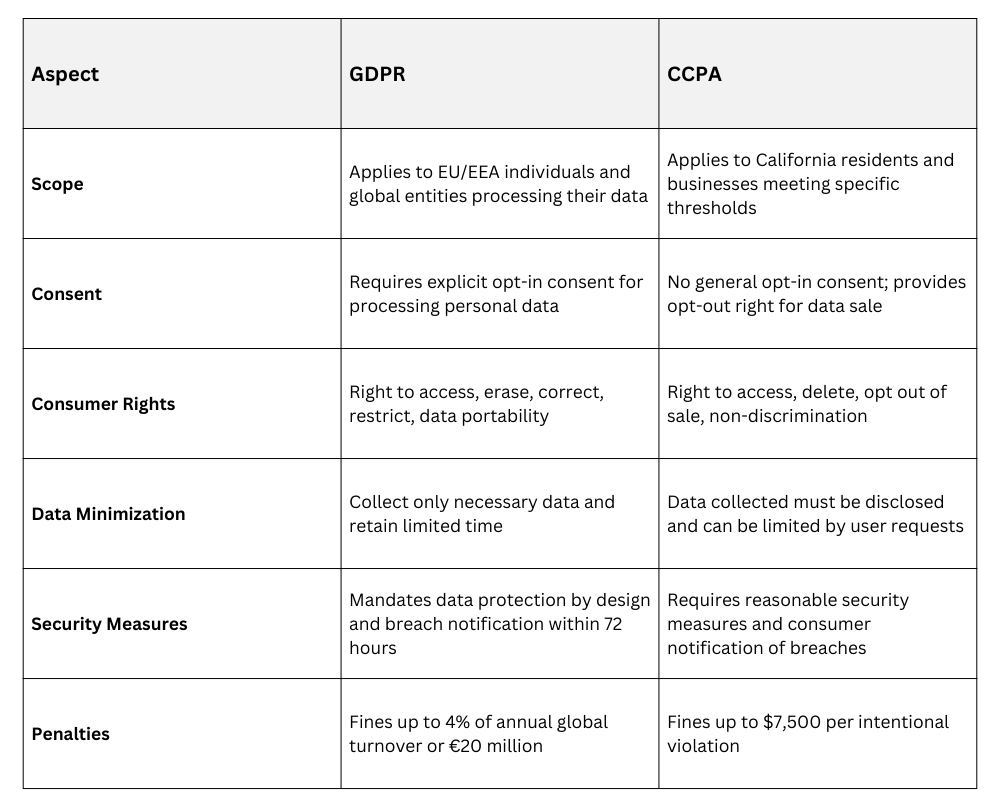
Key Compliance Requirements
Data Privacy Best Practices
Comprehensive data privacy strategies strengthen security and trust while meeting legal requirements. The methods outlined here provide actionable guidance for organizations.
1. Data Mapping and Inventory: Comprehensive identification and classification of personal data assets and flows within the organization to understand processing activities and risks.
2. Consent Management: Implement mechanisms to obtain, record, and manage valid consent compliant with opt-in (GDPR) or opt-out (CCPA) rules.
3. Privacy Policies: Maintain clear, accessible privacy notices outlining data collection purposes, sharing, rights, and contact information.
4. Data Minimization and Retention: Limit data collection to what is necessary and define retention schedules aligned with legal and business requirements.
5. Individual Rights Management: Establish processes for users to exercise rights such as data access, deletion, or objection to processing efficiently.
6. Security Controls: Apply encryption, access restrictions, intrusion detection, and regular audits to protect data confidentiality and integrity.
7. Vendor and Third-Party Management: Ensure contracts and audits address compliance responsibilities with data handlers.
8. Incident Response: Develop and test breach notification plans to meet regulatory timelines and minimize impact.
9. Training and Awareness: Educate employees and stakeholders on data privacy principles and compliance obligations.
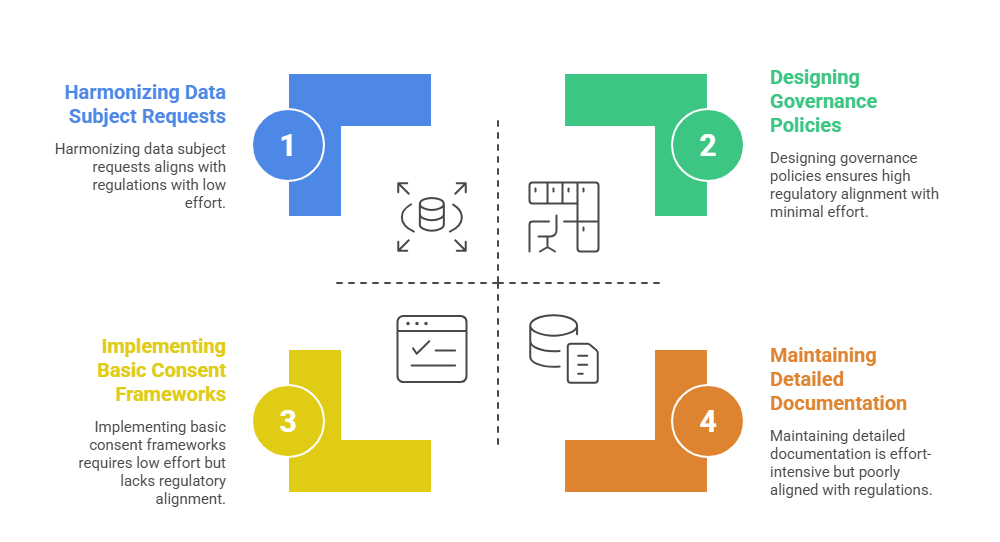
Harmonizing GDPR and CCPA Compliance
For organizations operating across both jurisdictions, alignment requires understanding overlapping and unique requirements. Key strategies include:

Class Sessions
Sales Campaign

We have a sales campaign on our promoted courses and products. You can purchase 1 products at a discounted price up to 15% discount.