In the realm of Business Intelligence (BI), the quality of data and the governance frameworks surrounding it are paramount for the credibility, accuracy, and reliability of insights generated. Data quality refers to the condition of data based on attributes like accuracy, completeness, consistency, and timeliness.
Without high-quality data, BI outputs risk being misleading or incorrect, leading to poor decision-making. Data governance encompasses the policies, processes, roles, and technologies that ensure data is managed as a valuable asset across its lifecycle. Together, data quality and governance form the foundation for trustworthy and compliant BI systems.
Importance of Data Quality in BI
High-quality data enables organizations to make confident decisions and drive business success. Poor data quality can cause operational inefficiencies, financial loss, reputational damage, and regulatory penalties.
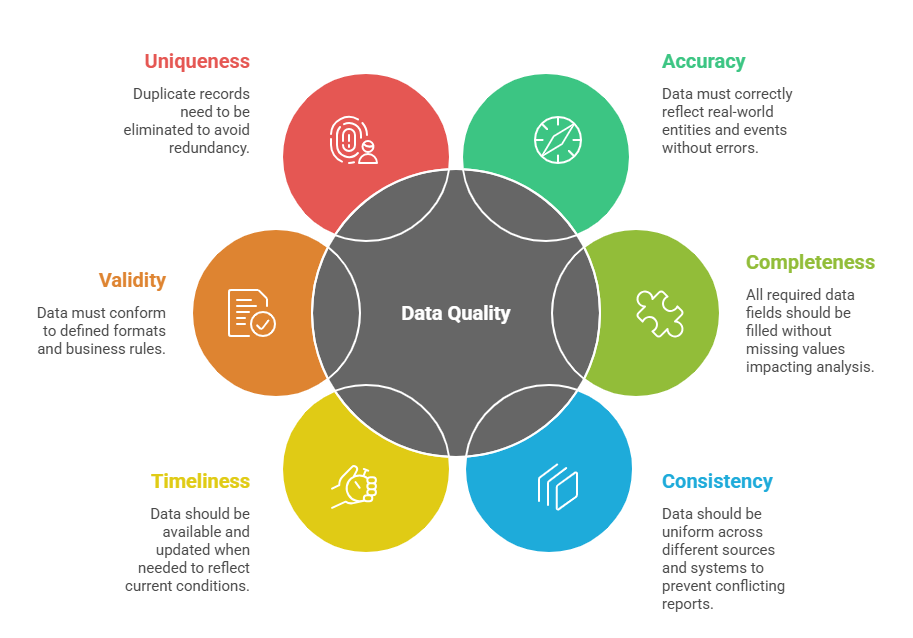
Components of Data Governance in BI
Data governance provides a structured approach to managing data quality, security, and usability:
1. Policies and Standards: Defining clear rules around data collection, usage, storage, and sharing aligned with business goals and compliance requirements.
2. Data Stewardship: Assigning responsibility to individuals or teams (data stewards) who oversee data quality and enforce governance standards across the organization.
3. Data Cataloging and Metadata Management: Maintaining comprehensive metadata that documents data sources, definitions, lineage, and usage to improve transparency and trust.
4. Access Controls and Security: Implementing role-based access, encryption, and auditing to protect sensitive data and ensure authorized use.
5. Data Quality Monitoring and Reporting: Continuously measure data quality metrics and generate reports to identify issues and track improvements.
Challenges in Data Quality and Governance
Modern data environments face several obstacles that hinder consistency, accuracy, and compliance. Key challenges include those outlined here.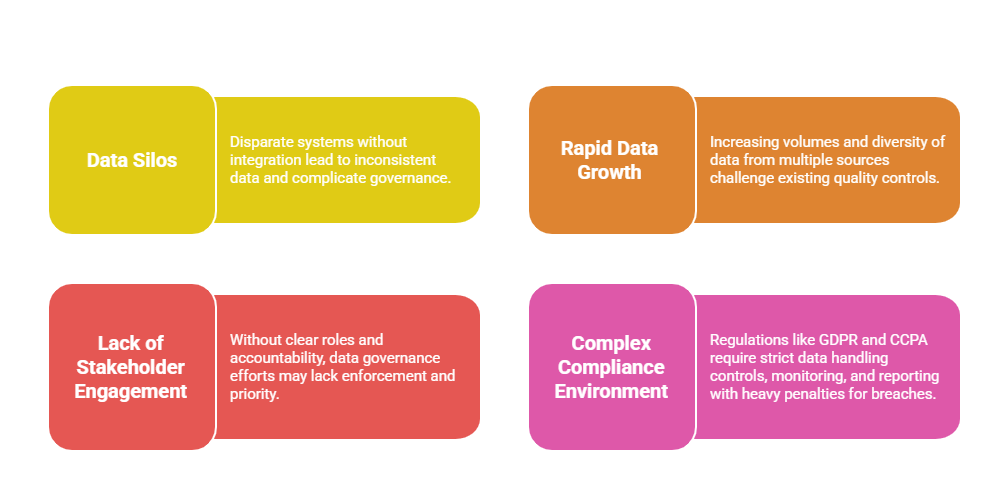
Best Practices for Ensuring Data Quality and Governance in BI
Sustaining high-quality BI insights requires addressing governance challenges with clear policies and automated controls. The practices listed here can help achieve that:
1. Establish a Data Governance Framework: Develop formal structures, roles, and policies involving all stakeholders to ensure collective responsibility.
2. Implement Automated Data Quality Tools: Use software to profile, cleanse, and monitor data, enabling timely detection and correction of issues.
3. Promote a Data-Driven Culture: Educate users about data quality and encourage adherence to governance policies throughout the data lifecycle.
4. Integrate Data Governance with BI Workflows: Embed data validation, lineage tracking, and user feedback mechanisms within BI tools and processes.
5. Regular Audits and Continuous Improvement: Conduct audits to assess compliance and data quality, using findings to refine governance practices proactively.

Class Sessions
Sales Campaign

We have a sales campaign on our promoted courses and products. You can purchase 1 products at a discounted price up to 15% discount.