Business Intelligence (BI) tools are essential for organizations to transform raw data into interactive insights, enabling smarter decisions and strategic planning. Among numerous BI solutions available today, Power BI, Tableau, Qlik, and Looker stand out for their robust analytics capabilities, user-friendly interfaces, and wide adoption across industries.
Each tool offers unique features, integration options, and deployment models, making them suited for different business needs and technical environments.
Power BI: Microsoft's Comprehensive BI Solution
Power BI is a widely used, cost-effective BI platform by Microsoft, designed for self-service analytics and enterprise reporting.
Key Features:
1. Seamless integration with Microsoft Office 365 and Azure.
2. Drag-and-drop report creation with customizable visuals.
3. Powerful data modeling using DAX (Data Analysis Expressions).
4. Real-time dashboards, interactive reports, and mobile accessibility.
Deployment: Cloud-based with on-premises options (Power BI Report Server).
Use Cases: Suitable for organizations leveraging Microsoft ecosystems, ranging from small businesses to large enterprises needing scalable BI solutions.
Strengths: Ease of use, strong integration with familiar Microsoft tools, and a vibrant user community.
Tableau: Leader in Visual Analytics
Tableau is known for its advanced data visualization and intuitive interface, empowering users to create compelling, interactive dashboards.
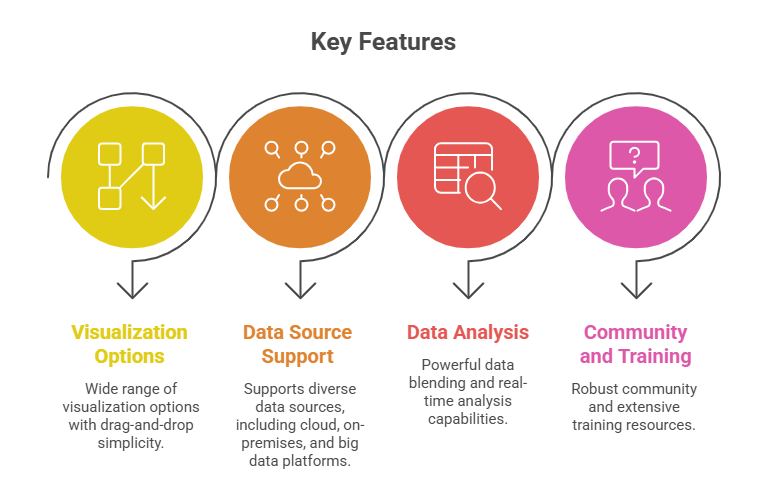
Deployment: Available as both on-premises and cloud service (Tableau Online).
Use Cases: Preferred by organizations emphasizing visual storytelling, exploratory data analysis, and cross-department collaboration.
Strengths: Superior visual quality, flexibility, and user empowerment.
Qlik: Associative Engine for Data Discovery
Qlik offers a unique associative data engine that allows users to explore data in any direction without pre-defined drill paths.
Key Features:
1. The associative model enables users to freely navigate data relationships.
2. In-memory data processing ensures swift query response times.
3. Advanced analytics, AI-driven insights, and augmented intelligence features.
4. Broad connectivity with multiple data sources and APIs.
Deployment: Cloud-based and on-premises options available.
Use Cases: Especially useful in scenarios requiring complex data discovery, multi-source analysis, and dynamic user-driven queries.
Strengths: Flexibility, speed, and ability to uncover hidden insights through associative exploration.
Looker: Modern Data Platform with Embedded BI
Looker, now part of Google Cloud, offers a web-based BI platform focusing on data exploration, governed analytics, and embedding BI into workflows.
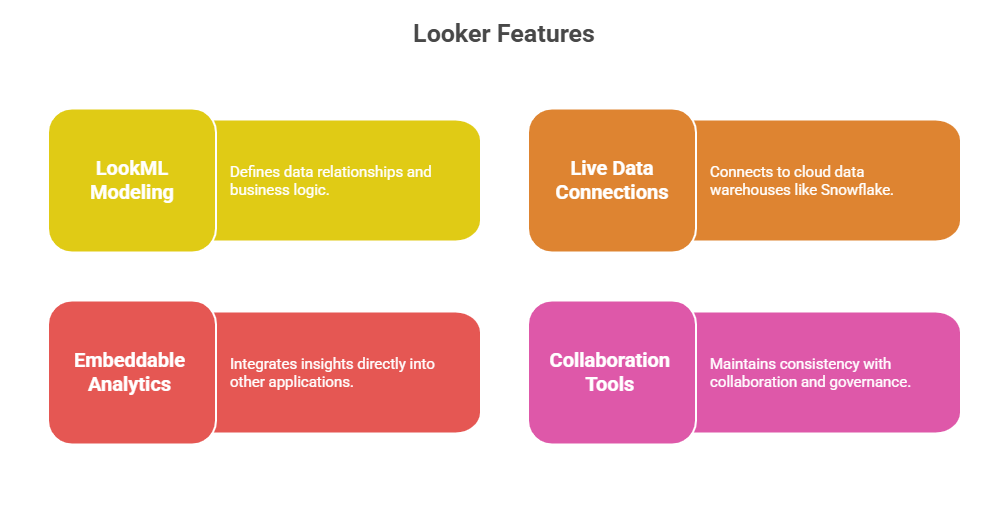
Deployment: Cloud-native platform optimized for modern data stacks.
Use Cases: Ideal for enterprises invested in cloud data ecosystems and requiring integrated BI within business applications.
Strengths: Strong developer and data engineering focus, real-time analytics, and governance.

Class Sessions
Sales Campaign

We have a sales campaign on our promoted courses and products. You can purchase 1 products at a discounted price up to 15% discount.