Business Intelligence (BI) plays a crucial role in transforming raw data into meaningful customer insights and comprehensive market analysis. By aggregating data from multiple touchpoints, BI enables businesses to gain a deeper understanding of customer behavior, preferences, and trends, which drives strategic marketing, personalization, and competitive positioning.
Market analysis supported by BI tools informs product development, pricing strategy, and resource allocation by highlighting evolving market dynamics and competitor movements.
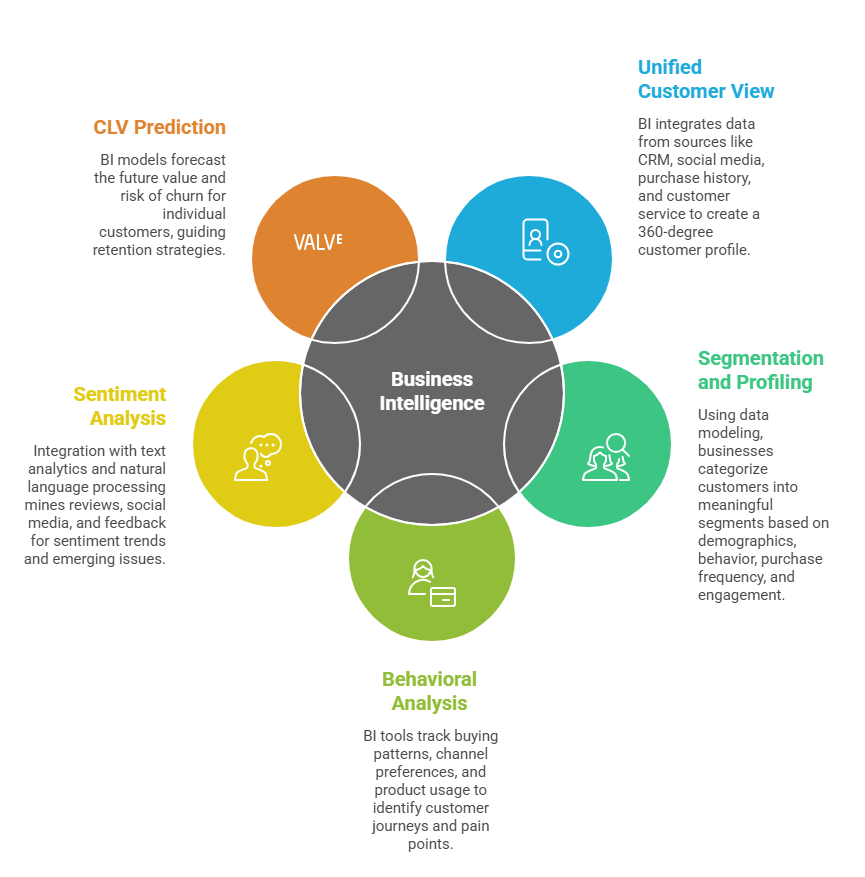
Generating Customer Insights with BI
Customer insights refer to actionable understandings derived from analyzing customer data, enabling businesses to anticipate needs, improve satisfaction, and tailor offerings.
Market Analysis Powered by BI
Market analysis involves examining industry conditions, competitor activities, and demand patterns to identify opportunities and threats.
1. Competitive Intelligence: BI tools gather and analyze competitor data on pricing, promotions, product launches, and market share changes.
2. Trend Identification: Analyzing market reports, social trends, and purchase behaviors helps businesses capture emerging demands and shifts.
3. Demand Forecasting: Predictive analytics estimate future product or service demand, optimizing inventory, staffing, and supply chain functions.
4. Pricing and Promotion Optimization: BI models evaluate the impact of pricing strategies and marketing campaigns to maximize returns on investment.
5. Risk Assessment: Evaluates external factors like economic indicators and regulatory changes affecting market conditions.
Use Cases: Practical Applications of BI Insights
Organizations can harness BI to optimize operations, marketing, and product strategies. The cases described here showcase the tangible benefits of data-driven decision-making.
1. A retail chain segments customers into “early adopters,” “bargain hunters,” and “brand loyalists” based on purchase data, enabling targeted promotions and personalized communications that improve engagement and sales.
2. A logistics company uses BI demand forecasts and trend analysis to allocate resources efficiently during peak shipment periods, reducing delays and customer dissatisfaction.
3. A fashion retailer monitors real-time social media analytics with sentiment tracking to identify emerging style trends before competitors, enabling agile product offering adjustments.
4. Marketers leverage campaign performance dashboards to continuously optimize spending across digital channels based on conversion tracking and ROI analytics.
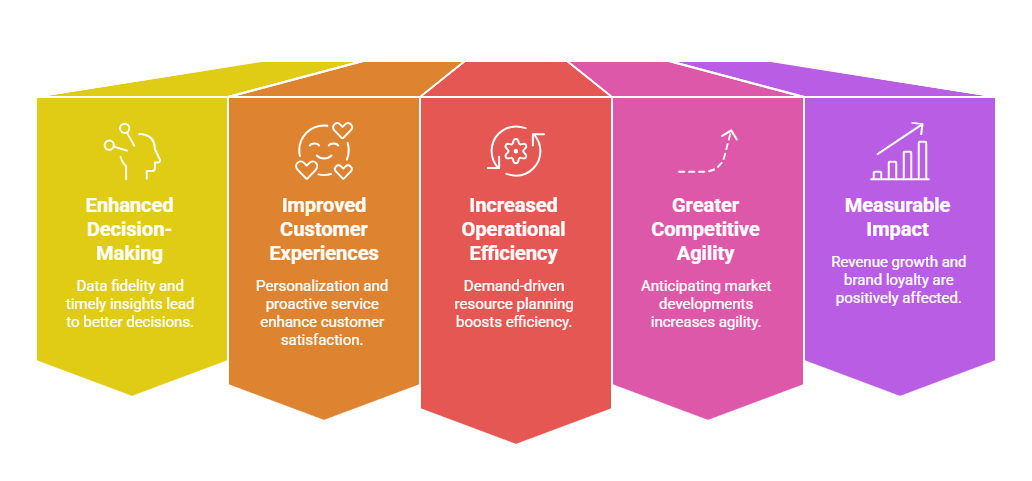
Benefits of Integrating Customer and Market Insights via BI
Here are some notable ways organizations gain value from this integration.

Class Sessions
Sales Campaign

We have a sales campaign on our promoted courses and products. You can purchase 1 products at a discounted price up to 15% discount.