Business Intelligence (BI) has emerged as a crucial capability for modern enterprises aiming to make informed decisions, optimize operations, and maintain competitive advantage.
It encompasses the strategies, technologies, and tools used to collect, analyze, and transform raw data into meaningful insights. These insights enable organizations to understand market trends, customer behavior, and internal performance—empowering leaders to make data-driven decisions that foster growth and efficiency.
BI goes beyond simple reporting; it integrates data from multiple sources, applies analytics to unravel patterns, and presents findings in an accessible way through dashboards, visualizations, and reports.
The role of BI in modern enterprises has evolved with the explosion of data, adoption of cloud technologies, and advanced analytical capabilities such as real-time analytics and AI integration.
Role of BI in Modern Enterprises
In today’s fast-paced business world, enterprises face continuous challenges from fluctuating markets, rising customer expectations, and the need to innovate. BI equips organizations with the capability to:
1. Make Informed Decisions: Decision-makers rely on timely, accurate data insights to evaluate business activities and forecast outcomes, replacing intuition-based choices with evidence-backed judgments.
2. Enhance Operational Efficiency: BI analyzes internal processes, identifying bottlenecks, redundancies, or inefficiencies and suggesting improvement opportunities, leading to cost savings and productivity gains.
3. Understand Customer Behavior and Preferences: Detailed analysis of customer data helps businesses tailor products, marketing strategies, and services, boosting customer satisfaction and retention.
4. Gain Competitive Advantage: By monitoring market trends, competitor strategies, and emerging opportunities, enterprises can position themselves strategically and innovate proactively.
5. Financial Performance: BI supports budgeting, forecasting, and financial reporting with precise data, helping monitor revenue streams and control finances effectively.
Components of Business Intelligence in Enterprises
Enterprises implement BI through several connected components that together form a holistic intelligence system:
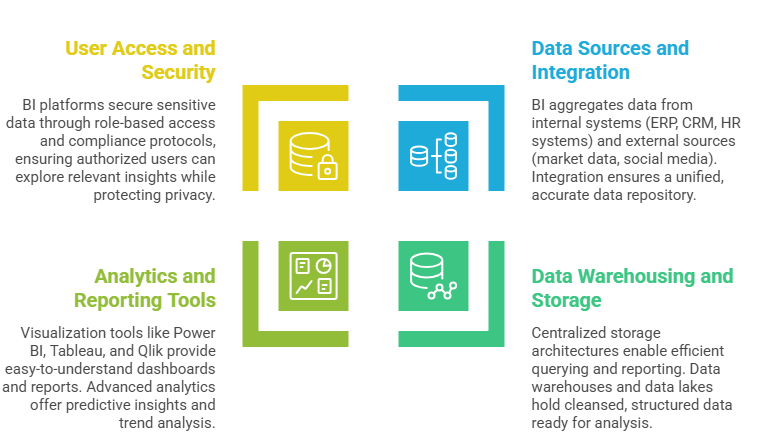
BI as a Strategic Asset for Enterprises
Modern enterprises recognize BI not just as an operational function but as a strategic asset that drives business transformation. The integration of BI with emerging technologies such as artificial intelligence (AI), machine learning (ML), and cloud computing further magnifies its impact.
1. Real-Time Decision Making: Real-time BI capabilities allow enterprises to respond instantly to market changes, customer feedback, or operational disruptions. This agility is vital in industries like retail, finance, and manufacturing.
2. AI and Advanced Analytics Integration: Machine learning models analyze vast datasets to detect complex patterns and predict future trends, providing decision-makers with foresight into market dynamics or customer needs.
3. Supporting Innovation: Data-driven insights guide product development, marketing innovation, and organizational change, fueling enterprise growth through smarter investments and initiatives.
Challenges in BI Adoption by Enterprises
While BI offers numerous benefits, enterprises often encounter challenges during implementation: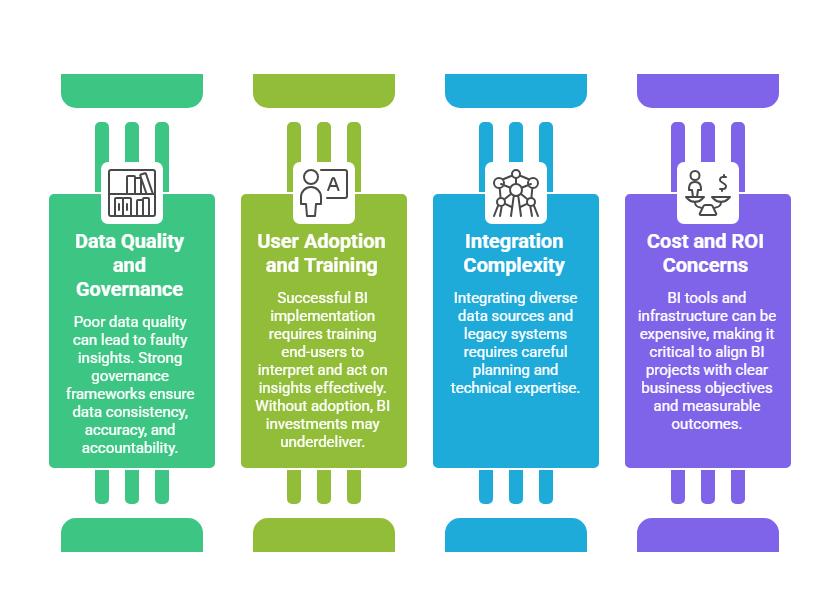

Class Sessions
Sales Campaign

We have a sales campaign on our promoted courses and products. You can purchase 1 products at a discounted price up to 15% discount.