Classification models are a core component of supervised machine learning used to predict categorical outcomes such as “Will the customer buy or not?”, “Is this user likely to churn?”, or “Which marketing offer will they respond to?” These models help marketers categorize customers into meaningful groups based on their likelihood to take specific actions.
By using historical data—such as past purchases, online behavior, demographics, and engagement patterns classification algorithms learn patterns that allow businesses to make highly targeted decisions.
In modern marketing, classification is essential because it allows companies to move beyond generic campaigns and instead tailor strategies to the right audience segments.
Whether used for identifying high-value customers, predicting churn, classifying leads by conversion probability, or determining which users should receive premium offers, classification models drive efficiency and personalization.
Popular algorithms include Logistic Regression, Decision Trees, Random Forests, Gradient Boosting Machines (like XGBoost, LightGBM), and Neural Networks.
With the rise of automation, CDPs, and digital marketing platforms, classification models now operate in real time, powering personalized recommendations, dynamic retargeting, and predictive campaign optimization.
They reduce wasted ad spend, improve customer engagement, and provide actionable insights that shape marketing ROI.
As data availability increases, classification models continue to evolve, becoming more accurate, scalable, and essential for every data-driven marketing strategy.
Machine Learning Classification for Marketing Decisions
1. Understanding the Purpose of Classification in Marketing
Classification models help marketers categorize customers into defined classes such as “likely to purchase,” “likely to churn,” or “high-engagement user.
” This structured categorization supports precise decision-making by focusing marketing resources on individuals more likely to respond.
Unlike clustering, which discovers hidden patterns, classification uses historical labeled data to predict future behaviors.
These models strengthen marketing by enabling targeted interventions and reducing blanket promotional efforts.
Ultimately, classification aligns campaigns with customer needs, improving both response rates and budget efficiency. It forms the backbone of predictive, personalized marketing strategies in digital businesses.
2. Key Classification Algorithms Used in Targeted Marketing
Several algorithms are widely used due to their accuracy, interpretability, and scalability.
Logistic Regression is simple, transparent, and great for binary outcomes like “buy/not buy.”
Decision Trees offer intuitive rule-based segmentation. Random Forests and Gradient Boosting methods provide powerful predictive performance by combining multiple decision trees.
Neural Networks excel when working with complex, high-volume customer data such as clickstreams.
Each algorithm has unique strengths, and marketers select them based on data complexity, performance needs, and interpretability requirements. These models have become standard tools in today's analytics-driven marketing ecosystems.
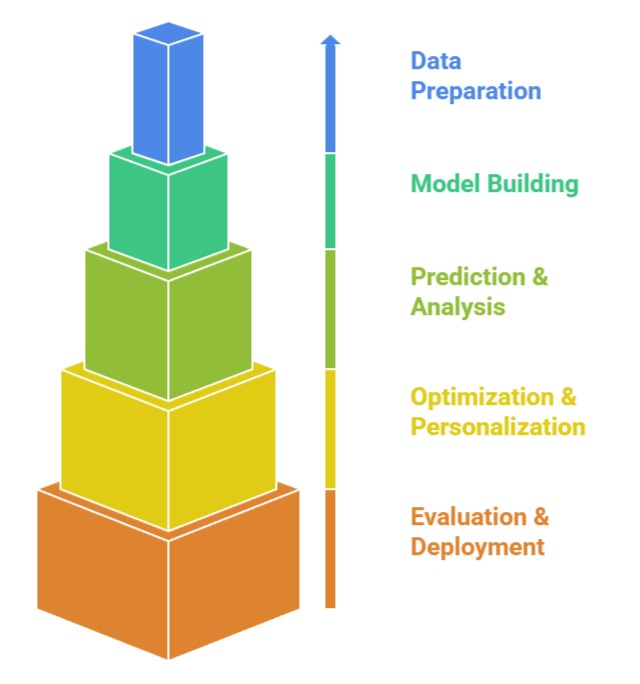
3. Preparing and Transforming Data for Classification Models
High-quality data is essential for building reliable classification models.
Features such as purchase history, website activity, demographics, and marketing interaction data must be cleaned, encoded, and scaled appropriately.
Feature engineering—like creating RFM scores, engagement levels, or visit frequency—helps models capture deeper behavioral signals.
Handling missing data, balancing class distributions, and removing outliers further improves model stability.
The preprocessing stage often determines whether the classification model will perform well.
Clean, structured, and meaningful features enhance accuracy and produce insights that marketers can trust.
4. Predicting Customer Conversion Probabilities
One of the most valuable applications of classification is estimating conversion likelihood.
Models identify behavioral and demographic patterns that distinguish converters from non-converters.
Marketers use these predictions to optimize ad targeting, prioritize high-intent leads, and customize offers for different probability groups.
By focusing efforts on customers with higher conversion probabilities, businesses reduce acquisition costs and increase ROI.
Conversion probability models are widely used in ecommerce, CRM systems, and performance marketing.
This prediction-driven approach ensures campaigns are smarter, more efficient, and more impactful.
5. Identifying and Preventing Customer Churn
Classification models are critical for identifying customers who are at risk of leaving or decreasing engagement.
Behavioral indicators such as reduced activity, fewer purchases, or declining email interactions serve as inputs to predict churn likelihood.
Early detection allows marketers to launch targeted retention strategies like personalized offers, loyalty incentives, or support outreach.
This proactive approach reduces customer loss, increases lifetime value, and strengthens overall customer relationships.
Churn prediction models are standard in subscription businesses, telecom, SaaS, and ecommerce. Their predictive accuracy directly translates to revenue protection.
6. Lead Scoring and Qualification Using Classification
Classification algorithms help businesses rank leads based on their likelihood to convert. Instead of manually evaluating prospects, automated models analyze attributes such as interaction history, industry, budget profile, or engagement signals.
Leads with higher scores are routed to sales teams, while lower-scoring leads receive nurturing content.
This structured scoring system improves conversion rates and prevents wasted effort on low-quality leads.
Many CRM platforms integrate real-time classification models to keep scoring responsive to new interactions. Lead scoring powered by machine learning creates faster, smarter sales pipelines.
7. Optimizing Marketing Offers and Message Personalization
Classification models can predict which customers should receive discounts, premium products, or personalized content based on their likelihood of responding.
For Example, a model can identify customers who may buy without discounts versus those who require promotional triggers. This prevents unnecessary markdowns and increases profitability.
Personalized messaging also becomes more relevant, improving engagement and customer satisfaction.
By understanding the predicted preferences of each classification group, brands deliver tailored experiences across email, SMS, apps, and ads.
This results in highly efficient, data-driven personalization strategies.
8. Evaluating Model Performance Using Key Metrics
Marketers assess classification models using metrics such as accuracy, precision, recall, F1-score, ROC curves, and AUC.
These measures reveal whether the model can reliably distinguish between different customer classes.
For applications like churn prediction, recall and F1-score may matter more than accuracy, while for conversion prediction, AUC might be prioritized.
Understanding these metrics ensures that marketing decisions are based on models that perform well under real-world conditions.
Continuous evaluation and recalibration help keep predictions accurate as customer behaviors evolve. Strong performance measurement builds trust and enhances strategic marketing impact.
9. Evaluating Classification Models Using Cross-Validation and Avoiding Overfitting
Cross-validation ensures that classification models generalize well to unseen marketing data by training the model on multiple folds and averaging the results.
This reduces the risk of overfitting, especially when datasets contain high variability in customer behavior.
Techniques like k-fold cross-validation provide a clearer understanding of how well the model performs across different customer groups rather than relying on a single train-test split.
Additionally, marketers can use regularization methods such as L1 and L2 penalties to control complexity and prevent the model from learning noise in the data.
With proper validation, businesses can select models that maintain accuracy during real-world deployment.
This is especially important for campaigns where incorrect predictions could lead to wasted marketing spend or lost opportunities.
10. Feature Engineering for Higher Targeting Accuracy
Feature engineering plays a crucial role in enhancing classification model performance, especially in marketing scenarios where customer behavior data is diverse and multi-dimensional.
Creating meaningful features such as frequency of engagement, recency of purchase, preferred communication channels, and average order values allows the model to capture deeper behavioral patterns.
Marketers can also encode categorical variables like customer demographics, subscription status, or device type to make them machine-understandable.
Transformations such as scaling, binning, and interaction terms often help the model detect subtle but valuable signals hidden within raw data.
High-quality features improve the model's ability to classify customers accurately, enabling more precise targeting and personalized campaign execution.
11. Handling Class Imbalance in Marketing Response Data
Marketing datasets often suffer from class imbalance—such as when only a small percentage of customers respond to emails or purchase after receiving promotions.
Without proper handling, classification models may become biased toward the majority class and fail to correctly identify high-value responders.
Techniques like SMOTE (Synthetic Minority Oversampling Technique), random oversampling, or class-weight adjustments help balance the dataset and allow the model to learn the minority class more effectively.
Marketers can also use threshold tuning to ensure predictions reflect campaign goals, whether maximizing conversion or minimizing false positives.
Proper imbalance handling leads to better ROI as it helps target the right customers instead of wasting resources on uninterested segments.
12. Using Probability Scores Instead of Binary Predictions
Modern classification models do not just output “yes/no” labels but also assign probability scores that indicate how likely a customer is to perform an action.
These scores enable marketers to create ranking-based targeting strategies where the focus is on customers most likely to convert. Probability-based targeting helps allocate budgets more efficiently—
for example, running expensive ads for high-probability leads and cheaper channels for medium-probability groups.
Marketers can also set different probability cutoffs based on campaign goals such as maximizing conversions or minimizing churn.
Probability-driven decision-making leads to smarter personalization and more optimized campaign planning.
13. Deploying Classification Models in Real-Time Marketing Systems
Classification models today are increasingly integrated into real-time systems like recommendation engines, CRM workflows, and automated ad platforms.
These models can instantly classify customers visiting a website or responding to notifications and adjust marketing actions accordingly.
For example, a real-time churn prediction model can trigger personalized retention messages the moment a customer shows disengagement behavior.
Similarly, targeted product suggestions can be generated immediately for customers based on their session activity.
Real-time deployment ensures that marketing responses are timely, context-aware, and more likely to influence customer decisions positively.