Data Science is a multidisciplinary field that focuses on extracting meaningful insights from data using a combination of statistics, mathematics, computer programming, machine learning, and business domain knowledge.
Its goal is to transform raw, unorganized data into actionable knowledge that can support decision-making and automate processes.
In simple terms, Data Science helps us understand what happened, why it happened, what is likely to happen next, and what can be done to improve outcomes.
Data Science
Data Science is a comprehensive discipline that focuses on generating insights, predictions, and automated decision-making from data.
It brings together several fields—statistics, mathematics, computer science, machine learning, data engineering, and domain expertise—to solve real-world business problems.
Key Activities
The Nature of Data in Today’s World
In the digital age, data is being generated at an unprecedented scale.
Every click on a website, every social media post, every online purchase, every GPS movement, and every customer service interaction produces data.
Companies are no longer dealing with small samples—they are dealing with big data that is too large and complex for traditional tools.
Data Science enables businesses to process:
1. Structured data: Rows and columns (CRM, sales data, transactions)
2. Semi-structured data: Logs, JSON files, APIs
3. Unstructured data: Text, reviews, emails, images, videos, voice recordings
The ability to analyze all these forms of data gives companies a competitive advantage.
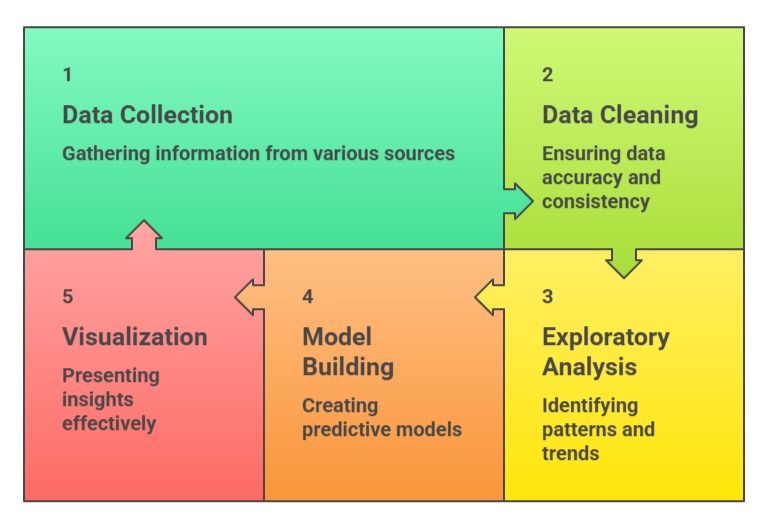
The Data Science Workflow
Data Science is not just about writing algorithms. It follows a structured workflow:
1. Data Collection: Gathering data from databases, websites, analytics tools, surveys, marketing platforms, IoT devices, and more.
2. Data Cleaning & Preprocessing
Removing noise, duplicates, missing values, formatting issues, and inconsistencies.
This step is crucial—70% of a data scientist’s time goes here.
3. Exploratory Data Analysis (EDA)
Understanding the data by exploring trends, correlations, and distributions.
This helps uncover business patterns that are not immediately visible.
4. Feature Engineering: Creating new variables or transforming existing ones to improve model performance.
5. Machine Learning & Statistical Modeling
Using algorithms to make predictions or classifications, such as:
Predicting customer churn
Forecasting demand
Grouping customers
Recommending products
6. Visualization & Storytelling
Presenting insights through dashboards, charts, and business reports.
This step turns technical results into decision-friendly information.
7. Deployment & Automation: Integrating models into business systems so they operate automatically—like personalized recommendations or real-time campaign optimization.
Importance in Marketing
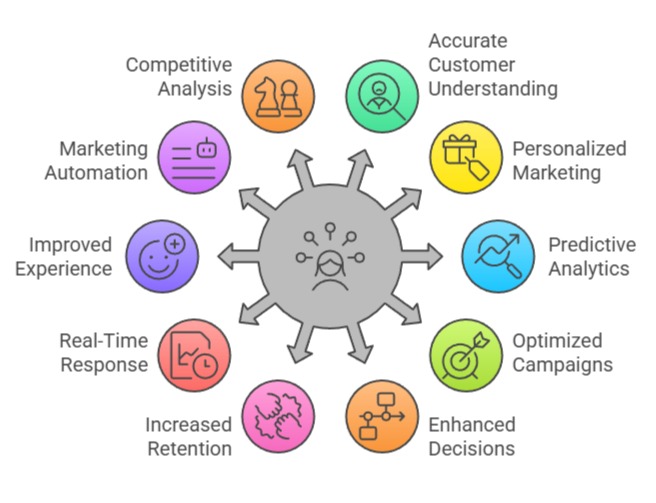
1. Understanding Customer Behavior with Greater Accuracy
Data Science allows marketers to deeply analyze customer behavior by examining large volumes of data collected from different digital touchpoints such as websites, social media, apps, and purchase records.
It helps identify hidden patterns in how customers think, what they prefer, and why they behave in certain ways.
Instead of making assumptions, marketers can rely on data-backed insights to create relevant messaging and campaigns.
By understanding motivations, pain points, and engagement habits, businesses can tailor strategies that resonate more effectively with their audience.
This level of behavioral understanding ultimately improves targeting accuracy and enhances the overall customer experience.
2. Delivering Personalization at Scale
One of the biggest strengths of Data Science is its ability to power large-scale personalization, something that modern customers expect from brands.
Through techniques like recommendation systems, behavioral tracking, and predictive analytics, marketers can offer customized products, emails, messages, and offers to each individual user.
This improves engagement because customers feel understood and valued.
Personalization also increases conversion rates by presenting the right content at the right moment, based on a user’s past actions and preferences.
Ultimately, Data Science enables brands to build stronger relationships by providing experiences tailored to each customer’s unique needs.
3. Predicting Future Customer Actions and Market Trends
Predictive analytics helps marketers forecast how customers will behave in the future by analyzing historical data and behavioral patterns.
It can predict which customers are likely to make a purchase, who might discontinue using a service, and what products will trend during specific seasons.
These insights allow companies to plan ahead, design proactive strategies, and allocate resources wisely.
Instead of reacting to market changes after they happen, brands can anticipate them and stay competitive.
This future-focused decision-making greatly reduces risk and enhances the long-term success of marketing initiatives.
4. Optimizing Marketing Campaigns and Improving ROI
Data Science helps marketers determine which strategies are effective and which ones need improvement, leading to better utilization of marketing budgets.
By analyzing campaign metrics, audience engagement, and channel performance, marketers can make data-driven adjustments that improve results.
A/B testing, conversion tracking, and real-time analytics also allow campaigns to be refined while they are still running.
This ensures that money is not wasted on ineffective ads or poorly performing channels. The result is higher return on investment (ROI) because every decision is backed by measurable data.
5. Enhancing Product, Pricing, and Market Decisions
Data Science supports smarter product and pricing strategies by analyzing customer feedback, purchase behavior, market demand, and competitor activities.
Marketers can understand which product features customers value most, which price points maximize sales, and which markets show high growth potential.
These insights help businesses design offerings that truly meet customer expectations and stand out in competitive environments.
Companies can also use price elasticity analysis to find the optimal balance between affordability and profitability.
Overall, Data Science reduces guesswork and ensures marketing decisions are aligned with real market behavior.
6. Strengthening Customer Retention and Loyalty
Retaining existing customers is more cost-effective than acquiring new ones, and Data Science makes retention strategies much stronger.
Through churn prediction models, businesses can identify customers at risk of leaving and intervene early with personalized offers, support, or re-engagement campaigns.
Analytics also helps uncover the reasons behind customer dissatisfaction, enabling companies to improve their products or services.
By understanding lifetime value and loyalty drivers, brands can prioritize their most valuable customers and design better retention programs.
This leads to stronger long-term relationships and higher overall customer loyalty.
7. Real-Time Decision Making and Faster Response to Market Changes
Data Science enables marketers to make real-time decisions by analyzing live data from campaigns, customer interactions, and market activity.
With dashboards and monitoring tools, businesses can quickly identify performance issues, audience behavior shifts, or sudden spikes in demand.
This allows companies to make immediate adjustments to ads, pricing, or promotions instead of waiting for end-of-month reports.
As a result, marketing becomes more agile and efficient, reducing losses and capturing opportunities faster. Real-time insights give brands a competitive advantage in fast-moving digital environments.
8. Improving Customer Experience Across All Touchpoints
With Data Science, companies can track a customer’s entire journey across channels—websites, mobile apps, stores, ads, and emails.
This helps marketers understand where customers face issues, drop off, or feel satisfied. Using this information, businesses can streamline processes, remove friction, and create smoother experiences.
For example, identifying slow website pages, confusing navigation paths, or ineffective messages becomes easier through data analysis.
Improved customer experience leads to higher satisfaction, better retention, and stronger brand loyalty.
Ultimately, Data Science helps shape a seamless journey for customers at every interaction.
9. Enhancing Marketing Automation and Efficiency
Data Science plays a major role in marketing automation by powering tools that send personalized emails, schedule ads, score leads, and segment audiences automatically.
Machine learning models can determine which customers should receive which offers without human involvement.
This reduces manual effort and increases accuracy, allowing marketers to focus on strategy rather than repetitive tasks.
Automation also ensures consistency in communication and timely delivery of relevant messages.
As a result, marketing teams become more productive and campaigns perform better.
10. Competitive Analysis and Market Intelligence
Marketers can use data science to monitor competitors’ pricing, advertising strategies, customer reviews, and market positioning.
Advanced models help compare performance metrics and predict how competitors might act next.
This provides deeper industry intelligence and helps companies refine their strategies to stay ahead. Understanding competitive trends allows marketers to position their brands more effectively and identify gaps in the market.
Data-driven competitive analysis supports smarter planning, product decisions, and budget allocation. In highly competitive industries, this level of insight becomes a key differentiator.