Data privacy regulations and risk management are fundamental components of responsible data governance in today’s digital business landscape. As organizations increasingly rely on data and Business Intelligence (BI) for strategic decisions, compliance with privacy laws and effective risk management are essential to safeguard individual rights, maintain trust, and avoid legal repercussions.
Understanding Data Privacy Regulations
Privacy regulations globally set legal standards for how organizations must collect, store, process, and protect personal data. Key laws include:
1. GDPR (General Data Protection Regulation): Enforces strict consent requirements, data subject rights (access, erasure), and breach notification obligations within the European Union and for global entities handling EU data.
2. CCPA (California Consumer Privacy Act): Grants California residents rights to know, delete, and opt out of the sale of personal information, with broad applicability to businesses processing such data.
3. HIPAA (Health Insurance Portability and Accountability Act): Regulates the protection of sensitive health information within the U.S. healthcare sector.
4. Other Jurisdictional Laws: Countries worldwide enact diverse privacy laws reflecting local expectations and risk profiles.
Key themes across these regulations include transparency, minimization, security, accountability, and user empowerment.
Principles of Privacy Risk Management
Privacy risk management involves identifying, assessing, and mitigating risks related to processing personal data. Effective frameworks operationalize these principles: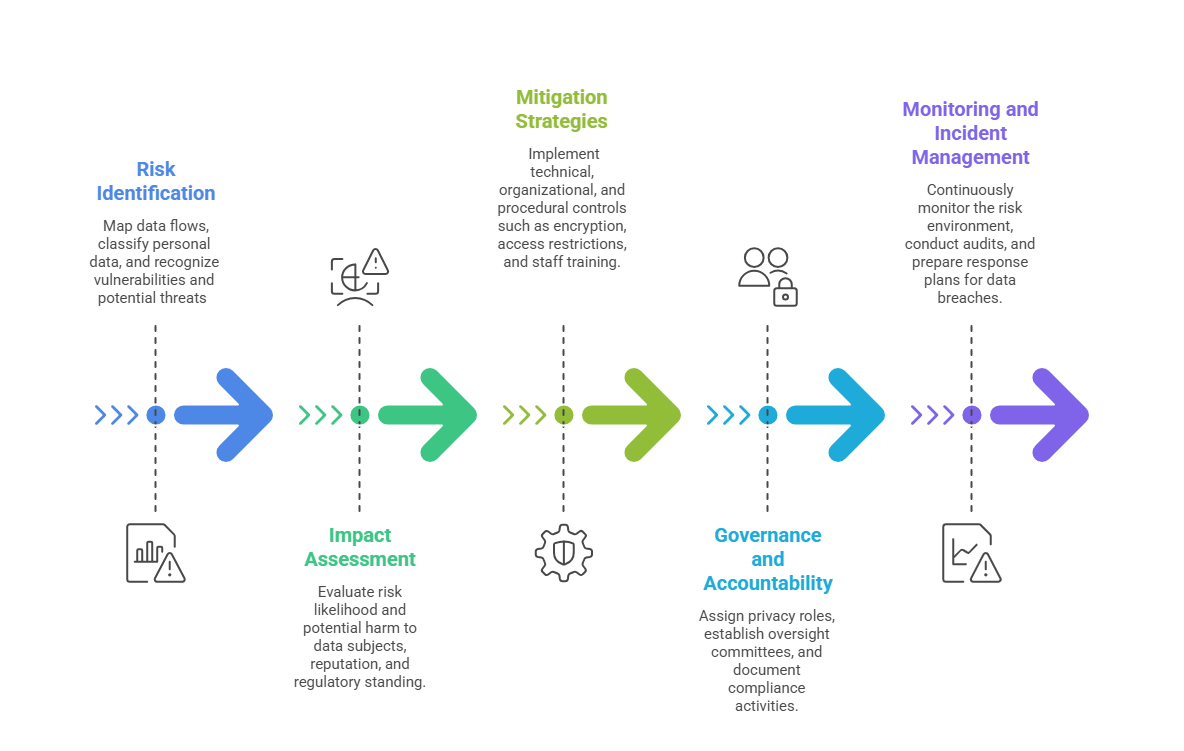
Balancing Data Utility and Privacy
Maintaining data utility while respecting privacy requires thoughtful strategies:
1. Data Minimization: Collect only necessary data for defined purposes to reduce exposure.
2. Anonymization and Pseudonymization: Use techniques to unlink data from identifiers where feasible, enabling analytics without compromising privacy.
3. Consent Management: Ensure lawful bases for data processing with transparent user agreements and opt-out options.
4. Privacy by Design and Default: Embed privacy considerations early in system design and enforce default protective settings.
5. Cross-Functional Collaboration: Engage legal, IT, business units, and data scientists to align privacy and analytics goals.
Impact on Risk Management and Business Intelligence
Strict privacy requirements introduce operational complexity but also drive more disciplined data handling, improving data quality and trustworthiness.
Compliance reduces risks of fines, legal actions, and reputational damage while enhancing customer confidence. BI functions must integrate privacy risk management to ensure that insights derive from ethically and legally sound data practices.