Managing Business Intelligence (BI) projects effectively requires not only technical expertise but also robust stakeholder engagement strategies. Successful BI initiatives depend on understanding stakeholder needs, continuous communication, and collaboration to ensure solutions meet business goals and add real value.
Engaging stakeholders from project inception through delivery helps mitigate risks, address data gaps, and secure organizational buy-in, thereby increasing the likelihood of project success.
Identifying and Involving Stakeholders Early
Engaging stakeholders at the beginning helps align BI initiatives with organizational goals and user needs. Consider these approaches to identify and involve stakeholders.
1. Identify All Relevant Stakeholders: Include executives, managers, end-users, IT, and data teams who influence or are impacted by the BI solution.
2. Understand Stakeholder Objectives: Stakeholders hold unique knowledge relevant to their domains; actively solicit their requirements and expectations.
3. Engagement Levels: Determine the involvement level for each stakeholder—decision-makers require ongoing updates; operational users need usability feedback.
Building Clear Communication Channels
Maintaining open and structured communication supports collaboration and project clarity. Below are methods to facilitate ongoing stakeholder dialogue and documentation.
Regular Updates: Schedule status meetings, progress reports, and demos to maintain transparency and manage expectations.
Two-Way Communication: Encourage dialogue to capture feedback, clarify misunderstandings, and refine requirements iteratively.
Documentation: Keep detailed records of decisions, feedback, and changes to ensure a shared understanding and accountability.
Collaborative Project Planning and Execution
Successful BI implementations rely on coordinated efforts and structured planning. The following are key strategies for collaborative project execution.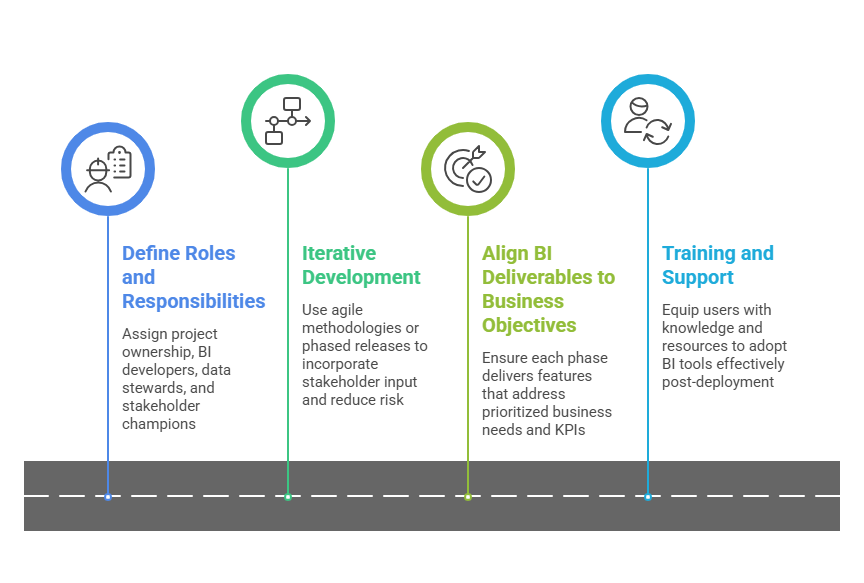 Managing Expectations and Conflict
Handling conflicts and aligning expectations strengthens trust and ensures project progress. Below are practical methods to achieve this.
1. Set Realistic Goals: Avoid “solution temptation” by thoroughly understanding the problem before committing to technology choices.
2. Prioritize Issues: Handle critical roadblocks first and manage less urgent items later to keep projects on track.
3. Empathy and Emotional Intelligence: Build trust through active listening and conflict resolution to maintain stakeholder commitment.
Leveraging Technology and AI for Engagement
Leveraging technology and AI can significantly strengthen stakeholder engagement efforts. AI-driven predictive modeling and analytics help organizations understand stakeholder sentiment, anticipate engagement risks, and tailor communications for improved alignment.
Additionally, digital collaboration platforms enable real-time interaction, document sharing, and efficient feedback collection, creating a more connected and responsive engagement environment.