Data governance and compliance standards are vital frameworks that ensure organizations manage their data responsibly, securely, and in alignment with regulatory requirements. Data governance encompasses the policies, processes, and roles established to maintain data quality, integrity, security, and accessibility across the data lifecycle.
Compliance standards, often mandated by legislation such as GDPR, HIPAA, and CCPA, require organizations to protect personal and sensitive data to mitigate legal and reputational risks. Together, these principles guide organizations in creating trustworthy, efficient, and legally compliant data management environments.
Principles of Data Governance
The foundation of effective data governance relies on several interdependent principles that ensure data serves as a reliable and valuable asset:
1. Accountability and Ownership: Assign clear roles such as data owners and data stewards responsible for data quality, security, and compliance within their domains. This promotes stewardship and accountability throughout the enterprise.
2. Transparency: Maintain open and understandable processes and policies regarding how data is collected, stored, used, and protected. Transparency fosters trust among stakeholders and regulators.
3. Data Quality and Integrity: Establish standards and procedures for data accuracy, completeness, consistency, and timeliness. Continuous data profiling, validation, and cleansing activities uphold these standards.
4. Security and Privacy: Implement robust safeguards, including encryption, access controls, audit trails, and anonymization techniques to protect data from unauthorized access and breaches while respecting privacy rights.
5. Compliance: Align data governance frameworks with relevant laws and industry standards to minimize legal risks and ensure ethical data usage. This includes regular audits and reviews to adapt to evolving regulations.
6. Lifecycle Management: Oversee data from creation through retention to disposal, ensuring relevance, reducing storage costs, and limiting exposure to stale or obsolete data.
Compliance Standards and Their Impact
Adherence to compliance standards safeguards both users and businesses while fostering trust. Consider the following key regulations and their requirements.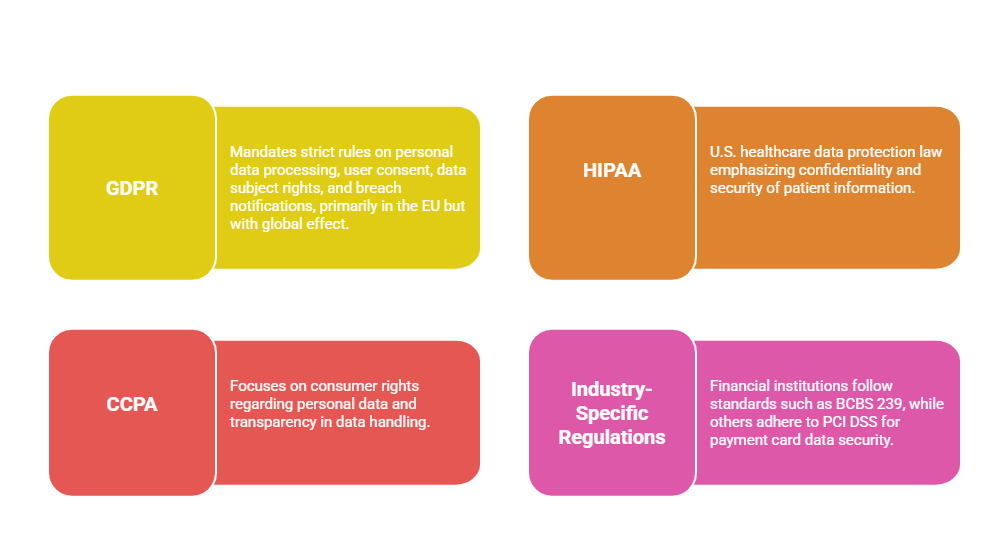
Effective data governance ensures continuous compliance, reduces risks of fines or reputational damage, and builds stakeholder trust.
Best Practices for Implementing Data Governance and Compliance
1. Develop a Clear Governance Framework: Define policies, processes, and roles aligned with business objectives and compliance requirements.
2. Engage Cross-Functional Teams: Include IT, legal, compliance, and business units for holistic governance and risk management.
3. Automate Monitoring and Reporting: Use technology to enforce policies, monitor data usage, and produce audit-ready reports.
4. Cultivate a Data-Driven Culture: Promote data literacy, responsibility, and ethical practices organization-wide.
5. Adapt to Regulatory Changes: Stay informed of legal updates to adjust governance practices proactively.

Class Sessions
Sales Campaign

We have a sales campaign on our promoted courses and products. You can purchase 1 products at a discounted price up to 15% discount.