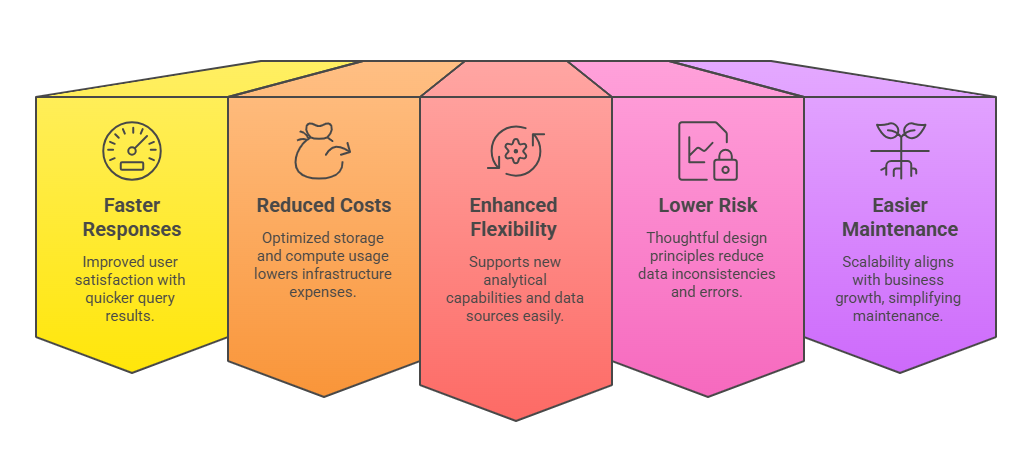
Designing efficient and scalable data models is a critical discipline for ensuring that Business Intelligence (BI) systems perform optimally and grow with organizational needs. A well-designed data model facilitates quick data retrieval, supports complex analytical queries, and adapts seamlessly to increasing data volumes and evolving business requirements.
Principles of Efficient Data Modeling
Efficiency in data modeling means creating structures that optimize storage, minimize redundancy, and accelerate query performance without sacrificing data integrity. Key principles include:
1. Normalization vs. Denormalization: Normalize to avoid data duplication and ensure consistency, especially for transactional systems. Denormalize strategically in analytical environments to reduce complex joins and speed up query responses.
2. Indexing: Use proper indexing strategies on keys and frequently queried columns to improve search efficiency. However, indexing must be balanced as it can slow down write operations.
3. Partitioning: Divide large tables into smaller, manageable partitions based on key fields (like date ranges) to enhance query performance and maintenance.
4. Attribute Selection: Carefully choose relevant attributes to avoid bloated data models while ensuring that required analytics questions can be answered.
5. Avoiding Over-Complexity: Simple, clear models reduce maintenance overhead and user confusion, improving adoption and accuracy in BI reporting.
Scalability Considerations
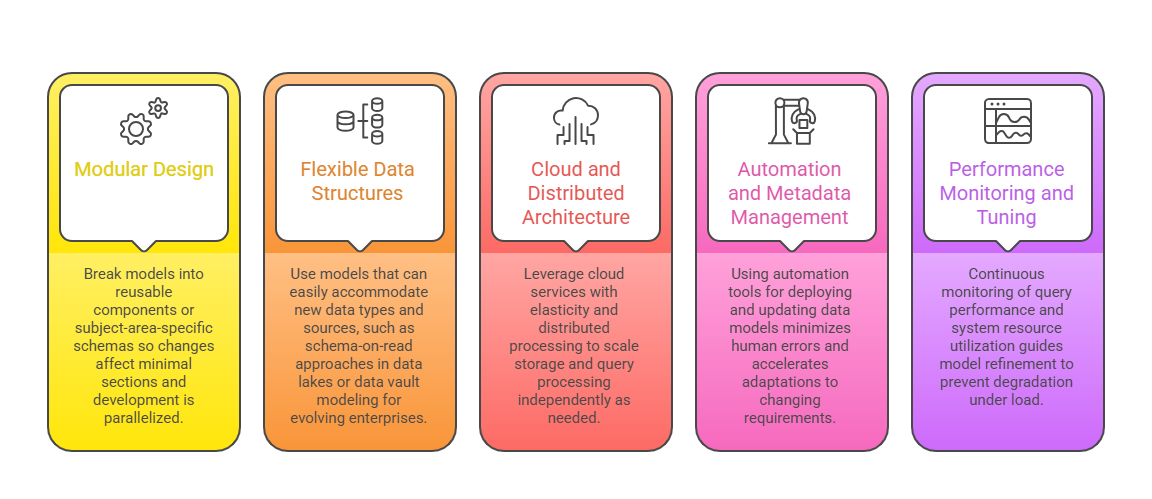
A scalable data model grows with the organization's data volume and complexity without causing performance bottlenecks or requiring costly refactoring. Scalability involves:
Best Practices for Designing BI Data Models
1. Start with a clear understanding of business processes and reporting requirements.
2. Engage with stakeholders to ensure the model supports real use cases and KPIs
3. Prototype early and iterate based on testing feedback to balance normalization and denormalization.
4. Document model design thoroughly, including tables, relationships, and business rules.
5. Use design tools and modeling standards (like UML, ER diagrams) for effective communication.
6. Implement data governance to control model changes and maintain data quality.
7. Plan for backward compatibility and data archival strategies in evolving models.
Benefits of Well-Designed Data Models
Designing efficient and scalable data models yields numerous advantages: