In today’s data-driven business landscape, understanding organizational data needs and aligning Business Intelligence (BI) initiatives accordingly is critical to maximizing the value derived from data assets.
BI alignment ensures that data collection, processing, and reporting efforts directly support an organization’s strategic goals, operational processes, and decision-making requirements. Without this alignment, BI projects risk producing irrelevant insights, wasting resources, and failing to gain organizational buy-in.
Organizational Data Needs
Organizational data stems from various factors that reflect the unique characteristics, challenges, and goals of a company:
1. Business Strategy and Objectives: A Clear understanding of an organization's short- and long-term strategy defines what data matters. For example, a retail chain focused on customer experience may prioritize customer behavior data.
2. Operational Processes: Day-to-day workflows and departments require data to optimize efficiency, track performance, and manage resources. For instance, supply chain teams need inventory and logistics data.
3. Stakeholder Requirements: Different stakeholders—from executives to frontline employees—have distinct information needs based on their roles and decision contexts.
4. Regulatory and Compliance Mandates: Legal requirements often dictate certain data collection and reporting standards, especially in finance, healthcare, or data privacy.
5. Market and Competitive Environment: External data, such as competitor performance, market trends, and customer sentiment,t influences organizational data needs.
Aligning BI Initiatives with Organizational Needs
Properly aligning BI with organizational data needs involves several deliberate steps:
1. Requirement Gathering and Stakeholder Engagement: Engage business leaders, process owners, and end-users early to gather detailed requirements. Conduct workshops, interviews, and surveys to translate business questions into data and analytic needs.
2. Defining Clear Objectives and KPIs: Set measurable objectives for BI initiatives aligned with strategic goals. Define key performance indicators (KPIs) that BI should track and improve, such as revenue growth, operational cost reduction, or customer satisfaction.
3. Data Governance and Quality Management: Establish governance policies to ensure data quality, consistency, and security. Good governance guarantees trust in BI outputs and supports compliance requirements.
4. Technology and Infrastructure Fit: Select BI tools, data platforms, and analytics technologies that fit the organization's scale, complexity, and skillsets while supporting future scalability.
5. Iterative Development and Feedback Loops: Implement BI solutions incrementally with constant feedback from users to ensure alignment and flexibility to adapt as needs evolve.
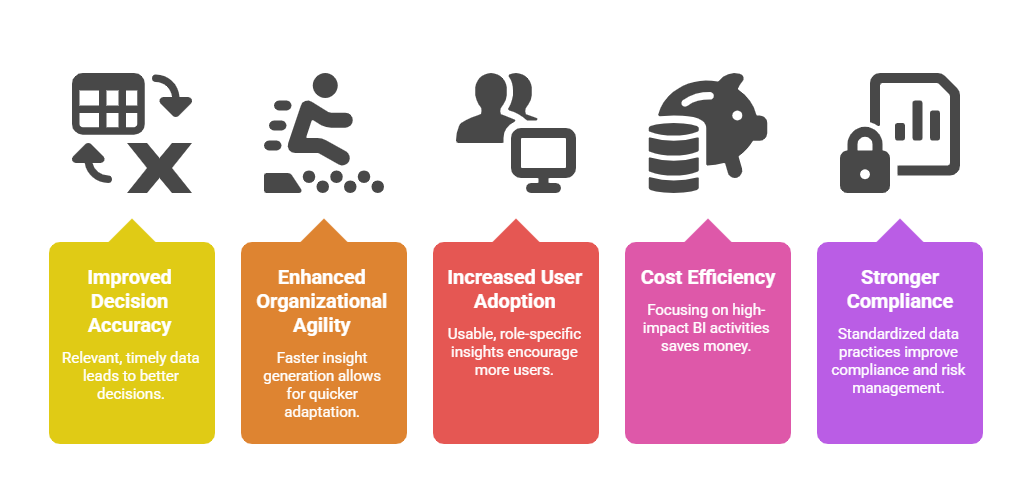
Benefits of BI Alignment
When BI is closely aligned with organizational data needs, several benefits emerge:
Challenges and Best Practices
Common challenges to alignment include siloed data, conflicting stakeholder priorities, change resistance, and rapidly shifting business environments. Best practices to overcome these obstacles involve:
1. Promoting a data-driven culture across the organization
2. Prioritizing cross-functional collaboration and communication
3. Maintaining flexibility in BI approaches to accommodate evolving needs
4. Investing in training and support to empower users