Cost optimization and resource management are critical for organizations leveraging cloud computing to ensure efficient use of resources while minimizing expenses.
Cloud environments provide tremendous flexibility and scalability, but can also lead to uncontrolled cost growth if not managed properly.
Effective cost optimization involves monitoring usage patterns, right-sizing resources, automating lifecycle management, and adopting architectural best practices that balance performance and cost.
AWS offers a rich set of tools and services that support transparent cost visibility and intelligent resource governance, empowering organizations to achieve financial accountability alongside technical excellence.
Fundamentals of Cost Optimization
AWS cost optimization is about eliminating waste, automating scaling, and leveraging flexible pricing models. The fundamentals listed below provide a roadmap to achieving financial efficiency in cloud operations.
1. Right-Sizing Resources: Adjusting compute, storage, and network components to match workloads without over-provisioning.
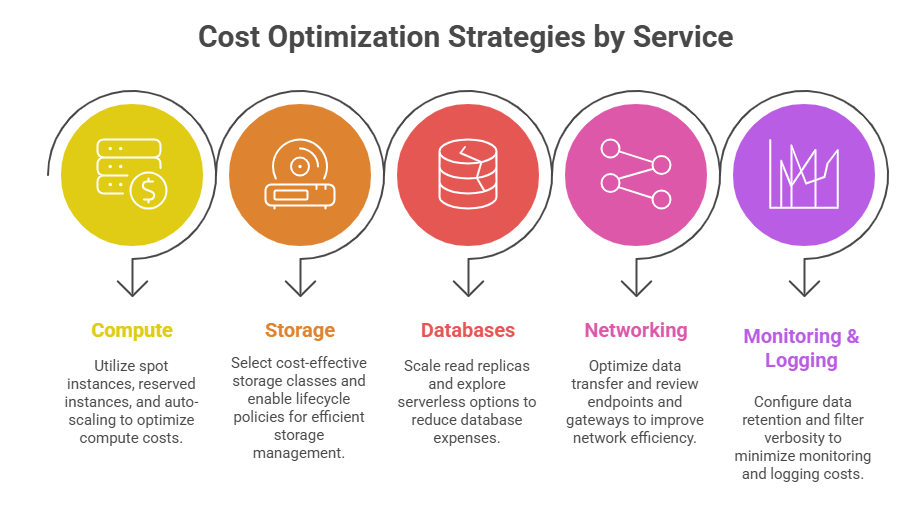
2. Reserved and Spot Instances: Utilizing Reserved Instances for predictable workloads to gain discounted pricing and Spot Instances to leverage spare capacity at low cost for flexible tasks.
3. Auto Scaling: Automatically adjusting the number of running resources, such as EC2 instance,s based on demand to avoid paying for idle capacity.
4. Storage Class Optimization: Choosing appropriate storage tiers (e.g., S3 Glacier for archiving) to reduce storage costs.
5. Operational Efficiency: Eliminating unused resources like unattached EBS volumes, orphaned snapshots, or idle load balancers.
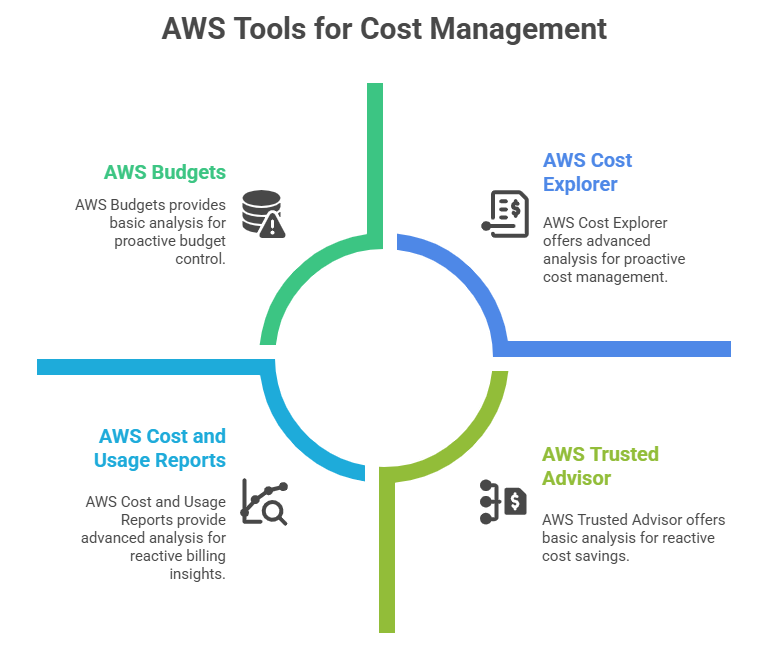
Best Practices in Resource Management
1. Tag resources consistently for cost allocation and tracking by business units or projects.
2. Regularly audit resource utilization and decommission unnecessary assets.
3. Adopt Infrastructure as Code (IaC) to automate resource provisioning and ensure environment consistency.
4. Use serverless and managed services to shift operational burdens and optimize costs.
5. Implement lifecycle policies to automate data transition or deletion.
Cultural and Organizational Alignment
Cost optimization requires collaboration between finance, IT, and development teams. Embedding a cost-aware culture with regular reviews, training, and incentives accelerates sustained cost control and innovation.