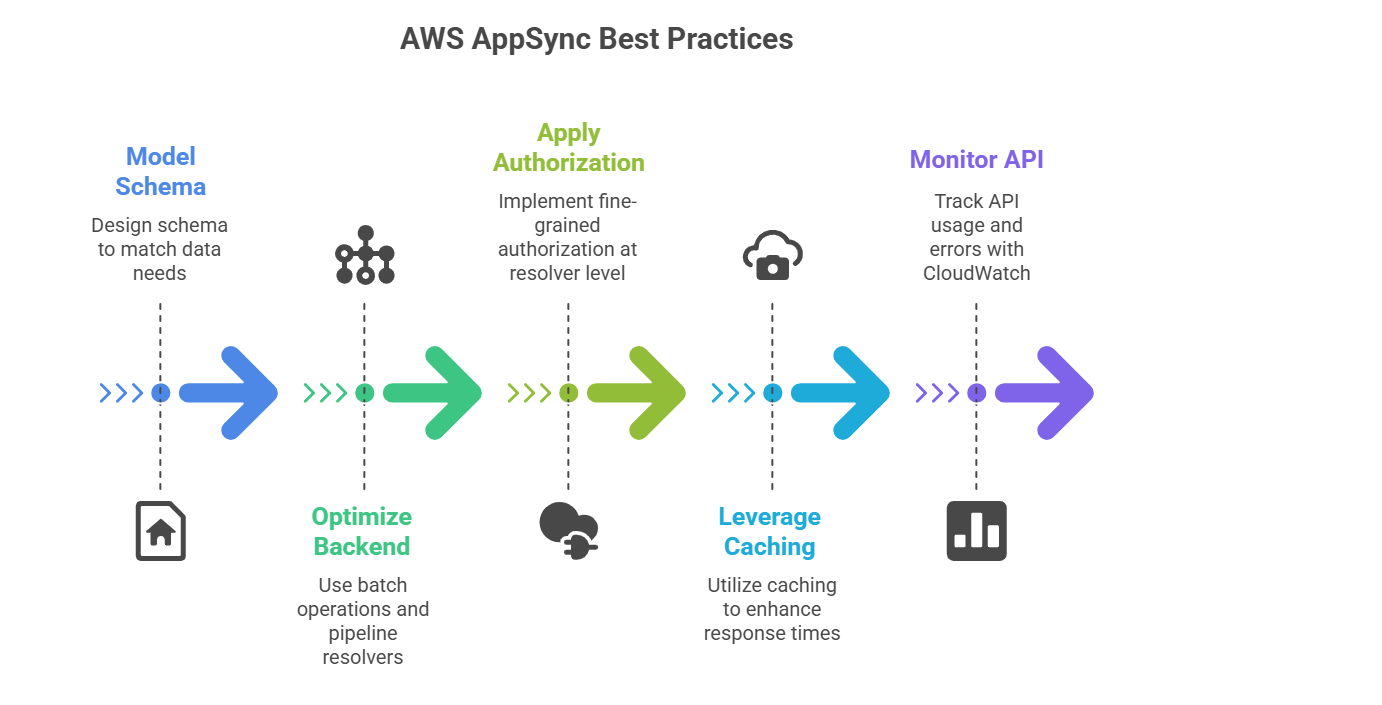
AWS AppSync is a fully managed service that simplifies the development of scalable GraphQL APIs by handling the heavy lifting of securely connecting applications to data sources such as databases, APIs, and serverless functions.
GraphQL is a powerful query language for APIs that enables clients to request exactly the data they need, improving efficiency and flexibility compared to traditional REST APIs.
AWS AppSync combines the benefits of GraphQL with AWS’s cloud features, allowing developers to build real-time applications with ease while reducing backend complexity and operational overhead.
Understanding GraphQL and Its Advantages
GraphQL allows clients to define the structure of the response, enabling multiple resources to be requested in a single API call and minimizing over-fetching or under-fetching of data. Core features of GraphQL include:
1. Declarative Data Fetching: Clients specify query shapes, requesting only the fields they need.
2. Single Endpoint: Unlike REST APIs with multiple endpoints, GraphQL exposes a single endpoint for all queries and mutations.
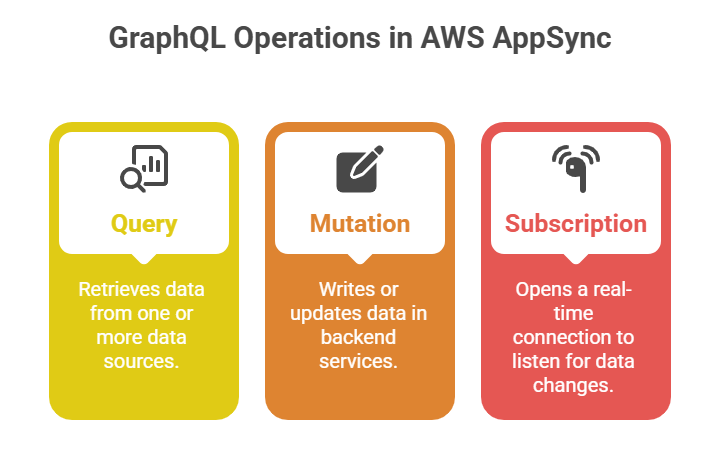
3. Real-time Data: Supports subscriptions to receive data updates in real time.
4. Strong Typing and Introspection: Provides a schema to define the API’s data types and query structure, enabling validation and tooling support.
AWS AppSync Architecture and Features
AWS AppSync orchestrates data from one or more backend sources, presenting a unified GraphQL interface to applications.
1. Data Sources: Supports integration with Amazon DynamoDB, AWS Lambda, Amazon Elasticsearch Service, HTTP APIs, and relational databases through AWS Aurora Serverless.
2. Resolvers: Configurable functions that translate GraphQL operations into actions on backend data sources. Resolving can be configured with Velocity Template Language (VTL) or AWS Lambda as needed.
3. Real-time and Offline Support: Supports GraphQL subscriptions with real-time updates using WebSocket connections. Offline access and data synchronization on mobile and web applications are also supported.
4. Security and Access Control: Integrates with AWS Cognito for user authentication and authorization, IAM permissions for resource access, and API keys for public access.
5. Monitoring and Logging: Deep integration with Amazon CloudWatch for metrics and logs, enabling performance monitoring and troubleshooting.
Use Cases and Benefits
From optimising application performance to simplifying backend integrations, GraphQL drives efficiency and innovation. Below are the primary scenarios and benefits where its adoption adds measurable business value:
1. Modern Web and Mobile Apps: Efficient data fetching with less network overhead enhances user experience.
2. Microservices Aggregation: Combines multiple backend APIs into a single GraphQL endpoint, simplifying client design.
3. Real-Time Collaboration Tools: Enable instant data synchronisation across multiple clients, like chat or collaboration platforms.
4. IoT and Streaming Data Applications: Efficiently manage and visualise sensor or telemetry data.
5. Flexibility in Data Access: Frontend teams can independently define and evolve their data needs without backend changes.