Achieving cost efficiency in cloud architectures is a primary goal for organizations leveraging AWS. Effective design not only reduces expenses but also improves operational performance and flexibility.
AWS offers powerful tools and services that, when utilized with best practices in architecture, enable businesses to optimize resource usage, minimize waste, and lower the total cost of ownership.
Optimize Resource Utilization
Optimizing resource utilization ensures that cloud infrastructure operates efficiently without unnecessary costs. The following strategies focus on aligning resource allocation with workload demands to maximize performance and savings.
1. Right-Size Instances: Choose instance types and sizes based on actual workload requirements. Regularly monitor and adjust resources using AWS Cost Explorer and CloudWatch metrics to avoid over-provisioning or underutilization.
2. Use Auto Scaling: Automate scaling policies to dynamically add or remove resources based on demand, reducing costs when demand subsides while ensuring performance during peaks.
3. Leverage Serverless Architectures: Utilize AWS Lambda and managed services that charge only for actual usage, eliminating the cost of idle resources.
Choose Appropriate Pricing Models
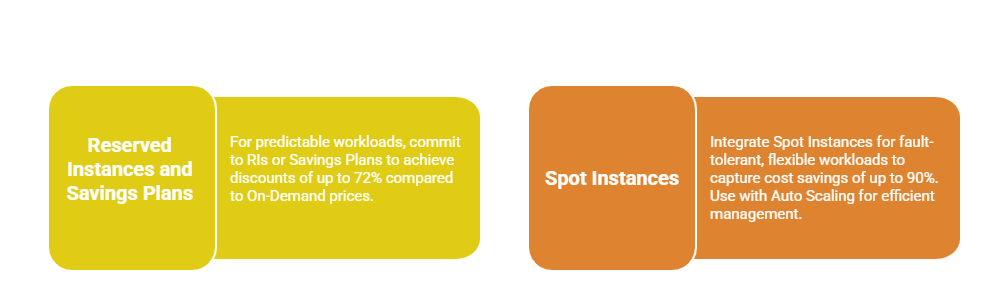
Efficient Storage Management
Efficient storage management ensures that data is stored cost-effectively without compromising accessibility. The following practices help balance performance, availability, and cost through intelligent data placement.
1. Use Tiered Storage Classes: Store infrequently accessed data in lower-cost options such as S3 Glacier or S3 Intelligent-Tiering, while keeping active data in frequently accessed S3 Standard tiers.
2. Implement Lifecycle Policies: Automate transitions between storage classes and delete obsolete backups or snapshots to control storage costs.
Optimize Data Transfer Costs
1. Keep Traffic Within AWS Regions: Wherever possible, architect applications to minimize cross-region data transfer, which incurs additional charges.
2. Use Amazon CloudFront: Cache static content close to users to reduce data transfer from origin services.
Monitor and Manage Costs Actively
Active cost monitoring ensures financial control and resource accountability across cloud environments. The following approaches help detect anomalies, allocate expenses accurately, and optimize ongoing usage.
1. Enable Billing Alerts and Budgets: Set up thresholds to detect and respond to unusual spending promptly.
2. Use AWS Trusted Advisor: Leverage recommendations for cost optimization, including idle resources and underutilized instances.
3. Tag Resources: Implement consistent tagging schemes for cost allocation and accountability across teams and projects.
Design for Operational Efficiency
Operational excellence starts with smart design choices that eliminate repetitive tasks and optimize resources. The points below demonstrate how to achieve streamlined, cost-effective operations.
1. Automation: Use infrastructure as code tools (CloudFormation, Terraform) to swiftly provision only necessary resources and tear down unused environments.
2. Leverage Managed Services: Prefer AWS managed services to reduce operational overhead and associated costs like patching, backups, and scaling.
Architectural Practices for Cost Efficiency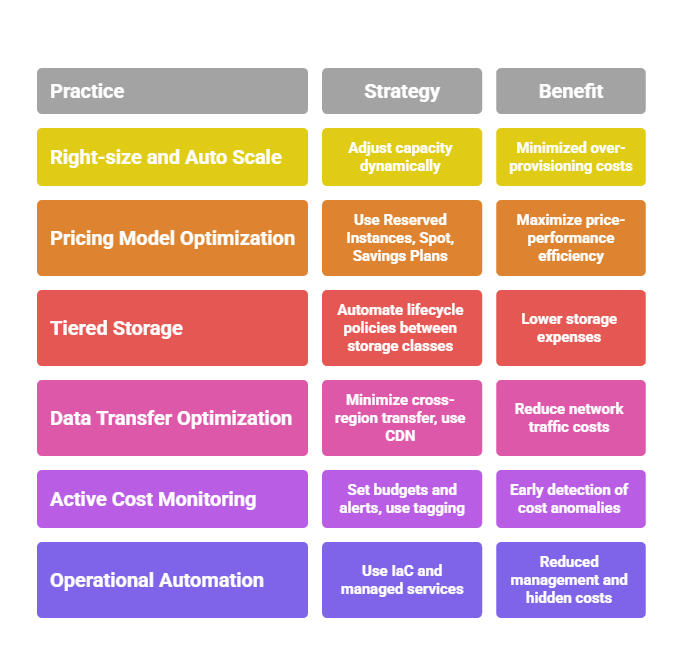

Class Sessions
Sales Campaign

We have a sales campaign on our promoted courses and products. You can purchase 1 products at a discounted price up to 15% discount.