AWS Cloud provides transformative capabilities enabling businesses to build flexible, scalable, and cost-effective IT infrastructure.
As cloud adoption grows, understanding core AWS benefits—scalability, elasticity, and cost optimization—is critical for modern organizations to stay competitive, handle fluctuating workloads, and optimize IT spending.
These key features together empower companies to deliver better customer experiences and innovate rapidly while maintaining financial control.
Scalability: Growing with Your Business
Scalability in AWS refers to the ability to increase or decrease computing resources seamlessly based on demand. This ensures applications run smoothly during traffic spikes and downtime, or wasted resources are minimized during low usage.
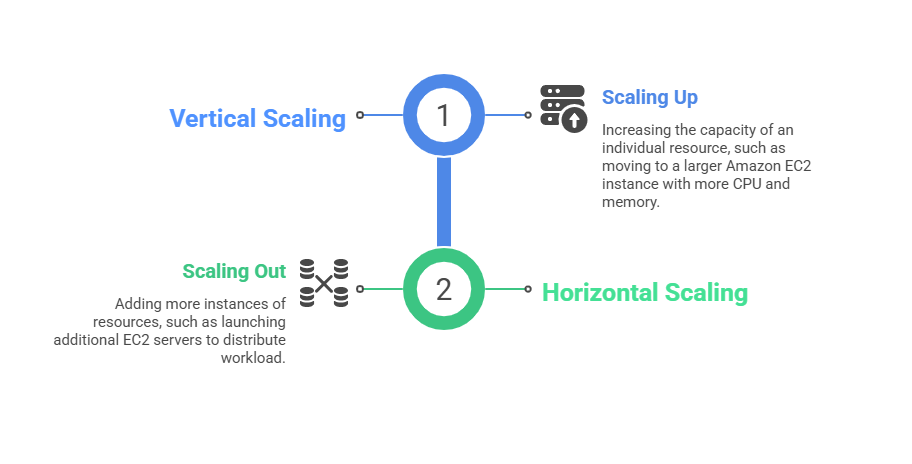 1. Services like Auto Scaling automate adjustments, ensuring performance keeps pace with traffic changes.
2. Database services such as Amazon RDS support scalability by resizing storage without downtime.
Scalability helps avoid over-provisioning, ensuring IT infrastructure grows alongside business needs cost-effectively.
Elasticity: Dynamic Resource Adjustment
Elasticity complements scalability by automatically and rapidly adapting resource levels in real-time based on workload fluctuations. While scalability can refer to planned growth, elasticity is about instantaneous responsiveness to change.
1. AWS Lambda exemplifies elasticity by running code only when triggered, automatically handling thousands of concurrent executions.
2. Elastic Load Balancers distribute traffic across healthy resources dynamically, maintaining responsiveness during traffic surges.
3. Elastic Block Store (EBS) volumes and Amazon S3 scale storage capacity on demand.
Elasticity provides applications the flexibility to handle unpredictable demand patterns smoothly, essential for maintaining user satisfaction and operational stability.
Cost Optimization: Pay for What You Use
AWS follows a pay-as-you-go pricing model, converting fixed infrastructure costs into variable operational expenses.
1. Businesses pay only for the resources they consume, enabling efficient budget allocation.
2. Pricing options like Reserved Instances and Spot Instances offer discounts for long-term or flexible workloads.
3. Services such as AWS Cost Explorer and Budgets help monitor and optimize spending.
4. Scalability and elasticity reduce costs by preventing over-provisioning and underutilization.
Effective cost optimization allows companies to maximize ROI on cloud investments while scaling confidently.

Class Sessions
Sales Campaign

We have a sales campaign on our promoted courses and products. You can purchase 1 products at a discounted price up to 15% discount.