Disaster recovery (DR) is a critical component of IT resilience, focused on restoring business operations after significant outages or catastrophic events.
Cloud computing and AWS provide versatile strategies and architectures for effective DR, allowing organizations to tailor recovery objectives and costs to their unique needs.
Key AWS disaster recovery approaches include pilot light, warm standby, and multi-site architectures, each balancing recovery time objectives (RTO) and recovery point objectives (RPO) with operational complexity and cost.
Disaster Recovery Fundamentals
Disaster recovery aims to ensure minimal data loss (RPO) and swift recovery time (RTO) following disruptive incidents such as hardware failures, natural disasters, or cyberattacks.
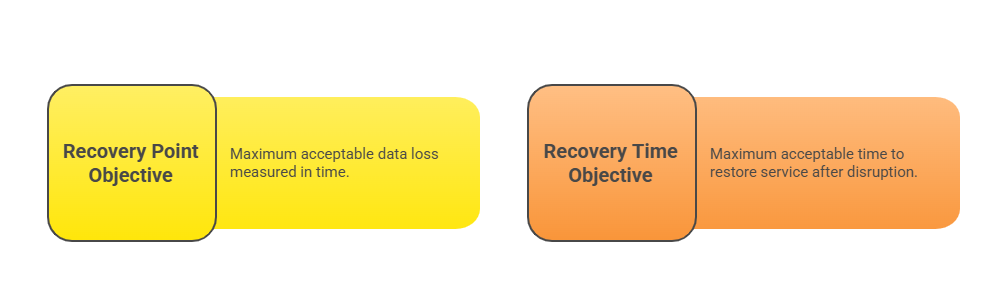
DR strategies must balance these objectives against budget constraints, compliance, and risk tolerance.
AWS Disaster Recovery Architectures
Effective disaster recovery planning in AWS ensures minimal downtime and data loss during disruptions. Below are key DR architecture strategies that differ in cost, recovery speed, and operational complexity.
Pilot Light
This strategy maintains a minimal running version of the critical core infrastructure (like databases) in a secondary region or availability zone.
Implementation:
1. Core data replication is continuous to the DR environment.
2. Non-essential elements (web servers, application servers) are provisioned on demand after a disaster.
3. Infrastructure as Code (CloudFormation, Terraform) automates provisioning and scaling post-incident.
Advantages: Low cost during normal operations, as most resources are inactive, and faster recovery than cold standby, with a smaller footprint.
Use Cases: Organizations that need a cost-effective DR plan with medium RTO requirements.
Warm Standby
It maintains a scaled-down but fully functional version of the production environment running in the DR site.
Implementation:
1. Primary application components run at reduced capacity in the DR region.
2. Traffic routing can quickly shift to the DR environment during failover.
3. Automations scale resources in the DR site to full capacity when needed.
Advantages: Faster recovery than the pilot light due to partially active infrastructure, and less costly than full active-active but offers better availability than pilot light.
Use Cases: Business-critical applications requiring quick failover and moderate cost constraints.
Multi-Site Active-Active
Multi-site deployment runs full-capacity production environments in two (or more) geographically separated AWS regions concurrently.
Implementation:
1. Synchronous or asynchronous replication maintains data consistency.
2. Intelligent DNS routing directs user traffic to the healthiest or nearest region.
3. Requires a more complex design for data consistency, conflict resolution, and scaling.
Advantages: Achieves the lowest RTO and RPO with near-zero downtime, provides global redundancy and load balancing among regions.
Use Cases:
1. Mission-critical, globally distributed applications with zero tolerance for downtime.
2. Compliance scenarios require geographic diversity and continuous availability.

Class Sessions
Sales Campaign

We have a sales campaign on our promoted courses and products. You can purchase 1 products at a discounted price up to 15% discount.