Responding to audit results and maintaining compliance is a critical ongoing process within an ISO 9001 Quality Management System (QMS) that ensures organizations address audit findings effectively and sustain continual improvement.
After receiving audit feedback—whether from internal audits or external certification assessments—organizations must take timely corrective and preventive actions, monitor their effectiveness, and update their QMS as necessary to maintain conformity and effectiveness.
Responding to Audit Results
Audit results provide valuable insights into how well the QMS meets ISO 9001 requirements and organizational objectives. They highlight strengths, areas that require improvement, and nonconformities.
Responding appropriately to these results demonstrates management commitment to quality, accountability of process owners, and dedication to compliance and customer satisfaction.
Below are the Key Steps in Responding to Audit Results
1. Review and Analyze Findings: Management and relevant teams thoroughly examine audit reports to understand each finding’s nature, severity, and root cause.
2. Develop Corrective Action Plans: For nonconformities, define actions needed to eliminate root causes. Responsibilities, timelines, and resources must be clearly assigned.
3. Implement Corrective Actions: Execute the planned corrective measures promptly, such as revising procedures, retraining employees, or modifying processes.
4. Verify Effectiveness: Perform follow-up audits or evaluations to ensure corrective actions have resolved issues and have not introduced new problems.
5. Document Actions and Outcomes: Maintain detailed records of findings, action plans, implementation status, and verification results to provide evidence of compliance.
6. Communicate Results: Share improvements and learnings with involved personnel and stakeholders to reinforce quality culture and transparency.
7.Update QMS Documentation: Reflect changes resulting from corrective actions in QMS documents to prevent recurrence and support continual improvement.
Maintaining Compliance Post-Audit
Beyond addressing specific audit findings, maintaining compliance requires a proactive, systematic approach: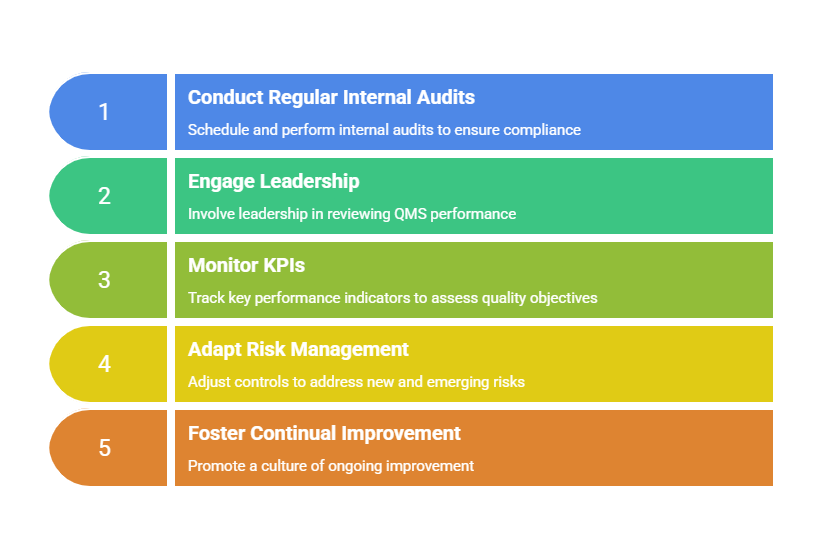 Effectively responding to audit results and sustaining compliance not only satisfies regulatory and customer requirements but also drives operational excellence, market credibility, and organizational resilience.