Internal audits are planned, systematic, and documented activities performed by trained personnel within the organization.
They serve as a self-assessment mechanism to identify nonconformities, root causes of issues, and opportunities for improvement before external certification audits.
Internal audits also stimulate accountability and raise awareness of quality responsibilities among employees at all levels.
Steps in Conducting Internal Audits
Systematic internal audits provide valuable insight into process performance and compliance. The list below details the key stages necessary for conducting them effectively.
1. Planning the Audit Schedule: Define a yearly audit plan that covers all relevant processes, focusing on risk-prone areas and key QMS elements. Scheduling audits openly communicates intent and supports preparedness among process owners.
2. Defining Audit Scope and Criteria: Each audit should have clearly defined objectives, scope, and reference criteria, including ISO 9001 clauses, internal procedures, and regulatory requirements.
3. Auditor Selection and Training: Appoint auditors who are independent of the areas they audit and who possess the necessary competence and training to conduct effective audits.
4. Audit Execution: Conduct the audit through document reviews, interviews, observations, and sampling of processes and records, gathering objective evidence of conformity or nonconformity.
5. Reporting Findings: Document audit results clearly, distinguishing between conformities, nonconformities, and areas for potential improvement. Detailed reports facilitate transparency and management decision-making.
6. Follow-up Actions: Ensure timely corrective actions for nonconformities, monitor their implementation, and verify effectiveness in subsequent audits.
7. Continuous Improvement: Use audit outcomes to inform management reviews and promote ongoing enhancement of the QMS.
Benefits of QMS Internal Audits
A strong internal audit process helps organizations identify weaknesses, enhance performance, and maintain certification readiness. The following list highlights its main advantages.
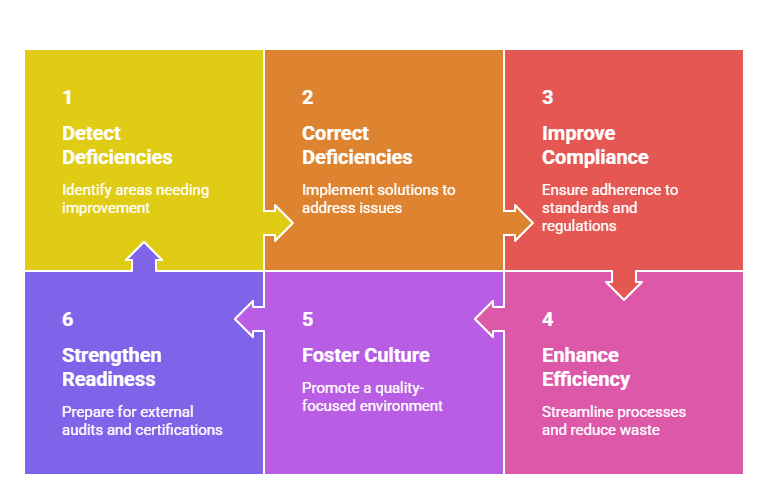
A robust internal audit program is an indispensable tool that supports not just compliance but also continuous optimization and excellence in quality management.

Class Sessions
Sales Campaign

We have a sales campaign on our promoted courses and products. You can purchase 1 products at a discounted price up to 15% discount.