Establishing effective implementation teams is a vital step in successfully adopting and integrating ISO 9001 Quality Management Systems into any organization. These teams serve as the driving force behind planning, executing, and sustaining quality initiatives.
By bringing together representatives from different functions and securing management support, implementation teams ensure that all perspectives are considered, resources are efficiently allocated, and the transition to new processes is smooth and collaborative.
Steps to Establishing Implementation Teams
Building an effective implementation team is essential for the successful rollout of a Quality Management System. Below are the key steps involved in forming and managing such teams.
1. Top Management Commitment: The initiative for forming teams begins with endorsement and resource allocation from senior leadership. This ensures quality goals are prioritized, progress is monitored, and obstacles are addressed promptly.
2. Defining Roles and Responsibilities: Clear documentation of each team member’s duties, decision-making authority, and required skills is essential. Common roles include team leader, quality manager, process owner, document controller, internal auditor, and support specialists. Assigning responsibilities aids accountability and enables targeted training.
3. Cross-functional Representation: Teams should incorporate individuals from key departments such as operations, HR, production, and logistics. This encourages buy-in, shares expertise, and improves the system’s applicability across the organization.
4. Communication Channels: Regular meetings, progress reports, and feedback sessions allow teams to stay aligned, resolve issues, and update leadership. Use organizational charts or job descriptions for clarity.
5. Resource Planning: Assess what people, time, and financial resources are needed. Schedule appropriate training, allocate necessary equipment, and stagger tasks to balance workloads.
6. Task Assignment and Follow-up: Assign specific implementation tasks with clear deadlines. Monitor completion, review procedures, and make adjustments based on regular evaluations and collected feedback.
7. Continuous Improvement: Foster a culture where team members are encouraged to identify potential improvements and share lessons learned throughout the project.
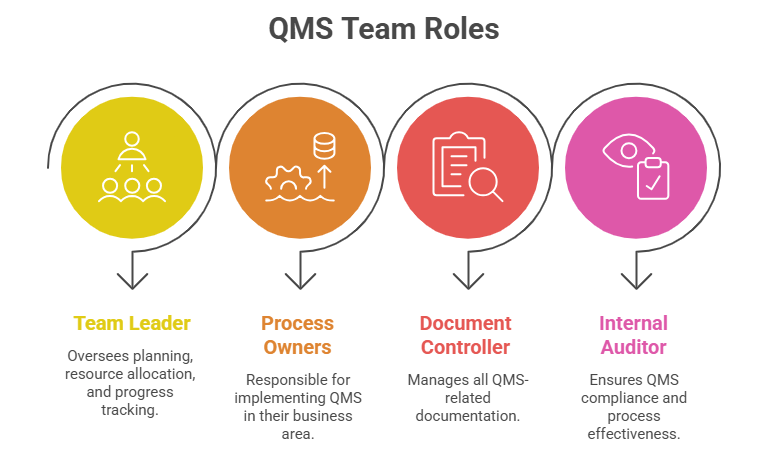
Through careful selection, clear role definition, and strong leadership support, implementation teams drive successful QMS adoption while promoting a shared commitment to quality across all levels of the organization.

Class Sessions
Sales Campaign

We have a sales campaign on our promoted courses and products. You can purchase 1 products at a discounted price up to 15% discount.